Earn $3 Cenexa Bucks when you buy this product!
 Buy More & Save!
Add selected quantity to cart above & discount is automatically applied.
SS-31 (ELAMIPRETIDE) RESEARCH & SCIENTIFIC OVERVIEW
Jump to: Structure | Mechanism | Studies | Pharmacokinetics | Protocols | Limitations | Lead Researcher | References
SS-31 Molecular Structure & Chemical Properties
SS-31, also known as elamipretide, represents a breakthrough in mitochondria-targeted peptide therapeutics, with development spanning over two decades and culminating in FDA approval in September 2025 for Barth syndrome. Originally discovered serendipitously during opioid receptor research at Weill Cornell Medical College, this synthetic tetrapeptide has been extensively studied in over 50 clinical trials and hundreds of preclinical investigations. Unlike conventional antioxidants that diffuse throughout cellular compartments, SS-31’s unique aromatic-cationic structure enables selective targeting of the inner mitochondrial membrane where it binds to cardiolipin, a critical phospholipid essential for mitochondrial structure and bioenergetic function. This targeted mechanism distinguishes SS-31 from other mitochondrial interventions and underlies its therapeutic potential across diverse pathologies involving mitochondrial dysfunction.
Chemical Structure
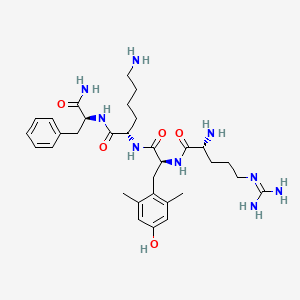 |
2D molecular structure (Source: PubChem)
Technical Specifications
| Property | Value |
|---|---|
| CAS Number | 736992-21-5 |
| Molecular Formula | C32H49N9O5 (subscripted) |
| Molecular Weight | 639.8 g/mol |
| Amino Acid Sequence | D-Arg-Dmt-Lys-Phe-NH2 (Dmt = dimethyltyrosine) |
| Half-Life (Plasma) | Less than 4 hours (human studies) |
| Stability | Stable in plasma; resistant to peptidase degradation |
| Solubility | Highly water-soluble; suitable for intravenous and subcutaneous administration |
| Storage | Lyophilized: -20 degrees C; Reconstituted: 2-8 degrees C (stability varies by protocol) |
The peptide’s structure features alternating aromatic and cationic residues creating an amphipathic character that facilitates membrane penetration. The dimethyltyrosine (Dmt) residue provides antioxidant capacity through its ability to scavenge reactive oxygen species, while the D-arginine confers resistance to enzymatic degradation.
SS-31 Mechanism of Action
SS-31 peptide exerts its biological effects through a multi-faceted mechanism centered on mitochondrial membrane stabilization and optimization of bioenergetic efficiency. Unlike single-target therapeutics, SS-31’s activity involves interaction with both lipid and protein components of the inner mitochondrial membrane, with cardiolipin binding serving as the primary driver of its protective effects.
Primary Cellular Pathways
Cardiolipin Binding – Membrane Stabilization
Research has demonstrated that SS-31 selectively binds to cardiolipin, an anionic phospholipid highly enriched in the inner mitochondrial membrane[1]. This interaction:
- Stabilizes cristae structure and prevents aberrant remodeling during stress
- Maintains optimal geometry for respiratory chain supercomplex assembly
- Protects cardiolipin from peroxidation by reactive oxygen species
- Preserves mitochondrial membrane potential under pathological conditions
Studies using chemical cross-linking with mass spectrometry revealed that SS-31 binds to cardiolipin-enriched membrane domains where respiratory complexes assemble[2]. This localization is driven by electrostatic interactions between the peptide’s cationic residues and cardiolipin’s negative charge.
Mitochondrial Protein Interactions – Bioenergetic Optimization
Beyond lipid interactions, SS-31 directly engages with mitochondrial proteins involved in energy metabolism[3]. Proteomic analyses identified 12 key protein interactors:
- ATP synthase complex components (Complex V)
- Adenine nucleotide translocator (ANT) – improves ADP/ATP exchange efficiency
- Electron transport chain proteins – enhances electron flux and reduces leak
- 2-oxoglutarate metabolism enzymes – modulates Krebs cycle regulation
These protein interactions contribute to improved oxidative phosphorylation efficiency and increased ATP production capacity in energy-depleted mitochondria.
Antioxidant Activity – ROS Scavenging
SS-31 peptide possesses intrinsic antioxidant properties through its dimethyltyrosine residue[4]:
- Scavenges superoxide and hydroxyl radicals
- Reduces peroxidation of membrane lipids and proteins
- Decreases mitochondrial reactive oxygen species production
- Prevents oxidative damage to mitochondrial DNA
Unlike traditional antioxidants, SS-31’s membrane localization enables targeted ROS neutralization at the primary site of oxidant generation within the electron transport chain.
Mitochondrial Dynamics Modulation
Research indicates SS-31 influences mitochondrial morphology and quality control processes[5]:
- Promotes formation of larger, more interconnected mitochondrial networks
- Enhances mitophagy (selective removal of damaged mitochondria)
- Reduces excessive mitochondrial fragmentation under stress
- Improves mitochondrial protein import efficiency
Anti-Apoptotic Signaling
SS-31 demonstrates cytoprotective effects through multiple apoptosis-regulatory pathways[6]:
- Inhibits cytochrome c release from mitochondria
- Reduces BAX protein recruitment to mitochondrial outer membrane
- Prevents mitochondrial permeability transition pore opening
- Maintains mitochondrial calcium handling capacity
SS-31 Research Applications & Key Findings
Mitochondrial Disease Research
Barth Syndrome Studies
Barth syndrome, caused by mutations in the TAZ gene affecting cardiolipin synthesis, represents SS-31’s most clinically advanced application. The TAZPOWER clinical trial demonstrated[7]:
- 45% improvement in knee extensor muscle strength at 48 weeks
- 40% enhancement in cardiac stroke volume
- Significant improvements in 6-minute walk test performance
- Sustained benefits in long-term open-label extension (over 8 years)
FDA accelerated approval was granted in September 2025, making SS-31 (branded as Forzinity) the first approved treatment for Barth syndrome and the first FDA-approved mitochondria-targeted therapeutic.
Primary Mitochondrial Myopathy
Phase 2/3 trials in patients with inherited mitochondrial diseases showed[8]:
- Improved mitochondrial respiratory chain function
- Dose-dependent increases in muscle ATP production
- Enhanced exercise tolerance in some patient subgroups
- Generally well-tolerated with mild injection site reactions
However, primary endpoints were not consistently met across all mitochondrial myopathy subtypes, indicating variable responsiveness based on specific genetic defects.
Cardiovascular Research
Heart Failure and Cardiac Protection
Extensive preclinical and clinical research has examined SS-31 in cardiac pathologies[9,10]:
- Preserved cardiac function following ischemia-reperfusion injury in animal models
- Improved left ventricular ejection fraction in dog models of heart failure
- Enhanced mitochondrial ATP production in failing human heart tissue
- Reduced myocardial infarct size in experimental coronary occlusion
Clinical trials in heart failure with reduced ejection fraction (PROGRESS-HF) showed trends toward improvement but did not achieve primary efficacy endpoints, highlighting challenges in translating preclinical promise to heterogeneous patient populations.
Renal Protection Research
Ischemia-Reperfusion Injury
Studies in renal artery stenosis and acute kidney injury demonstrated[11,12]:
- Attenuated post-procedural hypoxia following renal artery stenting
- Increased renal blood flow three months post-intervention
- Improved glomerular filtration rate in treated patients
- Reduced oxidative stress markers in kidney tissue
Diabetic Nephropathy
Research in diabetic kidney disease models showed[13]:
- Inhibition of mitochondrial fission and dysfunction
- Reduced tubulointerstitial injury and fibrosis
- Improved mitochondrial membrane potential in renal tubular cells
- Decreased proteinuria and preserved kidney architecture
Neurodegenerative Disease Research
Cognitive Function and Neuroprotection
Preclinical studies in neurodegeneration models revealed[14,15]:
- Improved memory performance in lipopolysaccharide-induced cognitive impairment models
- Reduced neuronal apoptosis in traumatic brain injury models
- Enhanced synaptic density and dendritic spine preservation
- Decreased neuroinflammation and oxidative damage in hippocampus
Mouse models of age-related cognitive decline showed restoration of mitochondrial function in brain tissue with corresponding improvements in behavioral testing.
Retinal and Ophthalmic Research
Age-Related Macular Degeneration
Studies in dry AMD and related retinal pathologies demonstrated[16]:
- Improved photoreceptor function in aged mice
- Reversal of age-related visual decline when treatment initiated at 24 months
- Protection against oxidative damage in retinal pigment epithelium
- Enhanced retinal blood flow and reduced drusen formation
Clinical trials (ReCLAIM studies) in intermediate AMD patients showed acceptable safety profiles with exploratory efficacy signals warranting continued investigation.
Skeletal Muscle and Aging Research
Sarcopenia and Exercise Tolerance
Research in aged animal models revealed remarkable effects on muscle function[17,18]:
- Significant increase in gastrocnemius muscle mass in aged mice
- Improved treadmill endurance capacity (increased running time and distance)
- Enhanced mitochondrial ATP production without increasing mitochondrial content
- Reduced muscle fatigue resistance and faster recovery
Eight-week treatment with SS-31 in 26-month-old mice restored mitochondrial function to levels approaching young animals, with corresponding improvements in physical performance.
SS-31 Pharmacokinetics & Metabolism
Absorption & Distribution
SS-31 exhibits favorable pharmacokinetic properties for a peptide therapeutic, with research in multiple species demonstrating[19,20]:
- Rapid tissue uptake following subcutaneous or intravenous administration
- Selective accumulation in mitochondria-rich tissues (heart, kidney, skeletal muscle, liver)
- Crosses blood-brain barrier with measurable brain concentrations
- Independent of mitochondrial membrane potential for cellular uptake
Distribution studies using radiolabeled peptide showed preferential localization to the inner mitochondrial membrane within 15-30 minutes of administration. Peak plasma concentrations occur within 1 hour of subcutaneous injection, with tissue concentrations persisting longer than plasma levels.
Metabolism & Elimination
Pharmacokinetic characterization reveals[21]:
- Plasma half-life of less than 4 hours in humans (approximately 2-3 hours)
- Metabolized primarily through peptidase-mediated degradation
- Resistance to rapid degradation due to D-arginine residue
- Dose-proportional pharmacokinetics across clinical dose ranges
A notable pharmacodynamic observation is the dissociation between short plasma half-life and prolonged biological effects. Improvements in mitochondrial function and clinical outcomes persist for days to weeks after treatment cessation, suggesting either tissue retention, downstream signaling cascade activation, or structural remodeling effects that outlast drug presence.
Excretion Pathways
Elimination characteristics include[22]:
- Renal excretion as primary clearance route
- No evidence of drug accumulation with chronic dosing
- Clearance proportional to renal function
- Minimal hepatic metabolism contribution
Studies in renal impairment models showed altered pharmacokinetics, though the peptide remained well-tolerated even in compromised kidney function, likely due to its mitochondrial protective effects offsetting potential accumulation concerns.
SS-31 Research Protocols & Administration
Dosing in Published Research
Research investigations across species and indications have employed varied SS-31 doses:
Preclinical Studies:
- Mouse models: 3-5 mg/kg/day (most common for chronic studies)
- Rat studies: 1-10 mg/kg (range depending on pathology model)
- Dog models: 0.05 mg/kg/hour (continuous intravenous infusion)
- Non-human primates: 0.05-0.25 mg/kg (pharmacokinetic studies)
Human Clinical Trials:
- Intravenous administration: 0.01-0.25 mg/kg/hour for 1-4 hours
- Subcutaneous injection: 40 mg/day (Barth syndrome studies)
- Safety studies: Up to 4 mg/kg single dose well-tolerated
Important: These are experimental doses used in controlled research studies and cannot be extrapolated to other species or conditions due to significant differences in pharmacokinetics, mitochondrial density, disease pathophysiology, and drug metabolism. Species-specific factors including body surface area, metabolic rate, and tissue distribution profoundly influence both efficacy and safety profiles. Clinical dosing must be determined through formal dose-escalation trials in target populations.
Administration Routes in Research
Multiple delivery methods have been investigated across studies:
- Subcutaneous injection – Primary route in Barth syndrome trials; once-daily administration; good patient acceptance
- Intravenous infusion – Used in acute settings (myocardial infarction, renal artery intervention); allows precise dose titration
- Continuous infusion – Employed in chronic heart failure studies; maintains steady plasma levels
- Bolus injection – Utilized in some animal studies for acute injury models
The subcutaneous route emerged as the preferred clinical administration method due to ease of self-administration, consistent absorption, and suitability for chronic therapy.
Common Model Organisms
SS-31 has been extensively studied across multiple experimental systems:
- Mice (C57BL/6, aged mice, genetic knockout models) – Primary preclinical model; extensive aging and disease studies
- Rats (Sprague-Dawley, Wistar) – Used in cardiac and renal injury models
- Dogs (mongrel dogs, heart failure models) – Cardiac function and chronic disease studies
- Rabbits – Ischemia-reperfusion and cardiovascular research
- Non-human primates – Pharmacokinetic and toxicology studies
- Cell culture (primary cardiomyocytes, neurons, kidney cells, patient-derived cells) – Mechanistic investigations and disease modeling
Human studies have been conducted in healthy volunteers, patients with Barth syndrome, primary mitochondrial myopathy, heart failure, age-related macular degeneration, and renal artery stenosis.
Research Limitations & Regulatory Status
Critical Gaps in Current Evidence
Despite over 20 years of research and recent FDA approval for Barth syndrome, SS-31 faces important translational limitations that constrain broader application.
Variable Clinical Trial Outcomes
The most significant challenge has been inconsistent translation of preclinical efficacy to clinical benefit:
- Heart failure trials (PROGRESS-HF) failed to meet primary endpoints despite robust preclinical data
- Primary mitochondrial myopathy studies showed variable responses across genetic subtypes
- Endpoint selection challenges in rare disease populations with heterogeneous phenotypes
- Placebo effects and subjective outcome measures complicated interpretation
These failures highlight the complexity of applying a single therapeutic to diverse mitochondrial diseases with different underlying genetic defects and pathophysiologies.
Mechanistic Understanding Gaps
Fundamental questions about SS-31’s mechanism remain incompletely resolved:
- Relative contribution of cardiolipin binding versus protein interactions to clinical effects
- Why biological effects persist long after drug clearance from plasma
- Which of multiple mechanisms (antioxidant, bioenergetic, structural) is most critical for different diseases
- Optimal biomarkers to predict responders versus non-responders
Long-Term Safety Considerations
Critical safety questions requiring continued investigation:
- Chronic effects beyond 8 years of treatment (longest available human data from Barth syndrome trials)
- Potential impacts on normal mitochondrial turnover and biogenesis
- Effects during pregnancy and development (limited data available)
- Interaction potential with medications affecting mitochondrial function
- Cancer risk considerations (mitochondrial function influences both tumor suppression and progression)
Regulatory & Competitive Sport Status
FDA Position
SS-31 has a complex regulatory history culminating in recent approval[23]:
- Approved for Barth syndrome in patients weighing at least 30 kg (September 2025)
- Granted under accelerated approval pathway based on muscle strength surrogate endpoint
- Continued approval contingent on confirmatory trials demonstrating clinical benefit
- Not approved for other indications including heart failure, mitochondrial myopathy, or age-related conditions
- Received Orphan Drug, Fast Track, Priority Review, and Rare Pediatric Disease designations
For conditions beyond Barth syndrome, SS-31 remains an investigational compound. The FDA has required additional evidence before considering broader indications.
International Status
- European Medicines Agency: Orphan Drug Designation for Barth syndrome; no marketing authorization to date
- Other jurisdictions: Investigational status; no approved indications outside United States
WADA Prohibition
Competitive sport considerations:
- Not explicitly prohibited by World Anti-Doping Agency as of current prohibited list
- Classification as unapproved pharmacological substance in most jurisdictions may create regulatory complexity
- Athletes should verify status with their specific sport governing body
- Potential future consideration under metabolic modulators if performance-enhancing effects demonstrated
Research Classification: SS-31 (elamipretide) is FDA-approved solely for treatment of Barth syndrome in patients weighing at least 30 kg. For all other applications, SS-31 is available only for laboratory research use. It is not intended for human consumption outside approved indications, medical use in unapproved conditions, or veterinary applications. All research must be conducted under appropriate ethical oversight and regulatory compliance with institutional review board approval where applicable.
Lead Researcher Spotlight
Dr. Hazel H. Szeto, MD, PhD
Professor of Pharmacology
Weill Cornell Medical College, New York, NY
Founder, Stealth BioTherapeutics
Dr. Hazel Szeto is the pioneering scientist who discovered SS-31 and developed the entire class of Szeto-Schiller (SS) peptides that selectively target mitochondria. Her groundbreaking work began serendipitously in the late 1990s while researching opioid receptor pharmacology, when she and colleagues observed that certain tetrapeptides improved mitochondrial function independently of opioid activity.
Dr. Szeto’s research contributions to mitochondrial therapeutics include:
- Discovery and development of SS-31 and related mitochondria-targeted peptides with alternating aromatic-cationic structure
- Elucidation of cardiolipin-binding mechanism as key to mitochondrial membrane stabilization
- Demonstration of SS peptide efficacy across diverse disease models involving mitochondrial dysfunction
- Translation of preclinical findings to clinical trials culminating in FDA approval for Barth syndrome
- Over 100 peer-reviewed publications on mitochondrial pharmacology and peptide therapeutics
Her work established the foundational understanding that small peptides can selectively target mitochondria based on their amphipathic character and charge distribution, opening new therapeutic avenues for diseases previously considered intractable. Dr. Szeto founded Stealth BioTherapeutics to advance clinical development of these compounds, leading to the first FDA-approved mitochondria-targeted therapeutic.
Disclaimer: This spotlight is provided for educational purposes to acknowledge scientific contributions to SS-31 research. Cenexa Labs has no affiliation with Dr. Szeto, Weill Cornell Medical College, or Stealth BioTherapeutics, and this information does not constitute an endorsement of any products or services.
References
- Mitchell, W., Ng, E.A., Tamucci, J.D., Boyd, K.J., Sathappa, M., Coscia, A., Pan, M., Han, X., Eddy, N.A., May, E.R., Szeto, H.H., & Alder, N.N. (2020). The mitochondria-targeted peptide SS-31 binds lipid bilayers and modulates surface electrostatics as a key component of its mechanism of action. Journal of Biological Chemistry, 295(21), 7452-7469. PubMed
- Chavez, J.D., Tang, X., Campbell, M.D., Reyes, G., Kramer, P.A., Stuppard, R., Keller, A., Zhang, H., Rabinovitch, P.S., Marcinek, D.J., & Bruce, J.E. (2020). Mitochondrial protein interaction landscape of SS-31. Proceedings of the National Academy of Sciences, 117(26), 15363-15373. PubMed
- Stuppard, R.S., Sapa, A.P., Mamedova, A., Reyes, G., Pham, U., Lee, J., Sweeney, M.G., Campbell, M.D., Sweet, I.R., & Marcinek, D.J. (2023). The mitochondrially targeted peptide elamipretide (SS-31) improves ADP sensitivity in aged mitochondria by increasing uptake through the adenine nucleotide translocator (ANT). GeroScience, 45(5), 3529-3548. PubMed
- Szeto, H.H. (2014). First-in-class cardiolipin-protective compound as a therapeutic agent to restore mitochondrial bioenergetics. British Journal of Pharmacology, 171(8), 2029-2050. PubMed
- Grosser, J.A., Fehrman, R.L., Mohan, R., & Nickells, R.W. (2021). The effects of a mitochondrial targeted peptide (elamipretide/SS31) on BAX recruitment and activation during apoptosis. BMC Research Notes, 14(1), 198. PubMed
- Yang, L., Zhao, K., Calingasan, N.Y., Luo, G., Szeto, H.H., & Beal, M.F. (2009). Mitochondria targeted peptides protect against 1-methyl-4-phenyl-1,2,3,6-tetrahydropyridine neurotoxicity. Antioxidants & Redox Signaling, 11(9), 2095-2104. PubMed
- Reid Thompson, W., Hornby, B., Manuel, R., Bradley, E., Laux, J., Carr, J., Vernon, H.J., & on behalf of the TAZ-POWER study group. (2021). A phase 2/3 randomized clinical trial followed by an open-label extension to evaluate the effectiveness of elamipretide in Barth syndrome, a genetic disorder of mitochondrial cardiolipin metabolism. Genetics in Medicine, 23(3), 471-478. PubMed
- Karaa, A., Haas, R., Goldstein, A., Vockley, J., & Cohen, B.H. (2020). A randomized crossover trial of elamipretide in adults with primary mitochondrial myopathy. Journal of Cachexia, Sarcopenia and Muscle, 11(4), 909-918. PubMed
- Chatfield, K.C., Sparagna, G.C., Chau, S., Phillips, E.K., Ambardekar, A.V., Aftab, M., Mitchell, M.B., Sucharov, C.C., Miyamoto, S.D., & Stauffer, B.L. (2019). Elamipretide improves mitochondrial function in the failing human heart. JACC: Basic to Translational Science, 4(2), 147-157. PubMed
- Sabbah, H.N., Gupta, R.C., Kohli, S., Wang, M., Hachem, S., & Zhang, K. (2016). Chronic therapy with elamipretide (MTP-131), a novel mitochondria-targeting peptide, improves left ventricular and mitochondrial function in dogs with advanced heart failure. Circulation: Heart Failure, 9(2), e002206. PubMed
- Saad, A., Herrmann, S.M.S., Eirin, A., Ferguson, C.M., Glockner, J.F., Bjarnason, H., McKusick, M.A., Misra, S., Lerman, L.O., & Textor, S.C. (2017). Phase 2a clinical trial of mitochondrial protection (elamipretide) during stent revascularization in patients with atherosclerotic renal artery stenosis. Circulation: Cardiovascular Interventions, 10(9), e005487. PubMed
- Sweetwyne, M.T., Pippin, J.W., Eng, D.G., Hudkins, K.L., Chiao, Y.A., Campbell, M.D., Marcinek, D.J., Alpers, C.E., Szeto, H.H., Rabinovitch, P.S., & Shankland, S.J. (2017). The mitochondrial-targeted peptide, SS-31, improves glomerular architecture in mice of advanced age. Kidney International, 91(5), 1126-1145. PubMed
- Miyamoto, S., Zhang, G., Hall, D., Oates, P.J., Maity, S., Madesh, M., Han, X., & Sharma, K. (2020). Restoring mitochondrial superoxide levels with elamipretide (MTP-131) protects db/db mice against progression of diabetic kidney disease. Journal of Biological Chemistry, 295(21), 7249-7260. PubMed
- Zhao, K., Luo, G., Giannelli, S., & Szeto, H.H. (2005). Mitochondria-targeted peptide prevents mitochondrial depolarization and apoptosis induced by tert-butyl hydroperoxide in neuronal cell lines. Biochemical Pharmacology, 70(12), 1796-1806. PubMed
- Yin, X., Manczak, M., & Reddy, P.H. (2016). Mitochondria-targeted molecules MitoQ and SS31 reduce mutant huntingtin-induced mitochondrial toxicity and synaptic damage in Huntington’s disease. Human Molecular Genetics, 25(9), 1739-1753. PubMed
- Siegel, M.P., Kruse, S.E., Percival, J.M., Goh, J., White, C.C., Hopkins, H.C., Kavanagh, T.J., Szeto, H.H., Rabinovitch, P.S., & Marcinek, D.J. (2013). Mitochondrial-targeted peptide rapidly improves mitochondrial energetics and skeletal muscle performance in aged mice. Aging Cell, 12(5), 763-771. PubMed
- Campbell, M.D., Duan, J., Samuelson, A.T., Gaffrey, M.J., Merrihew, G.E., Egertson, J.D., Wang, L., Bammler, T.K., Moore, R.J., White, C.C., Kavanagh, T.J., Voss, J.G., Szeto, H.H., Qian, W.J., Rabinovitch, P.S., MacCoss, M.J., & Marcinek, D.J. (2019). Improving mitochondrial function with SS-31 reverses age-related redox stress and improves exercise tolerance in aged mice. Free Radical Biology and Medicine, 134, 268-281. PubMed
- Chiao, Y.A., Zhang, H., Sweetwyne, M., Whitson, J., Ting, Y.S., Basisty, N., Pino, L.K., Quarles, E., Nguyen, N.H., Campbell, M.D., Zhang, T., Gaffrey, M.J., Merrihew, G., Jung, Y.S., Wehber, E.D., Poss, K.D., Marcinek, D.J., Qian, W.J., MacCoss, M.J., & Rabinovitch, P.S. (2020). Late-life restoration of mitochondrial function reverses cardiac dysfunction in old mice. eLife, 9, e55513. PubMed
- Birk, A.V., Liu, S., Soong, Y., Mills, W., Singh, P., Warren, J.D., Seshan, S.V., Pardee, J.D., & Szeto, H.H. (2013). The mitochondrial-targeted compound SS-31 re-energizes ischemic mitochondria by interacting with cardiolipin. Journal of the American Society of Nephrology, 24(8), 1250-1261. PubMed
- Birk, A.V., Chao, W.M., Bracken, C., Warren, J.D., & Szeto, H.H. (2014). Targeting mitochondrial cardiolipin and the cytochrome c/cardiolipin complex to promote electron transport and optimize mitochondrial ATP synthesis. British Journal of Pharmacology, 171(8), 2017-2028. PubMed
- Karaa, A., Haas, R., Goldstein, A., Vockley, J., Weaver, W.D., & Cohen, B.H. (2018). Randomized dose-escalation trial of elamipretide in adults with primary mitochondrial myopathy. Neurology, 90(14), e1212-e1221. PubMed
- Butler, J., Khan, M.S., Anker, S.D., Fonarow, G.C., Kim, R.J., Nodari, S., O’Connor, C.M., Pieske, B., Pieske-Kraigher, E., Sabbah, H.N., Shah, S.J., Teerlink, J.R., Voors, A.A., Gheorghiade, M., & PROGRESS-HF Investigators. (2020). Effects of elamipretide on left ventricular function in patients with heart failure with reduced ejection fraction: the PROGRESS-HF phase 2 trial. Journal of Cardiac Failure, 26(5), 429-437. PubMed
- U.S. Food and Drug Administration. (2025). FDA Grants Accelerated Approval to First Treatment for Barth Syndrome. FDA Press Release, September 19, 2025.
All references open in new window. These citations are provided for educational and research purposes only. This information is not intended to diagnose, treat, cure, or prevent any disease. SS-31 is FDA-approved only for Barth syndrome in patients weighing at least 30 kg. For all other applications, SS-31 is intended for laboratory research use only.
Related products
-
Peptides
AICAR
$64.99 Select options This product has multiple variants. The options may be chosen on the product page -
Peptides
NAD+
$99.99 Select options This product has multiple variants. The options may be chosen on the product page -
Peptides
GHK-Cu
Price range: $50.59 through $71.99 Select options This product has multiple variants. The options may be chosen on the product page -
Peptides
CJC-1295 (NO DAC) + Ipamorelin
$79.99 Select options This product has multiple variants. The options may be chosen on the product page