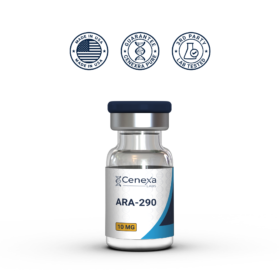


Availability: In Stock
ARA-290
$74.99
ARA-290 is an erythropoietin-derived peptide studied for neuroprotection, nerve fiber regeneration, and inflammation reduction without stimulating red blood cell production.
 Earn $3 Cenexa Bucks when you buy this product!
Availability: In Stock
A portion of every order supports organizations focused on children’s cancer research & care. Help us make a difference.
 Buy More & Save!
Add selected quantity to cart above & discount is automatically applied.
| Quantity | Discount % | Price Per Item |
|---|---|---|
| 3-6 | 4 | $71.99 |
| 7-9 | 7 | $69.74 |
| 10-50 | 9 | $68.24 |
Quick Links
ARA-290 Peptide
The EPO-Derived Neuroprotective & Tissue-Repair Peptide
Also known as: Cibinetide · Pyroglutamate Helix B Surface Peptide · pHBSP
Why Researchers Choose ARA-290
ARA-290’s defining research advantage is its ability to selectively activate the Innate Repair Receptor (IRR) — the tissue-protective signaling arm of erythropoietin biology — without any stimulation of red blood cell production. This separation of function makes it an invaluable molecular probe for isolating EPO’s neuroprotective and anti-inflammatory pathways from its hematopoietic effects, a confound that has historically limited full-length EPO research. For scientists studying peripheral neuropathy, small fiber nerve regeneration, chronic inflammation, or ischemic organ injury, ARA-290 provides mechanistic specificity that full-length EPO simply cannot offer.
What It Is
ARA-290 is a synthetic 11-amino acid peptide (sequence: QEQLERALNSS) engineered from the helix-B surface domain of erythropoietin — the region of EPO responsible for tissue protection rather than blood cell stimulation. Think of EPO as a protein with two distinct “jobs” encoded in separate regions of its structure; ARA-290 is the isolated fragment that captures only the tissue-repair job.
Researchers became interested when studies revealed that EPO’s cytoprotective effects in neural, cardiac, and renal models operated through a separate receptor complex — the EPOR/β-common receptor heterodimer — entirely independent of erythropoiesis. That meant those protective effects could potentially be studied in isolation, without the cardiovascular risks associated with elevated hematocrit and increased clotting.
How It Works (What Makes It Interesting)
Studies suggest ARA-290 may influence multiple protective pathways through several mechanisms:
- IRR / EPOR·β-CR Activation — Selectively binds the Innate Repair Receptor, a heterodimer of the EPO receptor and β-common receptor (CD131), the molecular switch that mediates EPO’s cytoprotective effects independently of red blood cell production
- Anti-inflammatory Signaling — Appears to downregulate pro-inflammatory cytokine expression and suppress spinal microglia activation, reducing the central inflammation that drives and sustains chronic neuropathic pain states
- Small Nerve Fiber Regeneration — Studies indicate ARA-290 may stimulate axonal regrowth from damaged small-diameter C-fibers and Aδ fibers, with measurable increases in corneal nerve fiber density observed in sarcoidosis patient trials
- TRPV1 Channel Modulation — Research suggests ARA-290 may directly inhibit TRPV1 (transient receptor potential vanilloid 1) channel activity — a peripheral pain receptor — representing a mechanism entirely distinct from its IRR-mediated anti-inflammatory actions
- Metabolic Pathway Influence — Preclinical work points to effects on insulin resistance and muscle mitochondrial biogenesis; phase 2 human data showed improvements in HbA1c and HDL cholesterol ratios in type 2 diabetes subjects
- Cardiac & Organ Cytoprotection — Reduces tissue inflammation and fibrosis in cardiac, renal, and pulmonary ischemia-reperfusion models, likely via anti-apoptotic signaling downstream of IRR activation
Common Research Applications
- Peripheral Neuropathy Models: Diabetic peripheral neuropathy, sarcoidosis-associated small fiber neuropathy (SFN), chemotherapy-induced peripheral neuropathy, nerve compression injury models, autonomic nerve degeneration
- Neuroinflammation & CNS Research: Spinal microglia activation, traumatic brain injury, cerebral ischemic stroke (MCAO models), neuropathic pain allodynia and hyperalgesia, depression-linked neuroinflammation
- Metabolic & Insulin Resistance Studies: Type 2 diabetes animal models, diet-induced insulin resistance, HbA1c and lipid profile modulation, muscle mitochondrial biogenesis, pancreatic beta cell function
- Cardiac & Vascular Research: Myocardial ischemia-reperfusion injury, age-associated cardiac inflammation, cardiac fibrosis models, mitochondrial dysfunction in aging hearts, healthspan and frailty studies
- Renal & Organ Protection: Acute kidney injury, renal ischemia-reperfusion, pulmonary ischemia, organ preservation models, oxidative stress-induced tissue damage
- Autoimmune & Inflammatory Models: Sarcoidosis-driven systemic inflammation, chronic inflammatory conditions, pro-inflammatory cytokine regulation (TNF-α, IL-6), immune-mediated small nerve fiber loss
What You’re Getting
Every batch of our ARA-290 meets rigorous research standards:
- Exceeds 99% Purity — Verified by HPLC analysis
- Certificate of Analysis (COA) — Included with every order, showing purity and identity confirmation
- Endotoxin-Free — Tested to ensure <1 EU/mg for cell culture applications
- Manufactured in USA — GMP-certified facilities with full traceability
- Sterile & Lyophilized — Stable for long-term storage, easy reconstitution
- Fast Shipping — Most orders ship same day. We offer flat rate shipping and 2-3 day delivery in the USA
Click the “Add To Cart” button to grab your ARA-290 today!
Research Use Only This product is intended strictly for laboratory research purposes. Not for human consumption, clinical use, veterinary applications, or any diagnostic or therapeutic purposes.
ARA-290 Research & Scientific Overview
Jump to: Structure | Mechanism | Studies | Pharmacokinetics | Protocols | Limitations | Lead Researcher | References
ARA-290 Molecular Structure & Chemical Properties
ARA-290 (also known as cibinetide and pyroglutamate helix B surface peptide, or PH-BSP) is one of the most precisely engineered tissue-protective peptides in contemporary preclinical and clinical research. Developed in the early 2000s from the three-dimensional structure of erythropoietin’s helix B surface domain, this synthetic 11-amino acid peptide was designed to retain erythropoietin’s cytoprotective and anti-inflammatory properties while completely eliminating its erythropoietic activity. This distinction resolves a fundamental pharmacological problem: erythropoietin’s tissue-protective actions were offset by cardiovascular risks from elevated red blood cell mass, limiting therapeutic utility. ARA-290’s compact structure and well-characterized receptor target have enabled a clinical research program including multiple Phase 2 trials, making it one of the more clinically advanced non-hematopoietic EPO-analog peptides.
Chemical Structure
[IMAGE PLACEHOLDER] Insert 2D chemical structure image here Image URL: https://pubchem.ncbi.nlm.nih.gov/image/imgsrv.fcgi?cid=91810664&t=l Alt text: ARA-290 cibinetide 2D molecular structure diagram Source credit: PubChem Position: Center-aligned below “Chemical Structure” heading
2D molecular structure (Source: PubChem)
Technical Specifications
Property
Value
CAS Number
1208243-50-8
Molecular Formula
C51H84N16O21 (subscripted)
Molecular Weight
1257.3 g/mol
Amino Acid Sequence
Pyr-Glu-Gln-Leu-Glu-Arg-Ala-Leu-Asn-Ser-Ser (11 aa)
Half-Life (Plasma)
~2 min (IV); ~20 min (SC) – human pharmacokinetic studies
Stability
Stable as lyophilized powder under standard cold storage conditions
Solubility
Water soluble; soluble in sterile phosphate buffer
Storage
Lyophilized: -20 degrees C; Reconstituted: 2-8 degrees C
The peptide’s N-terminal pyroglutamate residue is a cyclized form of glutamine that confers structural rigidity and is responsible for ARA-290’s selective binding to the innate repair receptor rather than the erythropoietic receptor homodimer.
ARA-290 Mechanism of Action
ARA-290 exerts its biological effects through selective engagement of the innate repair receptor (IRR), a heterodimeric complex formed by the erythropoietin receptor and the beta-common receptor (CD131). Unlike erythropoietin, which also activates the erythropoietin receptor homodimer driving red blood cell production, ARA-290 binds exclusively to the heterodimeric IRR. This receptor is not constitutively expressed in healthy tissue but becomes rapidly upregulated in response to injury, hypoxia, or metabolic stress – positioning it as an injury-activated protective system[1,2].
Primary Cellular Pathways
IRR Activation – Anti-Inflammatory and Anti-Apoptotic Signaling
IRR activation by ARA-290 initiates a multi-faceted cytoprotective response[1,2]:
Suppression of pro-inflammatory cytokines including TNF-alpha, IL-1beta, and IL-6
Inhibition of NF-kB pathway activation in macrophages and neural cells
Promotion of anti-apoptotic signaling that reduces programmed cell death in injured tissue
Polarization of T cell populations toward anti-inflammatory phenotypes (Th2 and regulatory T cells)[3]
Microglia Suppression – Central Neuroinflammation
Research in rat spared nerve injury models demonstrated dose-dependent suppression of spinal cord microglia activation concurrent with allodynia relief[4]. Mechanistic confirmation came from studies in beta-common receptor knockout mice, in which ARA-290 loses its analgesic effect entirely – directly implicating CD131 as the essential functional receptor[4,9].
TRPV1 Channel Antagonism – Peripheral Nociception
In addition to IRR-mediated anti-inflammatory actions, ARA-290 has been shown to directly inhibit TRPV1 (transient receptor potential vanilloid 1) channel activity in dorsal root ganglion neurons[5]. This suggests the peptide operates at both central (microglia suppression) and peripheral (direct nociceptor modulation) levels of pain signaling – a dual mechanism consistent with its broad efficacy across neuropathic pain models.
Small Nerve Fiber Regeneration
A particularly significant finding in preclinical and clinical studies is ARA-290’s ability to promote structural nerve fiber regrowth. Corneal confocal microscopy in human subjects demonstrated measurable increases in corneal nerve fiber density following treatment[6] – providing objective structural evidence of tissue repair rather than solely symptomatic pain modulation.
[CALLOUT BOX – Highlighted] Key Mechanistic Insight: ARA-290 has a plasma half-life of approximately 2 minutes IV yet produces biological effects lasting weeks to months after brief treatment courses. Research indicates it activates the IRR as a molecular switch, triggering sustained downstream signaling cascades that persist well after the peptide itself is cleared from circulation. [END CALLOUT BOX]
ARA-290 Research Applications & Key Findings
Neuropathic Pain Research
Sarcoidosis-Associated Small Fiber Neuropathy
ARA-290 has been most extensively studied in sarcoidosis patients with small fiber neuropathy (SFN). In a randomized, double-blind, placebo-controlled pilot study, intravenous ARA-290 produced significant improvements in Small Fiber Neuropathy Screening List (SFNSL) scores[8]. A subsequent trial using daily subcutaneous dosing found:
Significant neuropathic symptom improvement versus placebo (SFNSL score, p = 0.037)[7]
Approximately 80% of active-treatment subjects showed some improvement; about 40% showed 50% or greater improvement over baseline[8]
Measurable increases in corneal nerve fiber density by confocal microscopy – structural rather than purely symptomatic improvement[6]
No clinically meaningful adverse events attributable to ARA-290 across trials
Diabetic Neuropathy
In a Phase 2 trial of subjects with type 2 diabetes and painful neuropathy, daily subcutaneous ARA-290 (4 mg) for 28 days produced improvements in HbA1c, lipid profiles, and neuropathic pain scores, with effects maintained through a 56-day observation period without further dosing[7]. These results suggest the molecular switch mechanism extends beyond neuropathic endpoints to metabolic parameters – an area requiring Phase 3 confirmation.
Preclinical Neuropathic Pain Models
In rat spared nerve injury studies, ARA-290 dose-dependently reduced allodynia at 3-60 mcg/kg with effects persisting up to 20 weeks after a 10-day treatment course[4,9]. Diabetic autonomic nerve degeneration was reversed in murine models, and sciatic nerve function improved following inflammatory neuritis induction in rats.
Cerebral Ischemia Research
In mouse middle cerebral artery occlusion (MCAO) models, ARA-290 at 30-100 mcg/kg reduced infarction volumes and suppressed neuronal apoptosis without causing erythropoiesis-related side effects[10]. The neuroprotective magnitude was qualitatively similar to full erythropoietin but without its hematologic risks – precisely the pharmacological separation the peptide was engineered to achieve.
Cardiovascular and Autoimmune Research
A 15-month longitudinal rat study found chronic ARA-290 treatment reduced cardiac inflammatory markers and fibrosis while attenuating age-associated contractile dysfunction[11]. In experimental autoimmune encephalomyelitis models relevant to multiple sclerosis research, ARA-290 reduced clinical severity and shifted T cell polarization toward regulatory phenotypes[3].
[CALLOUT BOX – Highlighted] Critical Research Context: ARA-290 is notable among research peptides for having multiple completed Phase 2 human trials with published data. However, no Phase 3 trials have been completed and no regulatory approval for therapeutic use has been granted. Phase 2 data were generated in small, specialized patient populations and cannot be broadly generalized. [END CALLOUT BOX]
ARA-290 Pharmacokinetics & Metabolism
Absorption & Distribution
ARA-290 has been characterized pharmacokinetically in human volunteers, providing unusually complete data for a research peptide. Following 4 mg subcutaneous administration in normal volunteers, peak plasma concentration of approximately 3 ng/mL was achieved with a terminal half-life of approximately 20 minutes[7]. Intravenous administration produced a half-life of approximately 2 minutes and peak concentrations of ~50 ng/mL following 2 mg IV[8]. Effective IRR activation requires plasma concentrations exceeding approximately 1.3 ng/mL – a threshold readily achieved and sustained by subcutaneous dosing[8]. Animal studies confirm rapid blood-brain barrier penetration, consistent with the central nervous system effects observed despite short plasma residence.
Metabolism & Elimination
ARA-290 undergoes rapid proteolytic degradation consistent with small peptide catabolism:
Enzymatic peptidase activity is the presumed primary clearance mechanism
Hepatic metabolism contributes to clearance based on preclinical data
A key paradox: biological effects persist for weeks to months after brief treatment courses despite rapid plasma clearance – consistent with IRR functioning as a sustained molecular switch rather than requiring continuous receptor occupancy
No accumulation was detected in chronic animal dosing studies
Excretion Pathways
Renal elimination of peptide fragments following proteolytic degradation is the expected primary excretion route. The rapid clearance profile limits cumulative systemic exposure while downstream cellular effects are mediated by activated intracellular signaling cascades rather than circulating peptide.
ARA-290 Research Protocols & Administration
Dosing in Published Research
Dose ranges vary significantly by species and model:
Rat models: 3-60 mcg/kg intraperitoneal; 10-30 mcg/kg is the most commonly used range in neuropathic pain studies
Mouse models: 30-100 mcg/kg intraperitoneal in ischemia and autoimmune models
Human Phase 2 studies: 2 mg IV three times weekly (sarcoidosis pilot trials); 4 mg SC daily for 28 days (sarcoidosis and diabetes trials)
Important: These are experimental doses used in animal studies and cannot be extrapolated to other species due to significant differences in metabolism, receptor density, pharmacokinetics, body surface area scaling, and peptide degradation rates. Human Phase 2 doses were established through formal first-in-human safety studies under regulatory oversight.
Administration Routes in Research
Subcutaneous injection – Standard route in clinical trials; self-administered by participants in outpatient settings
Intraperitoneal injection – Most common route in rodent preclinical studies
Intravenous injection – Used in earlier clinical trials and pharmacokinetic characterization studies
Local application – Investigated in wound healing and organ-protective preclinical models
Common Model Organisms
Rats – Primary preclinical model; Sprague-Dawley and Lewis strains in neuropathic pain, EAE, ischemia, and renal injury research
Mice – C57BL/6 and beta-common receptor knockout mice for mechanistic confirmation studies
Human subjects – Phase 2 trials in sarcoidosis-SFN and type 2 diabetes (small cohorts, 20-50 per arm)
Cell culture – Dorsal root ganglion neurons, macrophages, endothelial cells, pancreatic islet cells
Research Limitations & Regulatory Status
Critical Gaps in Current Evidence
Despite its advanced position in clinical development relative to most research peptides, ARA-290 has significant evidence gaps that prevent definitive conclusions about broader efficacy and safety.
Absence of Phase 3 Data
Published Phase 2 trials involved small, specialized patient populations; no large-scale multi-center Phase 3 trials have published results. Generalizability to broader neuropathic pain etiologies is unestablished. Several trial designs had limited placebo arm sizes, reducing statistical robustness.
Mechanistic and Safety Unknowns
How brief IRR activation produces effects lasting weeks to months is not fully characterized at the molecular level. The full consequences of activating the beta-common receptor – which is shared with IL-3, IL-5, and GM-CSF signaling complexes – through repeated ARA-290 dosing have not been studied with long-term follow-up. Chronic safety beyond the 4-8 week windows studied in Phase 2, reproductive toxicity, and immune function with extended use are uncharacterized in humans.
Regulatory & Competitive Sport Status
FDA Position
FDA Orphan Drug Product designation granted for neuropathic pain in sarcoidosis – this provides development incentives only and does not constitute a safety or efficacy determination
Not approved for human therapeutic use for any indication
Not available through licensed pharmaceutical or compounding channels outside of approved clinical trial settings in the United States
WADA Prohibition
Classified under Section S2 (Peptide Hormones, Growth Factors, Related Substances and Mimetics) as a non-approved EPO-related compound, and likely also under Section S0 (Non-Approved Substances) given the absence of regulatory approval from any health authority
Prohibited both in- and out-of-competition
No Therapeutic Use Exemption (TUE) pathway exists for unapproved investigational compounds
Research Classification: ARA-290 is available only for laboratory research use. It is not intended for human consumption outside of approved clinical trial settings, medical use, or veterinary applications. All research must be conducted under appropriate ethical oversight and regulatory compliance with institutional review board approval where applicable.
Lead Researcher Spotlight
Michael Brines, MD, PhD
Research Scientist and Co-Founder Feinstein Institutes for Medical Research, Northwell Health, Manhasset, NY / Araim Pharmaceuticals, Tarrytown, NY
Dr. Michael Brines is the principal scientific architect of ARA-290’s development, co-authoring the foundational research that identified the innate repair receptor and established the non-hematopoietic tissue-protective signaling properties of erythropoietin derivatives. Working alongside Dr. Anthony Cerami (Araim Pharmaceuticals), Brines co-developed ARA-290 and led or co-led its Phase 2 clinical trials. His landmark 2004 PNAS paper demonstrating the EPO/beta-common receptor heteroreceptor remains the foundational citation in IRR biology and has been cited extensively across the peptide and neuroprotection literature.
Key research contributions include:
Discovery and characterization of the innate repair receptor (EPOR/CD131 heterodimer) as distinct from the erythropoietic receptor homodimer
Development and preclinical validation of ARA-290 and related non-erythropoietic EPO-derived peptides
Design and execution of Phase 2 clinical trials in sarcoidosis-associated SFN and type 2 diabetic neuropathy
Pharmacokinetic characterization of ARA-290 in healthy human volunteers
Disclaimer: This spotlight is provided for educational purposes to acknowledge scientific contributions to ARA-290 research. Cenexa Labs has no affiliation with Dr. Brines, Dr. Cerami, Araim Pharmaceuticals, or the Feinstein Institutes for Medical Research, and this information does not constitute an endorsement of any products or services.
References
Brines, M., Grasso, G., Fiordaliso, F., Sfacteria, A., Ghezzi, P., Fratelli, M., Latini, R., Xie, Q., Smart, J., Su-Rick, C., Pobre, E., Diaz, D., Gomez, D., Hand, C., Coleman, T., & Cerami, A. (2004). Erythropoietin mediates tissue protection through an erythropoietin and common beta-subunit heteroreceptor. Proceedings of the National Academy of Sciences USA, 101(41), 14907-14912. PubMed
Brines, M., Patel, N.S., Villa, P., Brines, C., Mennini, T., De Paola, M., Erbayraktar, Z., Erbayraktar, S., Sepodes, B., Thiemermann, C., Ghezzi, P., Yamin, M., Hand, C.C., Xie, Q.W., Coleman, T., & Cerami, A. (2008). Nonerythropoietic, tissue-protective peptides derived from the tertiary structure of erythropoietin. Proceedings of the National Academy of Sciences USA, 105(31), 10925-10930. PubMed
Chen, H., Luo, B., Yang, X., Xiong, J., Liu, Z., Jiang, M., Shi, R., Yan, C., Wu, Y., & Zhang, Z. (2014). Therapeutic effects of nonerythropoietic erythropoietin analog ARA290 in experimental autoimmune encephalomyelitis rat. Journal of the Neurological Sciences, 339(1-2), 154-162. PubMed
Swartjes, M., van Velzen, M., Niesters, M., Aarts, L., Brines, M., Dunne, A., Cerami, A., & Dahan, A. (2014). ARA 290, a peptide derived from the tertiary structure of erythropoietin, produces long-term relief of neuropathic pain coupled with suppression of the spinal microglia response. Molecular Pain, 10, 13. PubMed
Zhang, W., Yu, G., & Zhang, M. (2016). ARA 290 relieves pathophysiological pain by targeting TRPV1 channel: Integration between immune system and nociception. Peptides, 76, 73-79. PubMed
Dahan, A., Dunne, A., Swartjes, M., Proto, P.L., Heij, L., Vogels, O., van Velzen, M., Sarton, E., Niesters, M., Tannemaat, M.R., Cerami, A., & Brines, M. (2013). ARA 290 improves symptoms in patients with sarcoidosis-associated small nerve fiber loss and increases corneal nerve fiber density. Molecular Medicine, 19(1), 334-345. PubMed
Brines, M., Dunne, A.N., van Velzen, M., Proto, P.L., Ostenson, C.G., Kirk, R.I., Petropoulos, I.N., Javed, S., Malik, R.A., Cerami, A., & Dahan, A. (2015). ARA 290, a nonerythropoietic peptide engineered from erythropoietin, improves metabolic control and neuropathic symptoms in patients with type 2 diabetes. Molecular Medicine, 20, 658-666. PubMed
Heij, L., Niesters, M., Swartjes, M., Hoitsma, E., Drent, M., Dunne, A., Grutters, J., Vogels, O., Brines, M., Cerami, A., & Dahan, A. (2012). Safety and efficacy of ARA 290 in sarcoidosis patients with symptoms of small fiber neuropathy: a randomized, double-blind pilot study. Molecular Medicine, 18(1), 1430-1436. PubMed
Swartjes, M., Morariu, A., Niesters, M., Brines, M., Cerami, A., Aarts, L., & Dahan, A. (2011). ARA290, a peptide derived from the tertiary structure of erythropoietin, produces long-term relief of neuropathic pain: an experimental study in rats and beta-common receptor knockout mice. Anesthesiology, 115(5), 1084-1092. PubMed
Li, Y., Zhou, Y., Wei, B., Wang, X., Huang, Y., & Zhang, J. (2024). Erythropoietin-derived peptide ARA290 mediates brain tissue protection through the beta-common receptor in mice with cerebral ischemic stroke. CNS Neuroscience & Therapeutics, 30(3), e14610. PubMed
Winicki, N.M., Nanavati, A.P., Morrell, C.H., Moen, J.M., Axsom, J.E., Krawczyk, M., Petrashevskaya, N.N., Beyman, M.G., Ramirez, C., Alfaras, I., Mitchell, S.J., Juhaszova, M., Riordon, D.R., Wang, M., Zhang, J., Cerami, A., Brines, M., Sollott, S.J., de Cabo, R., & Lakatta, E.G. (2023). A small erythropoietin derived non-hematopoietic peptide reduces cardiac inflammation, attenuates age associated declines in heart function and prolongs healthspan. Frontiers in Cardiovascular Medicine, 10, 1096887. PubMed
Collino, M., Thiemermann, C., Cerami, A., & Brines, M. (2015). Flipping the molecular switch for innate protection and repair of tissues: long-lasting effects of a non-erythropoietic small peptide engineered from erythropoietin. Pharmacology & Therapeutics, 151, 32-40. PubMed
Hu, W., Cheng, M., Wei, J., Ling, S., Lu, K., Xue, Y., He, Y., Zhao, C., & Liu, Z. (2022). Nonerythropoietic erythropoietin mimetic peptide ARA290 ameliorates chronic stress-induced depression-like behavior and inflammation in mice. Frontiers in Pharmacology, 13, 896601. PubMed
All references open in new window. These citations are provided for educational and research purposes only. This information is not intended to diagnose, treat, cure, or prevent any disease. ARA-290 is intended for laboratory research use only.
The Cenexa Labs Gold Standard
Most peptide sites simply resell vials from overseas labs with little oversight or testing (Much of it is either fake or laced with contaminants). At Cenexa Labs, we manufacture our own peptides under strict USA-based standards…right here IN THE USA. From synthesis to lyophilization to final vial, every step is handled under our direct control — so you never have to question what you’re getting.
We might not be the cheapest, but you can count on our peptides being 100% legit and free from contaminants, heavy metals and toxins.
Why Researchers Choose Cenexa Labs
- End-to-End Chain of Custody: Every batch is logged, tested, and traceable — no middlemen, no relabeling, no guesswork.
- Lot-Linked COAs: Each vial’s lot number ties directly to third-party HPLC/MS results. No recycled or generic COAs.
- We’re the Manufacturer: Because we produce in-house, we control purity, potency, and compliance — instead of reselling from anonymous overseas labs.
- Verified Purity, Every Time: 99%+ purity confirmed on every batch by independent labs, not just claimed on a label.
- GMP-Aligned, USA Based: Manufactured domestically in controlled GMP, ISO 9001-audited facilities.
- Fast, Reliable Fulfillment: Orders placed by 2pm CST ship the same business day. Free USPS Priority on orders $300+. $9.95 Flat rate shipping on all other orders with 2-3 day delivery.
- Backed by Trust: Over 18,000 researchers nationwide rely on Cenexa Labs for consistent, verifiable peptides.
- Room Temperature (Unmixed): Lyophilized (powder) peptides are stable for 3–4 months at room temperature if kept sealed and away from direct light.
- Freezer (Unmixed): For long-term storage, place vials in a freezer. Depending on temperature, peptides can remain stable for 1–3 years.
- After Reconstitution: Once mixed with bacteriostatic water, peptides must be stored in the refrigerator and remain stable for up to 30 days.
All Cenexa peptides are manufactured 100% end-to-end here in the USA using the Lyophilization (Freeze Drying) process. This ensures maximum stability and quality.
Best Practice:
Only reconstitute your peptides when you’re ready to begin using them. Until then, keep vials in their lyophilized powder form, stored in the freezer and away from light.
Fast Processing: We strive to ship same-day. During high-volume times it may take 2–3 days for your package to enter the mailstream. (You’ll see a notice at checkout and can upgrade if you need guaranteed same-day shipping.)
- Flat Rate Shipping: $9.95 on all orders (USPS Priority Mail 2–3 days).
- Free Shipping: Orders over $300 ship free.
- Expedited Options: Faster methods available at checkout.
Important: Orders paid by eCheck won’t ship until payment clears our bank (usually 2–3 business days after it leaves your account).
All products are carefully packaged for safe arrival.
Need help with your order or delivery?
- Call us at +1 800 123 4567
- [email protected]
See What Some Of Our 18,000+ Happy Customers Have To Say…
Related products
-
Peptides
Glutathione
$98.99Original price was: $98.99.$89.09Current price is: $89.09. Select options This product has multiple variants. The options may be chosen on the product page -
Peptides
IGF-1 DES
$74.99 Select options This product has multiple variants. The options may be chosen on the product page -
Peptides
GRHP-2
$24.99 – $34.99Price range: $24.99 through $34.99 Select options This product has multiple variants. The options may be chosen on the product page -
Peptides
CJC-1295 NO DAC
$39.47 – $64.99Price range: $39.47 through $64.99 Select options This product has multiple variants. The options may be chosen on the product page