

Availability: In Stock
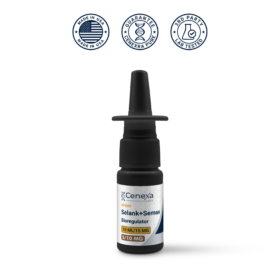
Semax+Selank Spray Blend
$109.99
Semax + Selank spray (10mg/5mg in 10ml sterile saline) is a synthetic peptide blend studied for cognitive performance and stress resilience.
0.2mL per spray.
 Earn $5 Cenexa Bucks when you buy this product!
Availability: In Stock
A portion of every order supports organizations focused on children’s cancer research & care. Help us make a difference.
 Buy More & Save!
Add selected quantity to cart above & discount is automatically applied.
| Quantity | Discount % | Price Per Item |
|---|---|---|
| 3-6 | 4 | $105.59 |
| 7-9 | 7 | $102.29 |
| 10-50 | 9 | $100.09 |
Quick Links
SEMAX + SELANK SPRAY
The Dual-Pathway Nootropic Peptide Blend
Product Format: Sterile Saline Solution | 10mg Semax + 5mg Selank | 10mL Spray. 0.2mL/300mcg per spray
Also known as: Semax/Selank Spray Blend, ACTH(4-10)/Tuftsin Analog Combination, Cognitive–Anxiolytic Peptide Blend Spray
This product is supplied as a pre-formulated 10mL sterile saline solution spray containing 10mg of Semax and 5mg of Selank — ready for spray-format research protocols with no reconstitution required.
Why Researchers Choose Semax + Selank Spray
Most nootropic peptide research focuses on a single pathway — either cognitive activation OR anxiolytic signaling. This blend pairs Semax’s BDNF/neurotrophic mechanisms with Selank’s GABAergic and immunomodulatory pathways, letting researchers investigate two complementary CNS systems in parallel. The pre-formulated sterile saline spray format also eliminates reconstitution variability, making it particularly useful for spray-format protocol studies where dosing consistency and rapid CNS access via olfactory pathways are central to the research design.
What It Is
Semax is a synthetic heptapeptide derived from the ACTH(4-7) fragment of adrenocorticotropic hormone, modified with a C-terminal Pro-Gly-Pro extension that significantly improves metabolic stability. Selank is a synthetic heptapeptide based on the endogenous immunomodulator tuftsin, similarly stabilized with a Pro-Gly-Pro tail. Both were developed at Russia’s Institute of Molecular Genetics and share an unusual property: efficient transport into the central nervous system via the olfactory pathway when delivered in spray form, bypassing first-pass metabolism.
Researchers became interested in the combination because the two peptides act on largely non-overlapping pathways — making the pairing well-suited for studies that need to investigate cognitive and stress-response mechanisms simultaneously rather than in isolation.
How It Works (What Makes It Interesting)
Studies suggest the Semax + Selank combination may influence CNS function through several converging mechanisms:
- BDNF/TrkB upregulation (Semax) – Increases brain-derived neurotrophic factor expression and TrkB receptor activation in the hippocampus and prefrontal cortex, pathways central to synaptic plasticity and memory consolidation
- GABAergic modulation (Selank) – Influences GABA receptor signaling and serotonergic tone, mechanisms studied in anxiolytic-like effects that occur without sedative or muscle-relaxant activity in animal models
- Monoaminergic activity – Both peptides modulate dopamine and serotonin turnover; Semax research shows activating effects on striatal monoamines while Selank shifts toward calming modulation, producing complementary research profiles
- Enkephalinase inhibition (Semax) – Slows enzymatic breakdown of endogenous opioid peptides, an upstream mechanism implicated in Semax’s neurotrophic and neuroprotective signaling
- Tuftsin-derived immune modulation (Selank) – Influences cytokine expression (IL-6, interferon-γ) and other neuroimmune markers, reflecting Selank’s origin as an analog of an endogenous immunoregulatory peptide
- Olfactory nose-to-brain transport – Spray-format delivery leverages direct olfactory and trigeminal nerve pathways, an active area of preclinical pharmacokinetic research
Common Research Applications
- Cognitive & Memory Research: BDNF expression studies, hippocampal long-term potentiation models, attention paradigms, ethanol-induced memory impairment models, learning consolidation studies
- Anxiety & Stress Models: GABAergic anxiolytic mechanism studies, generalized anxiety models, restraint stress paradigms, stress resilience under cognitive load, fear conditioning research
- Neuroprotection & Ischemia Research: Transient middle cerebral artery occlusion (tMCAO) models, infarct volume analysis, oxidative stress models, glutamate excitotoxicity studies, optic nerve injury models
- Neurotrophic Signaling: BDNF/TrkB pathway activation, NGF expression, c-Fos and CREB signaling, anti-apoptotic Bcl-2 family upregulation, neuronal survival assays
- Neuroimmune Research: Cytokine modulation studies (TNF-α, IL-6, interferon-γ), microglial activation, post-ischemic neuroinflammatory cascade analysis, cell adhesion molecule expression
- Olfactory Delivery Pharmacokinetics: Nose-to-brain peptide transport studies, olfactory pathway distribution, comparative bioavailability across delivery routes, CNS partitioning research
What You’re Getting
Every batch of our Semax + Selank Spray meets rigorous research standards:
- Exceeds 99% Purity – Each peptide verified by HPLC analysis prior to formulation
- Certificate of Analysis (COA) – Included with every order, showing purity and identity confirmation for both peptides
- Endotoxin-Free – Tested to ensure <1 EU/mg for cell culture applications
- Manufactured in USA – GMP-certified facilities with full traceability
- Pre-Formulated Sterile Saline Solution – 10mg Semax + 5mg Selank in 10mL, ready for spray-format research protocols with no reconstitution step required
- Fast Shipping – Most orders ship same day. We offer flat rate shipping and 2-3 day delivery in the USA
Click the “Add To Cart” button to grab your Semax + Selank Spray today!
Research Use Only
This product is intended strictly for laboratory research purposes. Not for human consumption, clinical use, veterinary applications, or any diagnostic or therapeutic purposes.
Semax + Selank Spray Blend Research & Scientific Overview
Jump to: Structure | Mechanism | Studies | Pharmacokinetics | Limitations | Lead Researcher | References
Semax + Selank Blend Molecular Structure & Chemical Properties
The Semax + Selank Blend combines two synthetic heptapeptides developed at the Institute of Molecular Genetics of the Russian Academy of Sciences during the late 1980s and 1990s. Both peptides share a common C-terminal Pro-Gly-Pro tripeptide tail engineered to confer enzymatic stability, but originate from different parent molecules – Semax from the ACTH(4-10) melanocortin fragment, and Selank from the immunomodulatory tetrapeptide tuftsin. The blend is studied in research settings as a multi-pathway tool for modeling stress-cognition interactions, with each peptide carrying its own distinct mechanistic literature.
Chemical Structure
[IMAGE PLACEHOLDER] Insert 2D chemical structure image of Semax here Image URL: https://pubchem.ncbi.nlm.nih.gov/image/imgsrv.fcgi?cid=9941958&t=l Alt text: Semax peptide molecular structure diagram Source credit: PubChem Position: Center-aligned below heading (left of pair)
[IMAGE PLACEHOLDER] Insert 2D chemical structure image of Selank here Image URL: https://pubchem.ncbi.nlm.nih.gov/image/imgsrv.fcgi?cid=11765600&t=l Alt text: Selank peptide molecular structure diagram Source credit: PubChem Position: Center-aligned below heading (right of pair)
2D molecular structures of Semax and Selank (Source: PubChem)
Technical Specifications
| Property | Semax | Selank |
|---|---|---|
| CAS Number | 80714-61-0 | 129954-34-3 |
| PubChem CID | 9941958 | 11765600 |
| Molecular Formula | C37H51N9O10S (subscripted) | C33H57N11O9 (subscripted) |
| Molecular Weight | 813.92 g/mol | 751.9 g/mol |
| Amino Acid Sequence | Met-Glu-His-Phe-Pro-Gly-Pro | Thr-Lys-Pro-Arg-Pro-Gly-Pro |
| Parent Molecule | ACTH(4-10) fragment | Tuftsin (Thr-Lys-Pro-Arg) |
| Half-Life (Plasma) | 2-30 minutes (rat models) | Approximately 30 minutes (rat models) |
| Stability | Stable lyophilized; PGP tail resists peptidase degradation | Stable lyophilized; PGP tail resists peptidase degradation |
| Solubility | Water soluble | Water soluble |
| Storage | Lyophilized: -20 degrees C; Reconstituted: 2-8 degrees C (stability varies by protocol) | Lyophilized: -20 degrees C; Reconstituted: 2-8 degrees C (stability varies by protocol) |
Both peptides are heptapeptides with identical C-terminal Pro-Gly-Pro motifs that protect against carboxypeptidase cleavage – a shared design feature underlying their characteristic short plasma half-life paired with prolonged biological activity.
Semax + Selank Blend Mechanism of Action
Research suggests the blend’s effects derive from two largely non-overlapping mechanistic profiles that converge on shared downstream targets. Semax research emphasizes melanocortin-derivative signaling and neurotrophic activation, while Selank research focuses on GABAergic modulation and immunomodulatory signaling. Both peptides have been studied for inhibition of enkephalin-degrading enzymes, providing a partial mechanistic overlap.
BDNF/TrkB Signaling – Neurotrophic Activation (Semax)
Studies in rat models demonstrate that Semax administration rapidly elevates brain-derived neurotrophic factor (BDNF) expression in the hippocampus and basal forebrain[1,2]:
- A single 50 mcg/kg dose produced approximately threefold increase in hippocampal BDNF mRNA within hours
- Approximately 1.6-fold increase in TrkB receptor phosphorylation
- Downstream activation of MAPK/ERK and PI3K/Akt pathways
- Sustained changes in NGF expression observed in subsequent hours
GABA-A Receptor Allosteric Modulation (Selank)
Research indicates Selank functions as a positive allosteric modulator of GABA-A receptors through mechanisms distinct from classical benzodiazepines[3,4]:
- Modulation of [3H]GABA binding kinetics in receptor preparations
- Alteration of GABA-A receptor subunit gene expression (alpha-2, alpha-3, gamma-2)
- Anxiolytic profile observed in rodent models without sedation
- Binding sites appear partially distinct from benzodiazepine sites
Enkephalinase Inhibition (Both Peptides)
Both Semax and Selank have been reported to inhibit enkephalin-degrading enzymes (neprilysin), prolonging endogenous opioid peptide activity in synaptic clefts[5]. This shared mechanism may contribute to mood-related and analgesic signaling observed for both compounds.
Monoaminergic and Cytokine Modulation
Semax research documents effects on dopaminergic and serotonergic systems, including altered serotonin turnover in rodent hypothalamus[6]. Selank, derived from tuftsin, additionally modulates IL-6 expression and T-helper cytokine balance, retaining immunomodulatory activity from its parent peptide[7].
[CALLOUT BOX – Highlighted] Key Mechanistic Insight: The Semax + Selank Blend offers layered signaling – Semax-associated neurotrophic activation paired with Selank-associated GABAergic and immunomodulatory effects. However, peer-reviewed research specifically on combined administration of both peptides remains substantially limited. [END CALLOUT BOX]
Semax + Selank Blend Research Applications & Key Findings
Cognitive and Memory Research
Semax has been examined extensively in rodent learning and memory paradigms. Studies in intact rat hippocampus demonstrate modulation of intracellular signaling genes including MAPK10 and amyloid precursor protein (APP), indicating activity even in non-pathological conditions[8]:
- Enhanced conditioned avoidance reactions in rodent behavioral testing
- Improved memory consolidation correlated with measured BDNF/TrkB increases
- Sharpened attention measures in operant paradigms
Anxiolytic Research
Selank is the more extensively studied compound for anxiolytic endpoints. Research has compared its activity to classical benzodiazepines in rodent stress models[9,10]:
- Anxiolytic profile in unpredictable chronic mild stress paradigms (rat models)
- Reduced anxiety-like behavior in elevated plus maze testing
- Synergistic effects observed when co-administered with diazepam in stress models
- No documented sedation, tolerance, or withdrawal syndrome in published rodent data
Neuroprotection Research
Semax has been investigated in cerebral ischemia models, including middle cerebral artery occlusion (MCAO) in rats[11,12]:
- Reduced infarct volume in MCAO models
- Decreased neuronal apoptosis in peri-infarct tissue
- Suppressed mRNA expression of inflammatory mediators (Il1b, Il6, Tnfa, Cxcl2) at 24 hours post-injury
- CREB activation and JNK pathway inhibition in protein-level studies
Russian clinical research has examined Semax in acute ischemic stroke patients, with reports of altered neurological recovery in combined intensive therapy protocols[13]. These studies have not been independently replicated in Western clinical trials.
Combined Administration Research
Published peer-reviewed data on combined Semax + Selank administration is substantially limited. Most discussion of the blend appears in narrative reviews and preclinical commentary rather than randomized comparative studies, and the theoretical rationale derives from extrapolation of individual-compound mechanisms.
[CALLOUT BOX – Highlighted] Important Context: The majority of efficacy data derives from animal models and Russian-based clinical research with limited international replication. No large-scale, internationally conducted clinical trials of the blend exist in peer-reviewed literature. [END CALLOUT BOX]
Semax + Selank Blend Pharmacokinetics & Metabolism
Absorption & Distribution
Both peptides have been studied across multiple research delivery routes including subcutaneous, intraperitoneal, and mucosal administration in rodent models[14]:
- Mucosal absorption demonstrated in rodent studies with detectable brain penetration
- Cerebrospinal fluid concentrations of Semax reach measurable levels within approximately 30 minutes of mucosal administration in rat models
- Distribution to multiple central nervous system regions documented for both compounds
- Pro-Gly-Pro motif extends bioavailability windows relative to unmodified parent peptides
Metabolism & Elimination
Both compounds exhibit a defining pharmacokinetic feature – rapid plasma clearance paired with sustained biological effects[15]:
- Semax plasma half-life: approximately 2-30 minutes (rat models)
- Selank plasma half-life: approximately 30 minutes (rat models)
- Semax metabolizes to Pro-Gly-Pro (PGP), itself biologically active
- Aminopeptidase activity cleaves N-terminal residues, generating intermediate fragments
- Downstream effects (BDNF mRNA upregulation, enkephalinase inhibition) persist 12-24 hours despite rapid parent peptide clearance
Excretion Pathways
Limited pharmacokinetic data indicates both peptides undergo enzymatic degradation to constituent amino acids and small fragments, with renal elimination of metabolites the presumed primary route. Detailed excretion kinetics have not been comprehensively characterized in published literature for either compound.
Administration Routes in Research
- Mucosal administration – Most common route in Russian preclinical and clinical research
- Subcutaneous injection – Used in systemic delivery rodent studies
- Intraperitoneal injection – Standard in mechanistic rodent research
- Intravenous injection – Used primarily for pharmacokinetic characterization
Common Model Organisms
- Rats – Primary preclinical model (Wistar, Sprague-Dawley); majority of mechanistic data
- Mice – Used for behavioral paradigms and gene expression studies
- Cell culture – IMR-32 neuroblastoma cells, primary neurons, astrocyte cultures
Research Limitations & Regulatory Status
Critical Gaps in Current Evidence
Lack of Robust Combined-Administration Data
- No large-scale peer-reviewed clinical trials of the combined blend in Western literature
- Combined pharmacokinetics, drug-interaction effects, and synergy data largely theoretical
- Most evidence draws from individual-compound studies
- Optimal dosing ratios for combined administration unestablished
Mechanistic Understanding Gaps
- Semax does not appear to act primarily through classical melanocortin receptors despite its ACTH origin, and its primary high-affinity binding target remains incompletely characterized
- Selank’s interaction with GABA-A receptors involves indirect modulation through mechanisms not fully resolved
- Functional consequences of shared enkephalinase inhibition in combined administration are not well studied
Long-Term Safety Considerations
- Chronic combined-administration safety unstudied beyond short-term rodent protocols
- Long-term effects on neurotrophic signaling balance unknown
- Interactions with concurrent medications uncharacterized
- Reproductive and developmental toxicity inadequately studied for either compound
Regulatory & Competitive Sport Status
FDA Position
Neither Semax nor Selank has received FDA approval for any indication in the United States:
- Both classified as unapproved drug substances
- Both currently barred from 503A/503B compounding pharmacy preparation under FDA Category 2 guidance
- Not recognized as Generally Recognized as Safe (GRAS)
- Available in the United States only as research chemicals for laboratory use
WADA Status
WADA classification requires careful consideration as published sources differ on current listing. Independent verification with the current WADA Prohibited List is recommended before any sport-related research:
- Both compounds may fall under Section S0 (Non-Approved Substances) as substances without governmental regulatory health authority approval for human therapeutic use
- The S0 catch-all provision applies broadly to unapproved peptides
- Athletes subject to anti-doping testing should verify current status with their governing body, as classifications are subject to change
Research Classification: The Semax + Selank Blend is available only for laboratory research use. It is not intended for human consumption, medical use, or veterinary applications. All research must be conducted under appropriate ethical oversight and regulatory compliance with institutional review board approval where applicable.
Lead Researcher Spotlight
Academician Nikolai F. Myasoedov, PhD, DSc
Institute of Molecular Genetics
Russian Academy of Sciences, Moscow, Russia
Academician Nikolai Myasoedov has been a central figure in the development and characterization of regulatory peptide compounds at the Institute of Molecular Genetics, including both Semax and Selank. His laboratory and collaborators have published extensively on the molecular mechanisms, neurochemistry, and preclinical applications of short regulatory peptides bearing the Pro-Gly-Pro stabilizing motif, establishing the design principles underlying both compounds.
Key research focus areas include:
- Synthesis and characterization of ACTH-derived and tuftsin-derived heptapeptides
- Mechanistic studies of BDNF and NGF expression following peptide administration
- Neuroprotective and nootropic activity in preclinical stroke and ischemia models
- Transcriptomic analysis of regulatory peptide effects in central nervous system tissue
His work, conducted alongside collaborators including Lyudmila Andreeva, Oleg Dolotov, and Sergey Seredenin (the latter associated specifically with Selank anxiolytic research), forms the foundational evidence base for both compounds.
Disclaimer: This spotlight is provided for educational purposes to acknowledge scientific contributions to Semax and Selank research. Cenexa Labs has no affiliation with Academician Myasoedov, the Institute of Molecular Genetics, or the Russian Academy of Sciences, and this information does not constitute an endorsement of any products or services.
References
- Dolotov, O.V., Karpenko, E.A., Inozemtseva, L.S., Seredenina, T.S., Levitskaya, N.G., Rozyczka, J., Dubynina, E.V., Novosadova, E.V., Andreeva, L.A., Alfeeva, L.Y., Kamensky, A.A., Grivennikov, I.A., Myasoedov, N.F., & Engele, J. (2006). Semax, an analog of ACTH(4-10) with cognitive effects, regulates BDNF and trkB expression in the rat hippocampus. Brain Research, 1117(1), 54-60. PubMed
- Dolotov, O.V., Karpenko, E.A., Seredenina, T.S., Inozemtseva, L.S., Levitskaya, N.G., Zolotarev, Y.A., Kamensky, A.A., Grivennikov, I.A., Engele, J., & Myasoedov, N.F. (2006). Semax, an analogue of adrenocorticotropin (4-10), binds specifically and increases levels of brain-derived neurotrophic factor protein in rat basal forebrain. Journal of Neurochemistry, 97 Suppl 1, 82-86. PubMed
- Kasian, A., Kolomin, T., Andreeva, L., Bondarenko, E., Myasoedov, N., Slominsky, P., & Shadrina, M. (2017). Peptide-based Anxiolytics: The Molecular Aspects of Heptapeptide Selank Biological Activity. Protein and Peptide Letters, 24(11), 1041-1047. PubMed
- Volkova, A., Shadrina, M., Kolomin, T., Andreeva, L., Limborska, S., Myasoedov, N., & Slominsky, P. (2016). Selank Administration Affects the Expression of Some Genes Involved in GABAergic Neurotransmission. Frontiers in Pharmacology, 7, 31. PubMed
- Vyunova, T.V., Andreeva, L.A., Shevchenko, K.V., & Myasoedov, N.F. (2018). Peptide-based Anxiolytics: The Molecular Aspects of Heptapeptide Selank Biological Activity. Protein and Peptide Letters, 25(10), 914-923. PubMed
- Eremin, K.O., Kudrin, V.S., Saransaari, P., Oja, S.S., Grivennikov, I.A., Myasoedov, N.F., & Rayevsky, K.S. (2005). Semax, an ACTH(4-10) analogue with nootropic properties, activates dopaminergic and serotoninergic brain systems in rodents. Neurochemical Research, 30(12), 1493-1500. PubMed
- Uchakina, O.N., Uchakin, P.N., Miasoedov, N.F., Andreeva, L.A., Shcherbenko, V.E., Mezentseva, M.V., Gabaeva, M.V., Sokolov, O.Y., Zozulya, A.A., & Ershov, F.I. (2008). Immunomodulatory effects of Selank in patients with anxiety-asthenic disorders. Zhurnal Nevrologii i Psikhiatrii imeni S.S. Korsakova, 108(5), 71-75. PubMed
- Filippenkov, I.B., Stavchansky, V.V., Denisova, A.E., Yuzhakov, V.V., Sevan’kaeva, L.E., Sudarkina, O.Y., Dmitrieva, V.G., Gubsky, L.V., Myasoedov, N.F., Limborska, S.A., & Dergunova, L.V. (2020). Novel Insights into the Protective Properties of ACTH(4-7)PGP (Semax) Peptide at the Transcriptome Level Following Cerebral Ischaemia-Reperfusion in Rats. Genes, 11(6), 681. PubMed
- Kozlovskaya, M.M., Kozlovskii, I.I., Val’dman, E.A., & Seredenin, S.B. (2003). Selank and short peptides of the tuftsin family in the regulation of adaptive behavior in stress. Neuroscience and Behavioral Physiology, 33(7), 639-642. PubMed
- Semenova, T.P., Kozlovskaia, M.M., Zuikov, A.V., Kozlovskii, I.I., & Zakharova, N.M. (2017). Peptide Selank Enhances the Effect of Diazepam in Reducing Anxiety in Unpredictable Chronic Mild Stress Conditions in Rats. Acta Naturae, 9(1), 99-103. PubMed
- Stavchansky, V.V., Yuzhakov, V.V., Botsina, A.Y., Skvortsova, V.I., Bondurko, L.N., Tsyganova, M.G., Limborska, S.A., Myasoedov, N.F., & Dergunova, L.V. (2011). The effect of Semax and its C-end peptide PGP on the morphology and proliferative activity of rat brain cells during experimental ischemia. Molecular Biology, 45(6), 1014-1023. PubMed
- Medvedeva, E.V., Dmitrieva, V.G., Povarova, O.V., Limborska, S.A., Skvortsova, V.I., Myasoedov, N.F., & Dergunova, L.V. (2017). The peptide semax affects the expression of genes related to the immune and vascular systems in rat brain focal ischemia: genome-wide transcriptional analysis. BMC Genomics, 18(1), 553. PubMed
- Gusev, E.I., Skvortsova, V.I., Miasoedov, N.F., Nezavibatko, V.N., Zhuravleva, E.I., & Vanichkin, A.V. (1997). Effectiveness of semax in acute period of hemispheric ischemic stroke (a clinical and electrophysiological study). Zhurnal Nevrologii i Psikhiatrii imeni S.S. Korsakova, 97(6), 26-34. PubMed
- Zolotarev, Y.A., Dadayan, A.K., Bocharov, E.V., Borisov, Y.A., Vaskovsky, B.V., Dorokhova, E.M., & Myasoedov, N.F. (2013). New development in the tritium labelling of peptides and proteins using solid catalytic isotopic exchange with spillover-tritium. Amino Acids, 45(2), 271-278. PubMed
- Potaman, V.N., Antonova, L.V., Dubynin, V.A., Zaitsev, D.A., Kamensky, A.A., Myasoedov, N.F., & Nezavibatko, V.N. (1991). Entry of the synthetic ACTH(4-10) analogue into the rat brain following intravenous injection. Neuroscience Letters, 127(1), 133-136. PubMed
All references open in new window. These citations are provided for educational and research purposes only. This information is not intended to diagnose, treat, cure, or prevent any disease. The Semax + Selank Blend is intended for laboratory research use only.
The Cenexa Labs Gold Standard
Most peptide sites simply resell vials from overseas labs with little oversight or testing (Much of it is either fake or laced with contaminants). At Cenexa Labs, we manufacture our own peptides under strict USA-based standards…right here IN THE USA. From synthesis to lyophilization to final vial, every step is handled under our direct control — so you never have to question what you’re getting.
We might not be the cheapest, but you can count on our peptides being 100% legit and free from contaminants, heavy metals and toxins.
Why Researchers Choose Cenexa Labs
- End-to-End Chain of Custody: Every batch is logged, tested, and traceable — no middlemen, no relabeling, no guesswork.
- Lot-Linked COAs: Each vial’s lot number ties directly to third-party HPLC/MS results. No recycled or generic COAs.
- We’re the Manufacturer: Because we produce in-house, we control purity, potency, and compliance — instead of reselling from anonymous overseas labs.
- Verified Purity, Every Time: 99%+ purity confirmed on every batch by independent labs, not just claimed on a label.
- GMP-Aligned, USA Based: Manufactured domestically in controlled GMP, ISO 9001-audited facilities.
- Fast, Reliable Fulfillment: Orders placed by 2pm CST ship the same business day. Free USPS Priority on orders $300+. $9.95 Flat rate shipping on all other orders with 2-3 day delivery.
- Backed by Trust: Over 18,000 researchers nationwide rely on Cenexa Labs for consistent, verifiable peptides.
- Room Temperature (Unmixed): Lyophilized (powder) peptides are stable for 3–4 months at room temperature if kept sealed and away from direct light.
- Freezer (Unmixed): For long-term storage, place vials in a freezer. Depending on temperature, peptides can remain stable for 1–3 years.
- After Reconstitution: Once mixed with bacteriostatic water, peptides must be stored in the refrigerator and remain stable for up to 30 days.
All Cenexa peptides are manufactured 100% end-to-end here in the USA using the Lyophilization (Freeze Drying) process. This ensures maximum stability and quality.
Best Practice:
Only reconstitute your peptides when you’re ready to begin using them. Until then, keep vials in their lyophilized powder form, stored in the freezer and away from light.
Fast Processing: We strive to ship same-day. During high-volume times it may take 2–3 days for your package to enter the mailstream. (You’ll see a notice at checkout and can upgrade if you need guaranteed same-day shipping.)
- Flat Rate Shipping: $9.95 on all orders (USPS Priority Mail 2–3 days).
- Free Shipping: Orders over $300 ship free.
- Expedited Options: Faster methods available at checkout.
Important: Orders paid by eCheck won’t ship until payment clears our bank (usually 2–3 business days after it leaves your account).
All products are carefully packaged for safe arrival.
Need help with your order or delivery?
- Call us at +1 800 123 4567
- [email protected]
See What Some Of Our 18,000+ Happy Customers Have To Say…
Related products
-
New
PT-141 Peptide Spray
$79.99 Select options This product has multiple variants. The options may be chosen on the product page -
Peptides
Oxytocin Spray
$97.99Original price was: $97.99.$87.99Current price is: $87.99. Select options This product has multiple variants. The options may be chosen on the product page -
Peptides
Semax Spray
$79.99Original price was: $79.99.$74.99Current price is: $74.99. Select options This product has multiple variants. The options may be chosen on the product page -
Peptides
DSIP
$41.99 – $99.99Price range: $41.99 through $99.99 Select options This product has multiple variants. The options may be chosen on the product page