Earn $3 Cenexa Bucks when you buy this product!
 Buy More & Save!
Add selected quantity to cart above & discount is automatically applied.
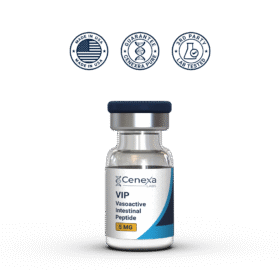
VIP Peptide Research & Scientific Overview
Jump to: Structure | Mechanism | Studies | Pharmacokinetics | Protocols | Limitations | Lead Researcher | References
VIP Molecular Structure & Chemical Properties
Vasoactive Intestinal Peptide represents one of the most extensively studied neuropeptides in physiological research, with investigations spanning over five decades since its initial isolation in 1970. Originally discovered due to its potent vasodilatory effects, this 28-amino acid peptide has since been shown to function as a critical neurotransmitter and neuroendocrine factor throughout the central and peripheral nervous systems. VIP’s evolutionary conservation across species – with over 85% sequence similarity among mammals – underscores its fundamental biological importance. Unlike many peptides, VIP exhibits activity across multiple organ systems including gastrointestinal, respiratory, cardiovascular, and immune tissues, making it a unique target for research into diverse physiological processes.
Chemical Structure
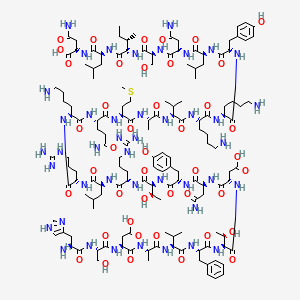 |
2D molecular structure (Source: PubChem)
Technical Specifications
| Property | Value |
|---|---|
| CAS Number | 40077-57-4 |
| Molecular Formula | C147H237N43O43S (subscripted) |
| Molecular Weight | 3326.77 g/mol |
| Amino Acid Sequence | His-Ser-Asp-Ala-Val-Phe-Thr-Asp-Asn-Tyr-Thr-Arg-Leu-Arg-Lys-Gln-Met-Ala-Val-Lys-Lys-Tyr-Leu-Asn-Ser-Ile-Leu-Asn-NH2 |
| Half-Life (Plasma) | 1–2 minutes (human studies) |
| Stability | Rapidly degraded by peptidases; requires stabilization for therapeutic use |
| Solubility | Water soluble; soluble in 1% acetic acid |
| Storage | Lyophilized: -20°C; Reconstituted: 2–8°C (stability varies by formulation) |
VIP belongs to the secretin/glucagon superfamily and adopts an alpha-helical conformation when bound to receptors or in the presence of anionic lipid bilayers. The peptide’s C-terminal is amidated, a modification essential for full biological activity.
VIP Mechanism of Action
VIP peptide exerts its diverse biological effects through activation of two primary G-protein-coupled receptors, VPAC1 and VPAC2, both members of the class II GPCR family. Unlike peptides with singular mechanisms, VIP triggers multiple interconnected signaling cascades that account for its pleiotropic physiological actions across different tissue types and cellular contexts.
Primary Receptor Systems
VPAC Receptor Activation – cAMP/PKA Pathway
VIP binds with equal affinity to both VPAC1 and VPAC2 receptors, triggering G-alpha-mediated signaling cascades[1]. Key features of this pathway include:
- Adenylyl cyclase activation leading to increased intracellular cAMP concentrations
- Protein kinase A (PKA) phosphorylation of downstream signaling proteins
- CREB transcription factor activation regulating gene expression including circadian rhythm genes
- Differential tissue distribution of VPAC1 (widely expressed) versus VPAC2 (more restricted)
Studies demonstrate that VPAC receptor activation mediates VIP’s effects on smooth muscle relaxation, vasodilation, and secretory functions across multiple organ systems[2].
Calcium Signaling Modulation
Research in smooth muscle cells reveals VIP’s effects on intracellular calcium dynamics[3]:
- Acceleration of calcium sequestration and extrusion from cells
- Hyperpolarization of cell membranes
- Increased potassium channel permeability
- Inhibition of calcium-dependent contractile responses
This mechanism underlies VIP’s potent smooth muscle relaxant properties in airways, blood vessels, and gastrointestinal tissues.
MAPK Pathway Signaling
Recent investigations demonstrate VIP activation of mitogen-activated protein kinase pathways[4]:
- p38 MAPK phosphorylation mediating secretory cell differentiation
- ERK pathway activation contributing to proliferative and protective effects
- MEK1 MAPK modulation involved in intestinal epithelial responses
- Coordinated regulation of inflammatory mediator production
These pathways appear particularly relevant to VIP’s immunomodulatory and tissue-protective functions.
Nitric Oxide System Interaction
VIP demonstrates complex interactions with nitric oxide signaling pathways[5]:
- Modulation of NO-mediated vasodilation independent of direct NO synthesis
- Synergistic effects with NO in airway smooth muscle relaxation
- Protection against NO synthase inhibition effects
- Influence on vascular tone through NO-dependent mechanisms
Immune Cell Modulation
VIP peptide exhibits potent immunomodulatory effects through receptor-mediated mechanisms[6]:
- Inhibition of pro-inflammatory cytokine production (TNF-alpha, IL-12, IL-18)
- Enhancement of regulatory T-cell function promoting immune tolerance
- Suppression of NFkappaB and AP-1 transcription factors reducing inflammatory gene expression
- Modulation of chemokine receptor activity affecting immune cell trafficking
VIP Research Applications & Key Findings
Respiratory System Research
Bronchodilation and Airway Function
Extensive research demonstrates VIP’s role as a non-adrenergic, non-cholinergic neurotransmitter in airways[7]. Key findings include:
- Potent bronchodilator activity comparable to beta-adrenergic agonists in preclinical models
- Protection against histamine-induced bronchoconstriction in asthmatic subjects
- Synergistic effects with nitric oxide on airway smooth muscle relaxation
- Reduced VIP innervation observed in severely asthmatic patients at autopsy
Studies in VIP knockout mice reveal histopathologic features of chronic airway inflammation, suggesting endogenous VIP plays a homeostatic role in respiratory tissues[8].
Inflammatory Lung Disease Models
Research in experimental models of pulmonary inflammation shows[9]:
- Suppression of cigarette smoke-induced alveolar epithelial apoptosis
- Reduction in inflammatory cell infiltration in lung tissues
- Attenuation of vascular and bronchial remodeling processes
- Limited clinical trial data in human COPD with mixed results
Cardiovascular Research
Vascular Effects and Blood Pressure Regulation
VIP demonstrates potent cardiovascular actions in both animal models and humans[10]:
- Coronary vasodilation at femtomolar to picomolar concentrations
- Reduction in pulmonary arterial pressure in pulmonary hypertension models
- Systemic vasodilation via VPAC2 receptor activation and potassium channel opening
- Positive inotropic and chronotropic effects on cardiac muscle
Human studies demonstrate VIP reduces mean arterial pressure by 10-15% during infusion, with effects mediated through both VPAC1 and VPAC2 receptors[11].
Pulmonary Hypertension Studies
A pivotal human trial in primary pulmonary hypertension patients found[12]:
- Improved pulmonary hemodynamics with inhaled VIP administration
- Decreased pulmonary arterial pressure and pulmonary vascular resistance
- Reduced smooth muscle cell proliferation in vitro
- 200 mcg per day inhalation demonstrated safety and preliminary efficacy
VIP-deficient mice develop moderate pulmonary hypertension, supporting a physiological role in pulmonary vascular homeostasis.
Gastrointestinal Research
Motility and Secretory Function
VIP functions as a primary inhibitory neurotransmitter in the enteric nervous system[13]:
- Smooth muscle relaxation in esophageal, gastric, and intestinal tissues
- Stimulation of water and electrolyte secretion in intestinal mucosa
- Inhibition of gastric acid secretion while promoting bicarbonate release
- Regulation of sphincter tone throughout the digestive tract
Genetic deletion of VIP in mice produces severe gastrointestinal phenotypes including intestinal stenosis, impaired transit, and altered intestinal morphology[14].
Inflammatory Bowel Disease Models
Preclinical investigations demonstrate therapeutic potential[15]:
- Reduced inflammation severity in TNBS-induced colitis models
- Enhanced intestinal barrier function and tight junction integrity
- Decreased inflammatory cytokine expression in intestinal tissues
- Protection against radiation-induced intestinal injury
Immunological Research
Anti-Inflammatory Actions
VIP exhibits profound immunomodulatory properties across multiple cell types[16]:
- Inhibition of macrophage activation reducing reactive oxygen species production
- Suppression of dendritic cell maturation promoting tolerogenic phenotypes
- Enhancement of regulatory T-cell induction supporting immune tolerance
- Reduction in autoimmune disease severity in multiple animal models
Studies demonstrate VIP downregulates expression of pro-inflammatory genes while upregulating anti-inflammatory mediators.
Infection and Sepsis Models
Research in bacterial infection models reveals complex effects[17]:
- Reduced pro-inflammatory cytokine production in infected macrophages
- Enhanced intracellular bacterial survival in some infection models
- Potential therapeutic window requiring careful timing of administration
- Mixed results in sepsis models depending on disease stage
Neurological Research
Neuroprotection Studies
Investigations in models of neurodegeneration demonstrate[18]:
- Protection against beta-amyloid toxicity in Alzheimer’s disease-relevant models
- Reduced oxidative stress and apoptosis in neuronal cultures
- Enhanced neuronal survival through receptor-mediated mechanisms
- Lipophilic VIP derivatives show improved blood-brain barrier penetration
Circadian Rhythm Regulation
VIP neurons in the suprachiasmatic nucleus serve critical functions[19]:
- Synchronization of circadian oscillations among SCN neurons
- Light-induced phase shifts of circadian rhythms
- Regulation of Per1 and Per2 clock gene expression
- VIP-deficient mice show disrupted circadian rhythms
VIP Pharmacokinetics & Metabolism
Absorption & Distribution
VIP exhibits unique pharmacokinetic characteristics that limit its therapeutic utility. Following administration in human studies[20]:
- Intravenous infusion produces immediate systemic effects with rapid distribution
- Volume of distribution approximately 14 ml/kg indicating limited tissue penetration
- Plasma protein binding characteristics remain incompletely characterized
- Inhaled administration achieves local pulmonary effects with minimal systemic exposure
Studies using radiolabeled VIP demonstrate widespread receptor distribution matching the peptide’s diverse physiological effects. However, intact peptide detection in tissues proves challenging due to rapid metabolism.
Metabolism & Elimination
VIP undergoes extremely rapid metabolic clearance, representing a major obstacle to clinical use[21]:
- Plasma half-life of 1-2 minutes in human studies following intravenous administration
- Metabolic clearance rate approximately 9 ml/kg/min
- Enzymatic degradation by peptidases including neutral endopeptidase
- Hepatic metabolism contributing significantly to first-pass clearance
Research demonstrates VIP clearance occurs through multiple pathways:
- Peptidase activity cleaving at specific amide bonds
- Hepatic uptake and intracellular degradation
- Pulmonary metabolism during circulatory passage
- Renal filtration of peptide fragments
The rapid degradation has prompted development of modified analogs incorporating:
- N-terminal fatty acid acylation for extended half-life
- Side-chain stapling for protease resistance
- PEGylation to reduce renal clearance
- Receptor-selective modifications
Excretion Pathways
Limited data on intact VIP excretion reflects its rapid metabolism[22]:
- Renal elimination of small peptide fragments following enzymatic cleavage
- Hepatic clearance via uptake and intracellular degradation
- Pulmonary metabolism contributing to systemic clearance
- Minimal intact peptide detected in urine due to complete degradation
The disconnect between VIP’s minute-scale plasma half-life and its prolonged biological effects (hours) in some systems suggests either tissue retention, generation of active metabolites, or persistent activation of signaling cascades beyond peptide clearance.
VIP Research Protocols & Administration
Dosing in Published Research
Research investigations have employed diverse VIP doses depending on species, model, and administration route:
- Human intravenous infusion: 0.6-3.3 pmol/kg/min in pharmacokinetic studies
- Human pulmonary hypertension trial: 200 mcg per day via inhalation
- Human asthma studies: 100 mcg per day via inhalation for bronchodilation testing
- Rat models: Wide range from nanomolar to micromolar concentrations depending on route
- Mouse models: Typically 1-10 mcg per dose for systemic effects
- Cell culture studies: 10 to the power of -12 to 10 to the power of -8 M concentrations
Important: These are experimental doses used in research studies and cannot be extrapolated to other species due to significant differences in VIP receptor expression patterns, enzymatic degradation rates, pharmacokinetic parameters, and tissue-specific responses. Species-specific factors profoundly influence both efficacy and safety profiles.
Administration Routes in Research
Multiple delivery methods have been investigated across species:
- Intravenous infusion – Used in human pharmacokinetic studies and animal cardiovascular research; provides precise dose control
- Inhalation delivery – Investigated for respiratory applications and pulmonary hypertension; reduces systemic exposure
- Subcutaneous injection – Applied in some immunological research protocols
- Intranasal administration – Explored for CNS delivery bypassing blood-brain barrier
- Intraperitoneal injection – Common route in rodent research studies
- Topical application – Investigated for localized effects in specific tissues
Common Model Organisms
VIP has been studied across diverse experimental systems:
- Humans – Limited clinical trials in pulmonary hypertension, asthma, COVID-19, and other conditions
- Mice – Extensive research including VIP knockout models revealing physiological roles
- Rats – Cardiovascular, gastrointestinal, and neurological research protocols
- Dogs – Early cardiovascular studies characterizing VIP’s hemodynamic effects
- Pigs – Gastrointestinal and pancreatic secretion research
- Cell cultures – Smooth muscle cells, immune cells, neurons, epithelial cells across multiple species
Research Limitations & Regulatory Status
Critical Gaps in Current Evidence
Despite over 50 years of research, VIP faces substantial obstacles that limit clinical translation and restrict its availability to research-only applications.
Limited Human Clinical Data
The most significant limitation is the paucity of successful human clinical trials:
- Few completed randomized controlled trials with most showing negative or inconclusive results
- Small-scale pulmonary hypertension trial showed preliminary efficacy but lacked large-scale validation
- COVID-19 trials produced negative results despite promising preclinical rationale
- Asthma and COPD trials demonstrated limited or transient benefits
- No FDA-approved therapeutic indications established
A 2023 randomized controlled trial of aviptadil (synthetic VIP) for COVID-19-associated respiratory failure showed no significant benefit, exemplifying the translational challenges[23].
Pharmacokinetic Challenges
Fundamental obstacles to therapeutic development remain unresolved:
- Extremely short plasma half-life (1-2 minutes) requiring continuous infusion or frequent dosing
- Rapid enzymatic degradation limiting systemic exposure and duration of action
- Poor oral bioavailability restricting administration routes
- Modified analogs show improved stability but reduced receptor affinity in some cases
- Optimal formulation strategies remain under investigation
Mechanistic Understanding Gaps
Critical aspects of VIP biology require clarification:
- Tissue-specific receptor subtype contributions incompletely defined
- Relationship between rapid clearance and prolonged biological effects unclear
- Potential active metabolites not fully characterized
- Differential signaling through VPAC1 versus VPAC2 in disease contexts needs elucidation
- Cross-talk between VIP and other neuropeptide systems requires further study
Safety and Tolerability Considerations
Long-term safety profile remains inadequately characterized:
- Cardiovascular effects including hypotension may limit dosing in some populations
- Chronic administration effects in humans unknown
- Potential for tachyphylaxis or receptor desensitization unstudied
- Drug interaction potential incompletely evaluated
- Immunogenicity of repeated dosing not thoroughly assessed
Regulatory & Competitive Sport Status
FDA Position
VIP and its synthetic analog aviptadil have limited regulatory status:
- No FDA-approved therapeutic indications for VIP or aviptadil
- Aviptadil received FDA Fast Track Designation for COVID-19 but failed to gain approval
- Emergency IND authorization granted during COVID-19 pandemic but not converted to approval
- VIP classified as a research peptide without recognized therapeutic use
- Not available for medical compounding or clinical use outside research protocols
WADA Status
VIP does not appear on the World Anti-Doping Agency prohibited substance list:
- Not explicitly prohibited as an endogenous neuropeptide
- However, any synthetic forms or analogs could fall under prohibited categories if used for performance enhancement
- Athletes should verify current status with anti-doping authorities
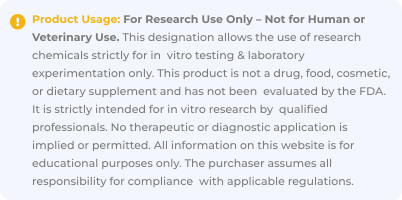
Research Classification: VIP is available only for laboratory research use. It is not intended for human consumption, medical use, or veterinary applications. All research must be conducted under appropriate ethical oversight and regulatory compliance with institutional review board approval where applicable.
Lead Researcher Spotlight
Dr. Sami I. Said, MD
Distinguished University Professor Emeritus
Stony Brook University School of Medicine, Stony Brook, New York
Dr. Sami I. Said stands as the pioneering figure in VIP research, having co-discovered this peptide with Dr. Viktor Mutt in 1970 from porcine duodenum extracts. His initial observation of vasodilatory peptides in lung tissue led to the systematic isolation and characterization of VIP, launching five decades of research into this neuropeptide’s diverse biological functions.
Dr. Said’s research contributions span the breadth of VIP biology:
- Initial discovery and structural characterization of VIP as a 28-amino acid peptide with potent vasodilatory properties
- Demonstration of VIP’s role as a non-adrenergic, non-cholinergic neurotransmitter in multiple organ systems
- Characterization of VIP’s immunomodulatory properties and potential therapeutic applications in inflammatory diseases
- Studies establishing VIP’s neuroprotective effects and role in neurological homeostasis
- Investigation of VIP analogs and modified peptides with improved pharmacological properties
His laboratory has published extensively on VIP’s cardiovascular, respiratory, immunological, and neurological functions, establishing the fundamental knowledge base that continues to guide contemporary research. Dr. Said’s work has inspired generations of researchers to explore VIP’s therapeutic potential across diverse medical applications.
Disclaimer: This spotlight is provided for educational purposes to acknowledge scientific contributions to VIP research. Cenexa Labs has no affiliation with Dr. Sami I. Said or Stony Brook University, and this information does not constitute an endorsement of any products or services.
References
- Harmar AJ, Fahrenkrug J, Gozes I, Laburthe M, May V, Pisegna JR, Vaudry D, Vaudry H, Waschek JA, Said SI. Pharmacology and functions of receptors for vasoactive intestinal peptide and pituitary adenylate cyclase-activating polypeptide: IUPHAR review 1. British Journal of Pharmacology. 2012;166(1):4-17. PubMed
- Laburthe M, Couvineau A. Molecular pharmacology and structure of VPAC Receptors for VIP and PACAP. Regulatory Peptides. 2002;108(2-3):165-173. PubMed
- Bolton TB, Clark JP, Kitamura K, Lang RJ. Mechanism of action of vasoactive intestinal polypeptide on myometrial smooth muscle of rabbit and guinea-pig. Journal of Physiology. 1981;318:41-55. PubMed
- Agibalova T, Hempel A, Maurer HC, et al. Vasoactive intestinal peptide promotes secretory differentiation and mitigates radiation-induced intestinal injury. Stem Cell Research & Therapy. 2024;15:348. PubMed
- Henning RJ, Sawmiller DR. Vasoactive intestinal peptide: cardiovascular effects. Cardiovascular Research. 2001;49(1):27-37. PubMed
- Delgado M, Abad C, Martinez C, Leceta J, Gomariz RP. Vasoactive intestinal peptide prevents experimental arthritis by downregulating both autoimmune and inflammatory components of the disease. Nature Medicine. 2001;7(5):563-568. PubMed
- Said SI. Vasoactive intestinal peptide in the lung. Annals of the New York Academy of Sciences. 1988;527:450-464. PubMed
- Said SI, Hamidi SA, Dickman KG, et al. Moderate pulmonary arterial hypertension in male mice lacking the vasoactive intestinal peptide gene. Circulation. 2007;115(10):1260-1268. PubMed
- Mathioudakis A, Chatzimavridou-Grigoriadou V, Evangelopoulou E, Mathioudakis G. Vasoactive intestinal peptide inhaled agonists: potential role in respiratory therapeutics. Hippokratia. 2013;17(1):12-16. PubMed
- Domschke S, Domschke W, Bloom SR, et al. Vasoactive intestinal peptide in man: pharmacokinetics, metabolic and circulatory effects. Gut. 1978;19(11):1049-1053. PubMed
- Ito T, Jensen RT. VIPomas. In: De Groot LJ, Chrousos G, Dungan K, et al., editors. Endotext. South Dartmouth (MA): MDText.com, Inc.; 2000-2018.
- Petkov V, Mosgoeller W, Ziesche R, et al. Vasoactive intestinal peptide as a new drug for treatment of primary pulmonary hypertension. Journal of Clinical Investigation. 2003;111(9):1339-1346. PubMed
- Ekblad E, Sundler F. Distribution of pancreatic polypeptide and peptide YY. Peptides. 2002;23(2):251-261. PubMed
- Lelievre V, Favrais G, Abad C, et al. Gastrointestinal dysfunction in mice with a targeted mutation in the gene encoding vasoactive intestinal polypeptide: a model for the study of intestinal ileus and Hirschsprung’s disease. Peptides. 2007;28(9):1688-1699. PubMed
- Wu X, Conlin VS, Morampudi V, et al. Vasoactive intestinal polypeptide promotes intestinal barrier homeostasis and protection against colitis in mice. PLoS ONE. 2015;10(5):e0125225. PubMed
- Gonzalez-Rey E, Delgado M. Role of vasoactive intestinal peptide in inflammation and autoimmunity. Current Opinion in Investigational Drugs. 2005;6(11):1116-1123. PubMed
- Abad C, Martinez C, Juarranz MG, et al. Therapeutic effects of vasoactive intestinal peptide in the trinitrobenzene sulfonic acid mice model of Crohn’s disease. Gastroenterology. 2003;124(4):961-971. PubMed
- Gozes I, Brenneman DE. Activity-dependent neurotrophic factor (ADNF). An extracellular neuroprotective chaperonin? Journal of Molecular Neuroscience. 1996;7(4):235-244. PubMed
- Harmar AJ, Marston HM, Shen S, et al. The VPAC2 receptor is essential for circadian function in the mouse suprachiasmatic nuclei. Cell. 2002;109(4):497-508. PubMed
- Domschke S, Domschke W, Bloom SR, et al. Vasoactive intestinal peptide in man: pharmacokinetics, metabolic and circulatory effects. Gut. 1978;19(11):1049-1053. PubMed
- Onoue S, Misaka S, Yamada S. Structure-activity relationship of vasoactive intestinal peptide (VIP): potent agonists and potential clinical applications. Naunyn-Schmiedeberg’s Archives of Pharmacology. 2008;377(4-6):579-590. PubMed
- Chayvialle JA, Rayford PL, Thompson JC. Radioimmunoassay study of hepatic clearance and disappearance half-time of somatostatin and vasoactive intestinal peptide in dogs. Gut. 1981;22(9):732-737. PubMed
- Brown SM, Peltan ID, Kumar N, et al. Intravenous aviptadil and remdesivir for treatment of COVID-19-associated hypoxaemic respiratory failure in the USA (TESICO): a randomised, placebo-controlled trial. The Lancet Respiratory Medicine. 2023;11(7):641-651. PubMed
All references open in new window. These citations are provided for educational and research purposes only. This information is not intended to diagnose, treat, cure, or prevent any disease. VIP is intended for laboratory research use only.
Related products
-
Peptides
BPC-157 + TB-500 Blend
Price range: $89.99 through $134.99 Select options This product has multiple variants. The options may be chosen on the product page -
Peptides
KPV
$69.99 Select options This product has multiple variants. The options may be chosen on the product page -
Peptides
GHK-Cu
Price range: $50.59 through $71.99 Select options This product has multiple variants. The options may be chosen on the product page -
Peptides
Dermorphin
$129.99 Select options This product has multiple variants. The options may be chosen on the product page