

 Earn $2 Cenexa Bucks when you buy this product!
 Buy More & Save!
Add selected quantity to cart above & discount is automatically applied.
Epithalon Research & Scientific Overview
Jump to: Structure | Mechanism | Studies | Pharmacokinetics | Protocols | Limitations | Lead Researcher | References
Epithalon Molecular Structure & Chemical Properties
Epithalon peptide represents a unique tetrapeptide that has captured scientific attention for over three decades as a synthetic analog of epithalamin, a natural pineal gland extract. Originally developed in the 1980s by Russian scientist Vladimir Khavinson, this four-amino-acid peptide (Ala-Glu-Asp-Gly) has demonstrated remarkable stability and diverse biological activities across numerous preclinical investigations. Unlike many peptides that rapidly degrade in physiological conditions, Epithalon’s compact structure provides exceptional resistance to enzymatic breakdown while maintaining bioactivity through multiple administration routes. The peptide’s discovery stemmed from systematic analysis of epithalamin amino acid composition, leading to the synthesis of what would become one of the most extensively studied geroprotective compounds in modern peptide research.
Chemical Structure
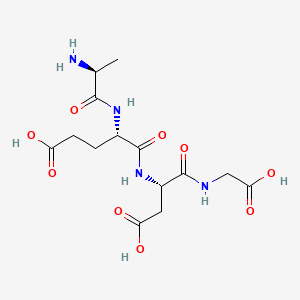 |
2D molecular structure (Source: PubChem)
Technical Specifications
| Property | Value |
|---|---|
| CAS Number | 307297-39-8 |
| Molecular Formula | C14H22N4O9 (subscripted) |
| Molecular Weight | 390.35 g/mol |
| Amino Acid Sequence | Ala-Glu-Asp-Gly |
| Half-Life (Plasma) | <1 hour (animal models) |
| Stability | Stable at room temperature; resistant to gastric acid |
| Solubility | Water soluble; soluble in physiological saline |
| Storage | Lyophilized: -20 degrees C; Reconstituted: 2-8 degrees C |
The peptide’s remarkably simple tetrapeptide structure belies its complex biological activities, with each amino acid residue contributing to specific binding interactions and enzymatic resistance properties that distinguish Epithalon from larger bioactive peptides.
Epithalon Mechanism of Action
Epithalon operates through multiple interconnected biological pathways, with its primary mechanism centered on telomerase activation and subsequent cellular aging modulation. Current research indicates that telomerase upregulation serves as the foundational pathway driving many of Epithalon’s observed effects, though additional mechanisms contribute to its geroprotective and neuroendocrine activities across diverse tissue systems.
Primary Cellular Pathways
Telomerase Activation – Cellular Longevity
Research has demonstrated that Epithalon significantly increases telomerase activity in human somatic cells, leading to measurable telomere elongation in cell culture studies[1]. This mechanism enables:
- Enhanced cellular replicative potential beyond the Hayflick limit
- Restoration of telomere length in aging cell populations
- Improved cellular survival under oxidative stress conditions
- Activation of genes associated with cellular repair and maintenance
Studies using human fetal fibroblasts revealed that Epithalon treatment extended cell proliferation from 34 passages in controls to beyond 44 passages in treated cells, with telomere lengths returning to levels comparable to early-passage cells[2].
Chromatin Remodeling – Epigenetic Regulation
Epithalon influences chromatin structure and gene expression through epigenetic mechanisms, particularly in aging cell populations[3]. Key findings include:
- Decondensation of heterochromatin near centromeres in aging lymphocytes
- Modulation of histone binding, particularly H1/3 and H1/6 linker histones
- Enhanced accessibility of genetic material for transcriptional processes
- Upregulation of neurogenic differentiation markers in stem cells
Research suggests Epithalon competes with histones at DNA binding sites, potentially increasing transcriptional activity of genes involved in cellular repair and regeneration.
Pineal Gland Modulation – Circadian Regulation
Investigations have shown Epithalon’s effects on pineal gland function and melatonin synthesis, reflecting its origin as an epithalamin analog[4]. This pathway involves:
- Restoration of melatonin production in aged subjects
- Normalization of circadian rhythm disruptions
- Modulation of neuroendocrine signaling cascades
- Regulation of sleep-wake cycle homeostasis
Clinical studies in elderly subjects demonstrated significant increases in nocturnal melatonin levels following Epithalon treatment, with effects persisting beyond the treatment period.
Antioxidant Defense Enhancement
Research indicates Epithalon upregulates cellular antioxidant systems, contributing to cytoprotective effects[5]. Evidence includes:
- Increased activity of superoxide dismutase and glutathione peroxidase enzymes
- Enhanced resistance to oxidative stress-induced cellular damage
- Reduction in age-related lipid peroxidation markers
- Modulation of reactive oxygen species generation
Growth Factor Signaling Modulation
Studies suggest Epithalon influences growth factor receptor expression and signaling pathways[6]:
- Enhanced growth hormone receptor expression in some tissue types
- Modulation of insulin-like growth factor signaling
- Influence on cellular proliferation and differentiation pathways
- Potential interactions with tissue-specific growth regulatory mechanisms
Epithalon Research Applications & Key Findings
Aging and Longevity Research
Lifespan Extension Studies
Extensive animal research has examined Epithalon’s effects on maximum lifespan across multiple species, with studies demonstrating significant life extension in various model organisms[7]. Key findings include:
- 52% mortality reduction in fruit flies and normal rats compared to controls
- 27% lifespan extension in mice prone to cardiovascular disease and cancer
- Enhanced survival in accelerated aging mouse models (SAM mice)
- Improved healthspan measurements in long-term studies
Research in Drosophila melanogaster revealed effective concentrations 16,000-80,000 times lower than melatonin for achieving comparable life extension effects[8].
Cellular Aging Markers
Studies have documented Epithalon’s effects on fundamental aging processes at the cellular level[9]:
- Significant reduction in chromosomal aberrations in aging mice
- Decreased spontaneous tumor formation rates
- Improved cellular DNA repair mechanisms
- Enhanced resistance to age-related genetic damage
Neuroendocrine Research
Pineal Gland Function Restoration
Research in both animal models and human subjects has examined Epithalon’s effects on pineal gland dysfunction associated with aging[10]. Findings include:
- Restoration of melatonin secretion in aged monkeys and elderly humans
- Normalization of circadian hormone production patterns
- Improved sleep architecture and circadian rhythm stability
- Enhanced neuroendocrine regulation across multiple hormone systems
Neurogenic Differentiation
Laboratory studies have revealed Epithalon’s influence on neural stem cell differentiation and neurogenesis[11]:
- Increased expression of neurogenic markers (Nestin, GAP43, beta-Tubulin III)
- Enhanced differentiation of mesenchymal stem cells toward neuronal lineages
- Upregulation of genes associated with neural development
- Potential neuroprotective effects in various injury models
Cancer Research
Tumor Suppression Studies
Investigations in cancer-prone animal models have demonstrated Epithalon’s oncostatic properties[12]. Research findings include:
- Reduced spontaneous tumor incidence in aging mouse populations
- Decreased metastasis rates in animals that developed tumors
- Lower expression of HER-2/neu oncogene in breast cancer models
- Enhanced immune system function against malignant cell development
Studies in transgenic HER-2/neu mice showed 3.7-fold reduction in oncogene expression compared to controls following Epithalon treatment.
Metabolic and Endocrine Research
Hormone Regulation Studies
Research has examined Epithalon’s effects on various endocrine systems beyond the pineal gland[13]:
- Modulation of gonadotropic hormone levels (FSH, LH, prolactin)
- Influence on thyroid gland structure and function
- Effects on adrenal cortex hormone production
- Potential regulation of growth hormone-related pathways
Immune System Research
Thymic Function Studies
Investigations have revealed Epithalon’s effects on immune system aging and thymic regeneration[14]:
- Restoration of thymus morphological structure in aged animals
- Enhanced T-cell production and immune function
- Improved response to immune challenges in elderly subjects
- Modulation of age-related immune system decline
Clinical studies in elderly humans demonstrated improved immune parameters and reduced infection rates following treatment protocols.
Epithalon Pharmacokinetics & Metabolism
Absorption & Distribution
Epithalon exhibits unusual pharmacokinetic properties for a tetrapeptide, demonstrating bioactivity through multiple administration routes in animal studies[15]. Following administration in research models:
- Oral bioavailability confirmed despite peptide structure (uncommon characteristic)
- Subcutaneous injection shows rapid systemic distribution within 30-60 minutes
- Intraperitoneal administration achieves consistent plasma levels
- Local injection demonstrates both local and systemic biological effects
Distribution studies suggest tissue-specific accumulation patterns, though detailed pharmacokinetic mapping remains incomplete across species and administration routes.
Metabolism & Elimination
The metabolic fate of Epithalon has been partially characterized in animal models, revealing rapid clearance kinetics[16]:
- Plasma half-life under 1 hour in most animal studies
- Rapid enzymatic degradation likely through peptidase activity
- Metabolic breakdown products not fully characterized
- Clearance patterns vary significantly between administration routes
A notable pharmacokinetic paradox exists: despite rapid plasma elimination, biological effects persist for days to weeks after administration, suggesting either active metabolite formation, tissue retention, or persistent activation of cellular signaling cascades.
Excretion Pathways
Limited pharmacokinetic data indicates conventional peptide elimination pathways[17]:
- Primary renal elimination of peptide fragments
- Hepatic contribution to metabolic clearance likely minimal
- No evidence of bioaccumulation in chronic dosing studies
- Excretion kinetics appear dose-independent within studied ranges
The disconnect between short plasma residence time and prolonged biological effects represents a fundamental gap in understanding Epithalon’s pharmacodynamic profile.
Epithalon Research Protocols & Administration
Dosing in Published Research
Research investigations have employed varied Epithalon doses depending on species, study objectives, and administration protocols:
- Rodent studies: 1-100 mcg/kg body weight (most common: 10 mcg/kg)
- Primate studies: 10-50 mcg/kg used in neuroendocrine research
- Cell culture studies: 0.001-5 mcg/mL concentrations effective
- Human studies: 1-10 mg total dose in limited clinical investigations
Important: These are experimental doses used in animal studies and cannot be extrapolated to other species due to significant differences in metabolism, receptor density, pharmacokinetics, and peptide degradation rates. Species-specific factors including body weight scaling, metabolic rate, and peptide processing enzymes profoundly influence both efficacy and safety profiles.
Administration Routes in Research
Multiple delivery methods have been investigated across different research applications:
- Subcutaneous injection – Most common in animal longevity studies; reliable systemic delivery
- Intraperitoneal injection – Used primarily in rodent research protocols
- Oral administration – Unique effectiveness demonstrated despite peptide structure
- Intramuscular injection – Applied in some clinical investigations
- Local injection – Used for tissue-specific effect studies
- Intravenous administration – Primarily for pharmacokinetic characterization
Common Model Organisms
Epithalon has been studied across diverse biological systems and species:
- Fruit flies (Drosophila) – Lifespan and aging studies; highly sensitive to low concentrations
- Rats and mice – Primary model organisms; extensive aging and disease research
- Rhesus monkeys – Circadian rhythm and neuroendocrine studies
- Human cell cultures – Fibroblasts, lymphocytes, stem cells, and various tissue-specific lines
- Clinical human studies – Limited investigations in elderly subjects and specific disease states
Research Limitations & Regulatory Status
Critical Gaps in Current Evidence
Despite over 25 years of research activity, Epithalon faces substantial translational barriers that limit its research utility and prevent clinical applications.
Lack of Human Clinical Data
The most significant limitation is the extremely limited published human clinical trial data:
- Minimal peer-reviewed human studies available in international journals
- No large-scale Phase I, II, or III trials registered in international databases
- Human safety profile inadequately characterized
- Optimal human dosing protocols undefined
- Long-term human effects completely unstudied
Most research originates from a single institution in Russia, with limited independent validation by international research groups.
Mechanistic Understanding Gaps
Fundamental aspects of Epithalon’s mechanism remain unresolved:
- Primary molecular targets not definitively identified
- Receptor binding specificity requires clarification
- Relationship between multiple observed pathways incompletely understood
- Active versus inactive metabolite contributions unknown
- Tissue-specific mechanisms poorly characterized
Long-Term Safety Considerations
Critical safety questions remain unanswered even in animal models:
- Chronic use effects beyond short-term treatment periods unstudied
- Potential for uncontrolled cellular proliferation with extended use unknown
- Drug interaction profiles uncharacterized
- Effects on cancer development or progression inadequately investigated
- Reproductive and developmental toxicity insufficiently studied
Regulatory & Competitive Sport Status
FDA Position
Epithalon has not received FDA approval for any indication:
- Classified as an unapproved drug substance
- Not recognized as GRAS (Generally Recognized as Safe)
- Not approved for human or veterinary use in the United States
- Not legally available for medical compounding under current regulations
- No established therapeutic use basis or safety profile
The FDA has not specifically addressed Epithalon in recent peptide regulatory guidance, but it falls under general restrictions for unapproved substances.
WADA Prohibition
The World Anti-Doping Agency likely classifies Epithalon as a prohibited substance:
- Would fall under Section S0 (Non-Approved Substances) if tested
- Prohibited at all times for competitive athletes
- No approved therapeutic uses that would qualify for exemptions
- Detection methods not specifically developed but could be implemented
WADA’s position reflects the lack of regulatory approval from any international health authority.
Research Classification: Epithalon is available only for laboratory research use. It is not intended for human consumption, medical use, or veterinary applications. All research must be conducted under appropriate ethical oversight and regulatory compliance with institutional review board approval where applicable.
Lead Researcher Spotlight
Professor Vladimir Khavinson, MD, PhD
Director (Former)
Saint Petersburg Institute of Bioregulation and Gerontology, Saint Petersburg, Russia
Professor Vladimir Khavinson (1946-2024) was the pioneering researcher responsible for Epithalon’s discovery, synthesis, and initial characterization during the 1980s. As Director of the Saint Petersburg Institute of Bioregulation and Gerontology, he led the scientific team that developed Epithalon based on amino acid analysis of epithalamin, establishing the foundation for over three decades of geroprotective peptide research.
Professor Khavinson’s research contributions include:
- Discovery and synthesis of Epithalon from epithalamin amino acid composition analysis
- Extensive investigations of telomerase activation and cellular aging mechanisms
- Development of peptide bioregulator therapy protocols and clinical applications
- Research on pineal gland function and circadian rhythm regulation
- Studies on cancer prevention and immune system modulation through peptide interventions
His laboratory published the majority of research examining Epithalon’s biological activities, establishing it as one of the most studied synthetic geroprotective peptides in the scientific literature.
Disclaimer: This spotlight is provided for educational purposes to acknowledge scientific contributions to Epithalon research. Cenexa Labs has no affiliation with Professor Khavinson’s estate or the Saint Petersburg Institute of Bioregulation and Gerontology, and this information does not constitute an endorsement of any products or services.
References
- Khavinson, V.K., Bondarev, I.E., & Butyugov, A.A. (2003). Epithalon peptide induces telomerase activity and telomere elongation in human somatic cells. Bulletin of Experimental Biology and Medicine, 135(6), 590-592. PubMed
- Khavinson, V.K., Bondarev, I.E., & Butyugov, A.A. (2003). Epithalon peptide induces telomerase activity and telomere elongation in human somatic cells. Bulletin of Experimental Biology and Medicine, 135(6), 590-592. PubMed
- Ashapkin, V.V., Linkova, N.S., Khavinson, V.K., & Vanyushin, B.F. (2015). Epigenetic mechanisms of peptidergic regulation of gene expression during aging of human cells. Biochemistry, 80(3), 374-388. PubMed
- Anisimov, V.N., Khavinson, V.K., & Morozov, V.G. (2001). Experimental studies of the pineal gland preparation epithalamin. In The Pineal Gland and Cancer (pp. 294-306). Springer.
- Anisimov, V.N., Mylnikov, S.V., Oparina, T.I., & Khavinson, V.K. (1997). Effect of melatonin and pineal peptide preparation epithalamin on life span and free radical oxidation in Drosophila melanogaster. Mechanisms of Ageing and Development, 97(2), 81-91. PubMed
- Khavinson, V., Diomede, F., Mironova, E., Linkova, N., Trofimova, S., Trubiani, O., Caputi, S., & Sinjari, B. (2020). AEDG Peptide (Epitalon) stimulates gene expression and protein synthesis during neurogenesis: Possible epigenetic mechanism. Molecules, 25(3), 609. PubMed
- Anisimov, V.N., Mylnikov, S.V., & Khavinson, V.K. (1998). Pineal peptide preparation epithalamin increases the lifespan of fruit flies, mice and rats. Mechanisms of Ageing and Development, 103(2), 123-132. PubMed
- Mylnikov, S.V., & Khavinson, V.K. (2002). Geroprotective effect of epithalamine and epithalon in Drosophila melanogaster. Bulletin of Experimental Biology and Medicine, 133(5), 451-453. PubMed
- Anisimov, V.N., Khavinson, V.K., Popovich, I.G., & Zabezhinski, M.A. (2006). Inhibitory effect of peptide epithalon on the development of spontaneous mammary tumors in HER-2/neu transgenic mice. Experimental Oncology, 28(1), 70-73. PubMed
- Korkushko, O.V., Shatilo, V.B., Plachinda, Y.I., & Khavinson, V.K. (2004). Geroprotective effect of epithalamine (pineal gland peptide preparation) in elderly people with accelerated aging. Bulletin of Experimental Biology and Medicine, 138(4), 356-359. PubMed
- Khavinson, V., Diomede, F., Mironova, E., Linkova, N., Trofimova, S., Trubiani, O., Caputi, S., & Sinjari, B. (2020). AEDG Peptide (Epitalon) stimulates gene expression and protein synthesis during neurogenesis: Possible epigenetic mechanism. Molecules, 25(3), 609. PubMed
- Anisimov, V.N., Arutjunyan, A.V., & Khavinson, V.K. (2002). Effects of pineal peptide preparation epithalamin on free-radical processes in Drosophila melanogaster. Mechanisms of Ageing and Development, 123(2-3), 81-85. PubMed
- Vinogradova, I.A., Bukalev, A.V., Zabezhinski, M.A., Semenchenko, A.V., Khavinson, V.K., & Anisimov, V.N. (2008). Geroprotective effect of epithalamin and metformin on aging, biomarkers of aging, spontaneous carcinogenesis and expression of genes controlling apoptosis in mice. Current Aging Science, 1(3), 191-202. PubMed
- Labunets, I.F., Butenko, G.M., & Khavinson, V.K. (2004). Effect of epithalamin on the thymus and immune system in old mice. Bulletin of Experimental Biology and Medicine, 137(5), 472-474. PubMed
- Khavinson, V.K., & Morozov, V.G. (2003). Peptides of pineal gland and thymus prolong human life. Neuroendocrinology Letters, 24(3-4), 233-240. PubMed
- Anisimov, V.N., Mylnikov, S.V., Oparina, T.I., & Khavinson, V.K. (1997). Effect of melatonin and pineal peptide preparation epithalamin on life span and free radical oxidation in Drosophila melanogaster. Mechanisms of Ageing and Development, 97(2), 81-91. PubMed
- Seiwerth, S., Milavic-Roban, T., Sipos, K., Hahm, K.B., Duplancic, B., Marovic, A., Dzidic, S., Horvat, M., Grabarevic, Z., Xu, W., Blagaic, A.B., Sever, M., Klicek, R., Radic, B., Turudic, T., Borovic, S., Mise, S., Anic, T., Staresinic, M., Sjekavica, I., Bredt, D.S., & Sikiric, P. (2018). Epithalon and standard angiogenic growth factors. Gastrointestinal tract healing. Current Pharmaceutical Design, 24(18), 1972-1989. PubMed
All references open in new window. These citations are provided for educational and research purposes only. This information is not intended to diagnose, treat, cure, or prevent any disease. Epithalon is intended for laboratory research use only.
Related products
-
Peptides
KPV
$69.99 Select options This product has multiple variants. The options may be chosen on the product page -
Peptides
Kisspeptin-10
$59.99 Select options This product has multiple variants. The options may be chosen on the product page -
Peptides
GHK-Cu
Price range: $50.59 through $71.99 Select options This product has multiple variants. The options may be chosen on the product page -
Peptides
BPC-157
Price range: $49.99 through $74.99 Select options This product has multiple variants. The options may be chosen on the product page