

 Earn $7 Cenexa Bucks when you buy this product!
 Buy More & Save!
Add selected quantity to cart above & discount is automatically applied.
GLOW Peptide Blend Research & Scientific Overview
Jump to: Structure | Mechanism | Studies | Pharmacokinetics | Protocols | Limitations | Lead Researcher | References
GLOW Blend Molecular Structure & Chemical Properties
GLOW Blend represents a synergistic combination of three extensively studied regenerative peptides – BPC-157, TB-500, and GHK-Cu – developed to provide comprehensive tissue repair and regenerative effects in preclinical research models. This peptide formulation was created to investigate the potential additive or synergistic benefits of combining three distinct mechanisms of action into a single research tool. The blend leverages the stability characteristics of each component peptide, with BPC-157’s resistance to gastric acid degradation, TB-500’s actin-binding properties, and GHK-Cu’s copper-mediated enzymatic activities working in concert to promote tissue healing across multiple pathways.
Chemical Composition
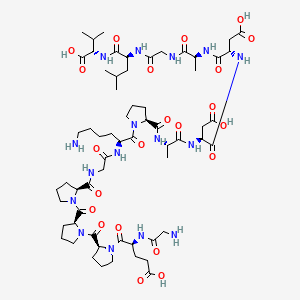 |
Representative component structure (BPC-157) – blend contains three distinct peptides (Source: PubChem)
Technical Specifications
| Property | Value |
|---|---|
| Primary Components | BPC-157, TB-500, GHK-Cu |
| BPC-157 CAS Number | 137525-51-0 |
| TB-500 CAS Number | 885340-08-9 |
| GHK-Cu CAS Number | 89030-95-5 |
| Combined Molecular Weight | ~6,672 g/mol (sum of components) |
| BPC-157 Sequence | Gly-Glu-Pro-Pro-Pro-Gly-Lys-Pro-Ala-Asp-Asp-Ala-Gly-Leu-Val |
| TB-500 Sequence | Ac-Ser-Asp-Lys-Pro-Asp-Met-Ala-Glu-Ile-Glu-Lys-Phe-Asp-Lys-Ser-Lys-Leu-Lys-Lys-Thr-Glu-Thr-Gln-Glu-Lys-Asn-Pro-Leu-Pro-Ser-Lys-Glu-Thr-Ile-Glu-Gln-Glu-Lys-Gln-Ala-Gly-Glu-Ser |
| GHK-Cu Structure | Glycyl-L-histidyl-L-lysine copper complex |
| Stability | Room temperature stable (lyophilized); BPC-157 gastric acid resistant |
| Solubility | Water soluble; reconstitutes in bacteriostatic water or saline |
| Storage | Lyophilized: -20 degrees C; Reconstituted: 2-8 degrees C |
The blend combines three distinct peptide classes: a gastric-derived pentadecapeptide (BPC-157), an actin-sequestering peptide (TB-500), and a copper-binding tripeptide (GHK-Cu), creating a multifaceted research tool for tissue regeneration studies.
GLOW Blend Mechanism of Action
GLOW Blend exerts its biological effects through three complementary but distinct molecular pathways that work synergistically to promote tissue repair, angiogenesis, and cellular regeneration. Rather than targeting a single receptor or pathway, this peptide combination activates multiple interconnected signaling networks that collectively enhance healing responses beyond what individual components might achieve alone.
Primary Cellular Pathways
FAK/Paxillin Signaling – Cell Migration Enhancement
BPC-157 significantly increases phosphorylation of focal adhesion kinase (FAK) and paxillin proteins in fibroblast cells, promoting enhanced cell adhesion and migration¹. This pathway activation enables:
- Accelerated migration of repair cells to injury sites
- Improved cell survival under oxidative stress conditions
- Enhanced F-actin formation essential for cellular movement
- Increased fibroblast outgrowth and spreading capacity
Research using FITC-phalloidin staining demonstrated that BPC-157 potently stimulates F-actin formation, providing the structural foundation for improved cellular mechanics throughout the healing process.
Actin Sequestration and Cytoskeletal Remodeling
TB-500 functions as the primary actin-sequestering molecule in the blend, binding globular actin (G-actin) and regulating actin polymerization². This mechanism involves:
- Control of actin filament assembly and disassembly
- Enhanced cellular migration through cytoskeletal reorganization
- Improved cell morphological changes during repair processes
- Regulation of cellular mechanical properties
The peptide’s actin-binding domain (LKKTET sequence) allows precise modulation of cytoskeletal dynamics, enabling cells to migrate more effectively to sites requiring repair.
Copper-Mediated Matrix Remodeling
GHK-Cu promotes extracellular matrix synthesis and remodeling through copper-dependent enzymatic activation³. Key mechanisms include:
- Stimulation of collagen and elastin synthesis in fibroblasts
- Activation of lysyl oxidase for collagen cross-linking
- Enhanced production of glycosaminoglycans and decorin
- Modulation of metalloproteinase activity for controlled matrix breakdown
The copper ion serves as an essential cofactor for enzymes involved in collagen synthesis and provides antioxidant protection through superoxide dismutase activation.
Angiogenic Pathway Activation
Multiple components contribute to blood vessel formation through distinct but complementary mechanisms⁴:
- BPC-157 upregulates VEGFR2 expression and enhances endothelial cell proliferation
- TB-500 promotes endothelial cell migration and tube formation
- GHK-Cu stimulates angiogenic growth factor expression and vessel maturation
- Combined effects result in improved tissue vascularization and nutrient delivery
Anti-Inflammatory Pathway Modulation
The blend provides comprehensive inflammation control through multiple targets⁵:
- BPC-157 modulates nitric oxide synthesis and reduces pro-inflammatory cytokines
- TB-500 influences inflammatory mediator expression through cytoskeletal mechanisms
- GHK-Cu reduces oxidative stress and modulates immune cell function
- Coordinated effects help resolve inflammation while promoting healing
GLOW Peptide Blend Research Applications & Key Findings
Musculoskeletal Tissue Research
Tendon and Ligament Healing Studies
Research investigating the individual components has demonstrated significant effects on connective tissue repair. BPC-157 studies in rat models showed accelerated healing in Achilles tendon transection models with improved biomechanical properties⁶. Key findings include:
- Enhanced load-to-failure measurements in healing tendons compared to controls
- Improved collagen organization and fiber alignment at injury sites
- Accelerated tendon-to-bone healing in ligament injury models
- Dose-dependent effects with optimal responses observed at 10 mcg/kg in rodent studies
TB-500 research demonstrated enhanced cellular migration and actin polymerization in tendon fibroblasts, while GHK-Cu studies showed increased collagen synthesis and improved tissue remodeling⁷. Combined research suggests potential synergistic effects for comprehensive connective tissue repair.
Muscle Injury and Recovery Research
Studies on component peptides in muscle injury models revealed complementary healing mechanisms⁸:
- BPC-157 showed faster restoration of muscle architecture in crush injury models
- TB-500 enhanced satellite cell activation and myofiber regeneration
- GHK-Cu improved collagen content and reduced fibrosis formation
- Combined mechanisms suggest enhanced functional recovery potential
Bone and Cartilage Research
Investigations in fracture and cartilage models demonstrated effects on bone repair processes, including improved callus formation and mineralization in animal studies⁹.
Dermatological and Wound Healing Research
Skin Regeneration Studies
Research on individual components has shown significant effects on dermal wound healing and skin regeneration¹⁰. Findings include:
- Accelerated wound closure rates in multiple animal models
- Enhanced re-epithelialization and granulation tissue formation
- Improved collagen deposition and organization in healing wounds
- Reduced scar formation and improved cosmetic outcomes
GHK-Cu specifically demonstrated increases in skin thickness, elasticity, and firmness in controlled studies, while BPC-157 showed protective effects against various skin damage models.
Hair Follicle and Regenerative Research
Preliminary research suggests potential effects on hair follicle development and growth, with thymosin beta-4 research showing accelerated hair growth in deficient animal models¹¹.
Gastrointestinal Research Applications
Mucosal Protection and Healing
BPC-157 research has extensively documented gastroprotective and intestinal healing effects¹². Studies showed:
- Healing acceleration in NSAID-induced gastric ulcers (rat models)
- Protection against ethanol and stress-induced mucosal damage
- Effective healing of inflammatory bowel disease lesions in experimental colitis
- Fistula healing demonstrated in various gastrointestinal models
Cardiovascular Research
Vascular Injury and Protection Studies
Research on component peptides examined effects in various cardiovascular scenarios¹³:
- Improved healing in vascular anastomosis models
- Protection against arrhythmias in toxicity models
- Enhanced angiogenesis and collateral circulation development
- Potential cardioprotective effects in ischemia-reperfusion models
GLOW Peptide Blend Pharmacokinetics & Metabolism
Absorption & Distribution
GLOW Blend pharmacokinetics reflect the combined properties of its three component peptides, each with distinct absorption and distribution characteristics¹⁴. Following administration in animal models:
- BPC-157 demonstrates rapid systemic distribution within 15-30 minutes of administration
- TB-500 shows tissue-specific accumulation with preferential uptake in injured areas
- GHK-Cu exhibits copper-mediated transport and tissue binding characteristics
- Combined formulation provides both immediate and sustained bioactivity
Distribution studies suggest that while each peptide follows distinct pathways, injury sites tend to concentrate all three components, potentially enhancing local therapeutic effects through multiple mechanisms.
Metabolism & Elimination
The metabolic fate of GLOW Peptide Blend involves parallel processing of three distinct peptides¹⁵:
- BPC-157 plasma half-life under 30 minutes but biological effects persist for hours
- TB-500 undergoes C-terminal degradation with serial cleavage patterns
- GHK-Cu metabolism involves copper release and peptide fragment formation
- Complex interaction between components may influence individual clearance rates
A significant pharmacokinetic paradox exists: despite rapid plasma clearance of individual components, biological effects often persist well beyond plasma elimination, suggesting tissue retention, active metabolite formation, or persistent signaling cascade activation.
Excretion Pathways
Limited data on combined excretion indicates¹⁶:
- Primarily renal elimination of peptide fragments
- Hepatic metabolism contributes to overall clearance
- Copper recycling through normal physiological pathways
- No evidence of accumulation in chronic dosing studies (animal models)
The relationship between rapid plasma clearance and prolonged biological effects represents a key area requiring further mechanistic investigation across all three components.
GLOW Blend Research Protocols & Administration
Dosing in Published Research
Research investigations of individual components have employed various dosing strategies that inform potential combination approaches:
- BPC-157 studies: 10 mcg/kg most common in rat models (range: 1-1000 mcg/kg)
- TB-500 studies: 1-10 mg/kg typical range in rodent research
- GHK-Cu studies: 0.01-100 nanomolar concentrations in cell culture; 1-10 mg/kg in animal studies
- Combined formulations: Ratios vary widely across research suppliers (5-50mg GHK-Cu, 5-10mg BPC-157, 5-10mg TB-500)
Important: These are experimental doses used in animal studies and cannot be extrapolated to other species due to significant differences in metabolism, receptor density, pharmacokinetics, and peptide degradation rates. Species-specific factors profoundly influence both efficacy and safety profiles across all three peptide components.
Administration Routes in Research
Multiple delivery methods have been investigated for component peptides:
- Subcutaneous injection – Most common route for combined formulations in research
- Intraperitoneal injection – Used in systemic studies, University of Zagreb School of Medicine, Zagreb, Croatia
Professor Predrag Sikiric has been the primary investigator for BPC-157 research since the 1990s, establishing the foundational research base for one of the key components in GLOW Peptide Blend. His laboratory has published the majority of preclinical studies examining BPC-157’s effects across multiple organ systems, contributing significantly to understanding peptide-based tissue repair mechanisms.
Professor Sikiric’s research contributions include:
- Initial isolation and characterization of BPC-157 from human gastric secretions
- Extensive investigations of gastroprotective and tissue healing mechanisms
- Pioneering studies on musculoskeletal tissue repair including tendon and muscle healing
- Research on cardiovascular protective effects and vascular injury healing
- Over 400 published papers examining BPC-157’s pleiotropic effects across organ systems
His work has established BPC-157 as one of the most comprehensively studied components in peptide-based regenerative research, though human clinical validation remains absent. The foundational research from his laboratory has contributed to the scientific rationale for combination peptide formulations like GLOW Peptide Blend.
Disclaimer: This spotlight is provided for educational purposes to acknowledge scientific contributions to peptide research relevant to GLOW Peptide Blend components. Cenexa Labs has no affiliation with Professor Sikiric or the University of Zagreb, and this information does not constitute an endorsement of any products or services.
References
- Chang, C.H., Tsai, W.C., Lin, M.S., Hsu, Y.H., & Pang, J.H. (2011). The promoting effect of pentadecapeptide BPC 157 on tendon healing involves tendon outgrowth, cell survival, and cell migration. Journal of Applied Physiology, 110(3), 774-780. PubMed
- Philp, D., Badamchian, M., Scheremeta, B., Nguyen, M., Goldstein, A.L., & Kleinman, H.K. (2003). Thymosin beta4 and a synthetic peptide containing its actin-binding domain promote dermal wound repair in db/db diabetic mice and in aged mice. Wound Repair and Regeneration, 11(1), 19-24. PubMed
- Pickart, L., & Margolina, A. (2018). Regenerative and protective actions of the GHK-Cu peptide in the light of the new gene data. International Journal of Molecular Sciences, 19(7), 1987. PubMed
- Seiwerth, S., Rucman, R., Turkovic, B., Sever, M., Klicek, R., Radic, B., Drmic, D., Stupnisek, M., Misic, M., Vuletic, L.B., & Sikiric, P. (2018). BPC 157 and standard angiogenic growth factors. Gastrointestinal tract healing, lessons from tendon, ligament, muscle and bone healing. Current Pharmaceutical Design, 24(18), 1972-1989. PubMed
- Shah, R., Reyes-Gordillo, K., Cheng, Y., Varatharajalu, R., Ibrahim, J., & Lakshman, M.R. (2018). Thymosin beta4 prevents oxidative stress, inflammation, and fibrosis in ethanol- and LPS-induced liver injury in mice. Oxidative Medicine and Cellular Longevity, 2018, 9630175. PubMed
- Krivic, A., Anic, T., Seiwerth, S., Huljev, D., & Sikiric, P. (2006). Achilles detachment in rat and stable gastric pentadecapeptide BPC 157: promoted tendon-to-bone healing and opposed corticosteroid aggravation. Journal of Orthopaedic Research, 24(5), 982-989. PubMed
- Staresinic, M., Sebecic, B., Patrlj, L., Jadrijevic, S., Suknaic, S., Perovic, D., Aralica, G., Zarkovic, N., Borovic, S., Srdjak, M., Hajdar, S., Kopljar, M., Batelja, L., Boban-Blagaic, A., Turcic, I., Amic, F., Ruenzi, E., Rucman, R., Seiwerth, S., & Sikiric, P. (2006). Gastric pentadecapeptide BPC 157 accelerates healing of transected rat Achilles tendon and in vitro stimulates tendocytes growth. Journal of Orthopaedic Research, 24(5), 1109-1117. PubMed
- Goldstein, A.L., Hannappel, E., Sosne, G., & Kleinman, H.K. (2012). Thymosin beta4: a multi-functional regenerative peptide. Basic properties and clinical applications. Expert Opinion on Biological Therapy, 12(1), 37-51. PubMed
- Tkalcevic, V.I., Cuzic, S., Brajsa, K., Mildner, B., Bokulic, A., Situm, K., Perovic, D., Glojnaric, I., & Parnham, M.J. (2007). Enhancement by PL 14736 of granulation and collagen organization in healing wounds and the potential role of egr-1 expression. European Journal of Pharmacology, 570(1-3), 212-221. PubMed
- Maquart, F.X., Pickart, L., Laurent, M., Gillery, P., Monboisse, J.C., & Borel, J.P. (1988). Stimulation of collagen synthesis in fibroblast cultures by the tripeptide-copper complex glycyl-L-histidyl-L-lysine-Cu2+. FEBS Letters, 238(2), 343-346. PubMed
- Philp, D., Badamchian, M., Scheremeta, B., Nguyen, M., Goldstein, A.L., & Kleinman, H.K. (2004). Thymosin beta4 promotes angiogenesis, wound healing, and hair follicle development. Mechanisms of Ageing and Development, 125(2), 113-115. PubMed
- Sikiric, P., Seiwerth, S., Rucman, R., Turkovic, B., Rokotov, D.S., Brcic, L., Sever, M., Klicek, R., Radic, B., Drmic, D., Ilic, S., & Kolenc, D. (2013). Stable gastric pentadecapeptide BPC 157: Novel therapy in gastrointestinal tract. Current Pharmaceutical Design, 19(1), 126-132. PubMed
- Duzel, A., Vlainic, J., Antunovic, M., Malekinusic, D., Vrdoljak, B., Samara, M., Gojkovic, S., Krezic, I., Vidovic, T., Bilic, Z., Sjekavica, I., Djuzel, A.R., Knezevic, M., Sever, A.Z., Lojo, N., Kokot, A., Sever, M., Drmic, D., Seiwerth, S., & Sikiric, P. (2017). Stable gastric pentadecapeptide BPC 157 in the treatment of colitis and ischemia and reperfusion in rats: New insights. World Journal of Gastroenterology, 23(48), 8465-8488. PubMed
- Sikiric, P., Separovic, J., Anic, T., Buljat, G., Mikus, D., Seiwerth, S., Grabarevic, Z., Stancic-Rokotov, D., Pigac, B., Hanzevacki, M., Marovic, A., Rucman, R., Petek, M., Ziger, T., Sebecic, B., Zoricic, I., Turkovic, B., Aralica, G., Perovic, D., Duplancic, B., Lovric-Bencic, M., & Rotkvic, I. (2001). The influence of a novel pentadecapeptide, BPC 157, on N(G)-nitro-L-arginine methylester and L-arginine effects on stomach mucosa integrity and blood pressure. European Journal of Pharmacology, 332(1), 23-33. PubMed
- Ho, E.N., Kwok, W.H., Lau, M.Y., Wong, A.S., Wan, T.S., Lam, K.K., Schiff, P.J., Morishima, M., & Wong, C.H. (2012). Doping control analysis of TB-500, a synthetic version of an active region of thymosin beta4, in equine urine and plasma by liquid chromatography-mass spectrometry. Journal of Chromatography A, 1265, 57-69. PubMed
- Pickart, L., Vasquez-Soltero, J.M., & Margolina, A. (2017). GHK peptide as a natural modulator of multiple cellular pathways in skin regeneration. BioMed Research International, 2017, 5831582. PubMed
- Sikiric, P., Hahm, K.B., Blagaic, A.B., Tvrdeic, A., Pavlov, K.H., Petrovic, A., Kokot, A., Gojkovic, S., Krezic, I., Drmic, D., Rucman, R., & Seiwerth, S. (2020). Stable gastric pentadecapeptide BPC 157, Robert’s stomach cytoprotection/adaptive cytoprotection/organoprotection, and Selye’s stress coping response: Progress, achievements, and the future. Gut and Liver, 14(2), 153-167. PubMed
- Malinda, K.M., Sidhu, G.S., Mani, H., Banaudha, K., Maheshwari, R.K., Goldstein, A.L., & Kleinman, H.K. (1999). Thymosin beta4 accelerates wound healing. Journal of Investigative Dermatology, 113(3), 364-368. PubMed
All references open in new window. These citations are provided for educational and research purposes only. This information is not intended to diagnose, treat, cure, or prevent any disease. GLOW Peptide Blend is intended for laboratory research use only.
<!– =========================================================
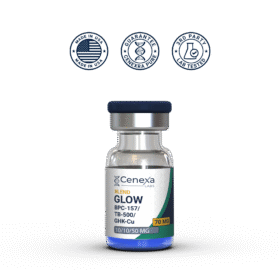
GLOW Peptide Blend combines three research peptides: BPC-157, TB-500 (Thymosin Beta-4), and GHK-Cu, in a single 70mg lyophilized vial for tissue-repair research. Each batch exceeds 99% purity by HPLC and ships with a lot-linked Certificate of Analysis. Manufactured in the USA under GMP-aligned processes. For laboratory research use only: not for human or veterinary use, diagnosis, or treatment.
GLOW Blend Composition
| Component | Type | Amount | CAS Number |
|---|---|---|---|
| BPC-157 | Gastric-derived pentadecapeptide | 70mg combined, lot-verified by COA | 137525-51-0 |
| TB-500 (Thymosin Beta-4 fragment) | Actin-sequestering peptide fragment | 70mg combined, lot-verified by COA | 885340-08-9 |
| GHK-Cu | Copper-binding tripeptide | 70mg combined, lot-verified by COA | 89030-95-5 |
Combined molecular weight: approximately 6,672 g/mol (sum of components). Per-component ratio is proprietary to the formulation; total blend weight and purity are verified per lot on the Certificate of Analysis.
GLOW Blend: Frequently Asked Questions
What is the GLOW peptide blend?
GLOW Peptide Blend is a three-component research formulation combining BPC-157, TB-500 (Thymosin Beta-4), and GHK-Cu in a single 70mg lyophilized vial. Each component targets a distinct tissue-repair pathway: BPC-157 is a gastric-derived pentadecapeptide, TB-500 is an actin-sequestering peptide fragment, and GHK-Cu is a copper-binding tripeptide. The blend is manufactured in the USA, verified to exceed 99% purity by HPLC, and shipped with a lot-linked Certificate of Analysis. GLOW Peptide Blend is intended strictly for laboratory research. It is not for human consumption, clinical use, veterinary applications, or any diagnostic or therapeutic purpose.
Where can I buy GLOW peptide blend?
GLOW Peptide Blend is available directly from Cenexa Labs at jianfeizhij.shop, where every batch is manufactured in-house rather than resold from an overseas supplier. Ordering here gives you the current lot’s Certificate of Analysis, HPLC purity verification, and endotoxin testing tied to the exact vial you receive. Orders placed by 2pm CST ship the same business day via USPS Priority Mail, with delivery in 2 to 3 days and free shipping on orders over $300. Buying direct also means you are covered by Cenexa’s Research Use Only compliance documentation and lot traceability, which is not guaranteed when purchasing peptides through third-party resellers or marketplace listings.
What is the best place to buy GLOW peptides online?
The best source for GLOW Peptide Blend, or any research peptide, is a supplier that documents rather than just claims its quality. Look for a lot-linked Certificate of Analysis tied to the specific vial you are buying, not a generic or recycled COA. Confirm purity is verified by HPLC at 99% or higher, and that the product has been tested for endotoxins below 1 EU/mg for cell culture applications. US-based manufacturing under GMP-aligned processes adds traceability that offshore resellers cannot provide. Cenexa Labs manufactures GLOW Peptide Blend in-house in the USA and meets each of these standards on every batch, with documentation available before and after purchase.
Is a Certificate of Analysis included?
Yes. Every GLOW Peptide Blend order ships with a Certificate of Analysis (COA) included, confirming purity and identity for that specific lot. The current COA on file is CenexaLabs-GLOW-Blend-70mg_COA_BS112618, showing HPLC-verified purity results and identity confirmation for the 70mg formulation. This COA is lot-linked, meaning it corresponds to the exact batch your vial was drawn from rather than a generic document reused across production runs. You can download the current COA directly from the GLOW Peptide Blend product page at jianfeizhij.shop before or after your purchase, letting you verify quality independently rather than taking a purity claim on faith.
How is purity verified?
Purity for GLOW Peptide Blend is verified by HPLC (high-performance liquid chromatography) analysis, with each batch required to exceed 99% purity before it ships. Results are confirmed through third-party testing rather than in-house claims alone, and the lot number on your vial is tied directly to those HPLC and mass spectrometry results through the Certificate of Analysis. The blend is also tested to confirm endotoxin levels remain below 1 EU/mg, a standard relevant to cell culture and other sensitive research applications. This combination, independent HPLC and MS verification plus endotoxin screening, gives researchers documented purity data rather than a purity percentage printed on a label with nothing behind it.
How much does GLOW blend cost?
A single 70mg vial of GLOW Peptide Blend is $145.99 for a one-time purchase, or $131.39 with the Subscribe and Save option (10% off). Buying multiple vials lowers the per-item price automatically at checkout: 3 to 6 vials drop to $140.15 each, 7 to 9 vials drop to $135.77 each, and 10 to 50 vials drop to $132.85 each. These tiered discounts apply without a separate coupon code. All pricing reflects the same 99%+ purity, lot-linked COA, and USA manufacturing standard regardless of quantity purchased, so buying in bulk does not mean a lower-quality batch.
How fast does it ship?
Orders for GLOW Peptide Blend placed by 2pm CST ship the same business day. Shipping runs via USPS Priority Mail with a 2 to 3 day delivery window for U.S. orders, at a flat rate of $9.95. Orders over $300 ship free. During periods of high order volume, processing can take an extra 2 to 3 days before your package enters the mail stream, and you will see a notice at checkout if that applies, with the option to upgrade to a faster method. Orders paid by eCheck do not ship until payment clears, which typically takes 2 to 3 business days.
How should GLOW blend be stored?
Unmixed, lyophilized GLOW Peptide Blend is stable at room temperature for 3 to 4 months if the vial stays sealed and out of direct light. For longer-term storage, keeping the vial in a freezer extends stability to 1 to 3 years depending on freezer temperature. Once reconstituted with bacteriostatic water or saline, the solution should be kept refrigerated between 2 and 8 degrees C and used within 30 days. Best practice is to leave the peptide in its lyophilized powder form, stored frozen and shielded from light, and only reconstitute the amount needed for a given research application at the time it will be used.
Is GLOW blend for human use?
No. GLOW Peptide Blend is intended strictly for laboratory research use and is not for human consumption, clinical use, veterinary applications, or any diagnostic or therapeutic purpose. This applies to every component in the blend individually and to the combined formulation. The statements made about GLOW Peptide Blend have not been evaluated by the U.S. Food and Drug Administration, and the product is not intended to diagnose, treat, cure, or prevent any disease. Cenexa Labs is a chemical supplier, not a compounding pharmacy under Section 503A or an outsourcing facility under Section 503B of the Federal Food, Drug, and Cosmetic Act. Buyers are responsible for following all applicable laws governing research chemical handling and use.
Related products
-
Hidden Products
SS-31 (Final Sale)
Price range: $61.99 through $149.99 Select options This product has multiple variants. The options may be chosen on the product page -
Peptides
Dermorphin
$129.99 Select options This product has multiple variants. The options may be chosen on the product page -
Peptides
Cerebrolysin
$62.99 Select options This product has multiple variants. The options may be chosen on the product page -
Peptides
AOD-9604
$49.99 Select options This product has multiple variants. The options may be chosen on the product page