Earn $2 Cenexa Bucks when you buy this product!
 Buy More & Save!
Add selected quantity to cart above & discount is automatically applied.
Ipamorelin Research & Scientific Overview
Jump to: Structure | Mechanism | Studies | Pharmacokinetics | Protocols | Limitations | Lead Researcher | References
Ipamorelin Molecular Structure & Chemical Properties
Ipamorelin peptide represents the first selective growth hormone secretagogue developed to release growth hormone without affecting other pituitary hormones. Synthesized in the late 1990s by as part of an extensive medicinal chemistry program, this pentapeptide emerged from modifications to GHRP-1 through removal of the central Ala-Trp dipeptide. Unlike other growth hormone-releasing peptides such as GHRP-2 and GHRP-6, ipamorelin demonstrates remarkable selectivity for growth hormone release without elevating ACTH, cortisol, or prolactin levels – even at doses exceeding 200-fold above the effective concentration for GH stimulation. This unique selectivity profile has made ipamorelin one of the most extensively studied growth hormone secretagogues in preclinical research, with investigations spanning growth hormone physiology, gastrointestinal motility, and metabolic function.
Chemical Structure
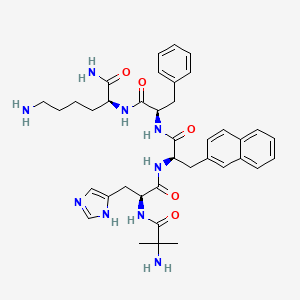 |
2D molecular structure (Source: PubChem)
Technical Specifications
| Property | Value |
|---|---|
| CAS Number | 170851-70-4 |
| Molecular Formula | C38H49N9O5 (subscripted) |
| Molecular Weight | 711.85 g/mol |
| Amino Acid Sequence | Aib-His-D-2-Nal-D-Phe-Lys-NH2 |
| Half-Life (Plasma) | ~2 hours (human studies) |
| Stability | Stable as lyophilized powder; moderately resistant to metabolism |
| Solubility | Water soluble; soluble in saline solutions |
| Storage | Lyophilized: -20 degrees C; Reconstituted: 2-8 degrees C |
The pentapeptide structure incorporates alpha-aminoisobutyric acid (Aib) at the N-terminus and several D-amino acids, modifications that enhance metabolic stability compared to naturally occurring peptides while maintaining high receptor binding affinity.
Ipamorelin Mechanism of Action
Ipamorelin functions as a selective agonist of the growth hormone secretagogue receptor type 1a (GHSR-1a), commonly known as the ghrelin receptor. By mimicking the endogenous hormone ghrelin, ipamorelin binds to GHSR-1a in the anterior pituitary gland and hypothalamus, triggering a cascade of signaling events that culminate in growth hormone release. What distinguishes ipamorelin peptide from other growth hormone-releasing peptides is its exceptional selectivity – it stimulates GH secretion through a mechanism remarkably similar to that of endogenous growth hormone-releasing hormone (GHRH), without the undesirable hormonal side effects associated with other ghrelin mimetics.
Primary Receptor Pathway
GHSR-1a Receptor Activation – Selective Growth Hormone Release
Studies in rat pituitary cells demonstrated that ipamorelin releases growth hormone with potency and efficacy comparable to GHRP-6, yet with fundamentally different hormonal selectivity. Key characteristics include:
- Selective GH stimulation without affecting FSH, LH, prolactin, or TSH plasma levels
- No elevation of ACTH or cortisol even at doses 200-fold higher than the effective dose for GH release
- Rapid GH pulse generation with peak concentrations occurring approximately 0.67 hours after administration
- Dose-dependent response with predictable pharmacodynamic properties across species
Research using GHRP receptor antagonists confirmed that ipamorelin stimulates GH release via a GHRP-like receptor mechanism distinct from GHRH receptors, yet produces hormonal selectivity patterns resembling GHRH itself.
Secondary Mechanisms & Systemic Effects
IGF-1 Pathway Modulation
Following growth hormone release, ipamorelin peptide indirectly elevates circulating insulin-like growth factor 1 (IGF-1) levels. This secondary pathway mediates many of the downstream anabolic effects:
- Increased protein synthesis in muscle and connective tissues
- Enhanced lipolysis and fat metabolism
- Improved bone mineral density and collagen production
- Tissue repair and regenerative processes
Gastrointestinal Motility Enhancement
Beyond its growth hormone effects, ipamorelin demonstrates significant prokinetic properties through ghrelin receptor activation in the gastrointestinal tract:
- Stimulation of gastric contractility via cholinergic excitatory neurons
- Accelerated gastric emptying in models of delayed motility
- Enhanced colonic transit through activation of enteric nervous system pathways
- Normalization of contractile responses to acetylcholine and electrical field stimulation
Somatostatin Pathway Interaction
Ipamorelin appears to modulate the inhibitory effects of somatostatin on growth hormone release, though the precise mechanism remains under investigation. Evidence suggests:
- Reduction of somatostatin’s inhibitory signal at the pituitary level
- Potential hypothalamic effects on somatostatin-producing neurons
- Synergistic interactions with endogenous GHRH signaling
Ipamorelin Research Applications & Key Findings
Growth Hormone Physiology Research
Pharmacodynamic Characterization
A Phase 1 dose-escalation study in healthy human volunteers provided critical pharmacodynamic data on ipamorelin’s GH-releasing properties. The investigation examined five different infusion rates ranging from 4.21 to 140.45 nmol/kg administered over 15 minutes:
- Dose-proportional GH release across all tested doses
- Peak GH concentrations occurring at 0.67 hours post-administration
- Rapid exponential decline to negligible concentrations across all doses
- SC50 value of 214 nmol/L – the concentration required for half-maximal GH stimulation
- Maximal GH production rate of 694 mIU/L/h at saturating concentrations
The study established that ipamorelin produces a single discrete GH pulse rather than sustained elevation, mimicking natural pulsatile GH secretion patterns.
Skeletal and Connective Tissue Research
Longitudinal Bone Growth Studies
Research in growing rats demonstrated that ipamorelin promotes longitudinal bone growth through growth hormone-mediated mechanisms. Studies using tibial growth plate measurements showed:
- Dose-dependent increases in longitudinal bone growth rate from 42 micrometers/day in controls to 52 micrometers/day at the highest dose
- Significant body weight gain in treated animals
- No alterations in total IGF-I levels, IGF-binding proteins, or bone formation/resorption markers
- Preserved pituitary responsiveness to subsequent GH secretagogue challenges
Bone Formation in Glucocorticoid-Induced Osteopenia
Investigations in rat models of glucocorticoid-induced bone loss revealed protective effects of ipamorelin. Adult female rats receiving methylprednisolone plus ipamorelin showed:
- Four-fold increase in periosteal bone formation rate compared to glucocorticoid-only treatment
- Significantly increased maximum tetanic tension in calf muscles
- Counteraction of glucocorticoid-induced decreases in muscle strength and bone formation
- Restoration of anabolic signaling in skeletal tissues
Gastrointestinal Motility Research
Postoperative Ileus Animal Models
Extensive preclinical research examined ipamorelin’s prokinetic effects in rodent models of postoperative ileus following laparotomy and intestinal manipulation:
- Dose-dependent acceleration of colonic transit time with repetitive dosing regimens
- Increased fecal pellet output from 0.01 to 1 mg/kg doses administered four times daily
- Enhanced food intake and body weight gain compared to vehicle controls
- Restoration of gastric emptying from 78 percent retention to 52 percent in treated animals
- Normalization of gastric smooth muscle contractility through ghrelin receptor-mediated cholinergic mechanisms
Phase 2 Clinical Trial in Postoperative Ileus
A multicenter, double-blind, placebo-controlled Phase 2 trial evaluated ipamorelin for postoperative ileus management in patients undergoing bowel resection. The study examined intravenous infusions of 0.03 mg/kg ipamorelin twice daily for up to 7 days:
- Well-tolerated safety profile with no serious adverse events attributed to ipamorelin
- No significant differences between ipamorelin and placebo in primary or secondary efficacy endpoints
- Trial discontinued by Helsinn Therapeutics due to lack of clinical efficacy
- Results highlighted challenges in translating preclinical gastrointestinal effects to human clinical benefit
Ipamorelin Pharmacokinetics & Metabolism
Absorption & Distribution
Pharmacokinetic studies in healthy human volunteers established fundamental parameters following intravenous infusion. Research demonstrated:
- Dose-proportional pharmacokinetics across a 30-fold dose range
- Volume of distribution at steady-state of 0.22 L/kg, suggesting distribution beyond plasma compartment
- Rapid distribution phase following administration
- Clearance rate of 0.078 L/h/kg
Comparative studies in rats revealed species-specific differences in pharmacokinetics:
- Systemic plasma clearance in rats five-fold lower than GHRP-6
- Primary excretion via urine in contrast to biliary excretion of GHRP-6
- Moderate resistance to metabolism with 60-80 percent of administered dose recovered as intact peptide from urine and bile
Metabolism & Elimination
The metabolic fate of ipamorelin involves peptidase-mediated degradation, though specific enzymatic pathways remain incompletely characterized:
- Terminal half-life of approximately 2 hours in human plasma following intravenous administration
- Rapid clearance from circulation with exponential decline kinetics
- No significant accumulation with multiple dosing regimens
- Metabolic products not fully identified or characterized
A notable pharmacokinetic paradox exists: despite the short 2-hour plasma half-life, growth hormone responses persist beyond the detectable presence of ipamorelin in circulation. This suggests either tissue retention, formation of active metabolites, or persistent activation of signaling cascades following receptor engagement.
Excretion Pathways
Based on preclinical investigations in rats, excretion occurs primarily through renal mechanisms:
- Predominantly renal elimination with intact peptide and metabolites appearing in urine
- Minimal biliary excretion compared to other growth hormone-releasing peptides
- No evidence of long-term tissue accumulation in chronic dosing studies
- Complete elimination within 12-24 hours post-administration
The relatively rapid clearance necessitates multiple daily dosing or continuous infusion strategies to maintain sustained effects in research protocols.
Ipamorelin Research Protocols & Administration
Dosing in Published Research
Research protocols have employed diverse ipamorelin doses depending on species, model system, and route of administration. Published investigations document:
- Human studies: 4.21 to 140.45 nmol/kg (approximately 3 to 100 mcg/kg) via 15-minute intravenous infusion
- Clinical trial dosing: 0.03 mg/kg (30 mcg/kg) twice daily via intravenous infusion for postoperative ileus
- Rat models: 0.01 to 1 mg/kg (10 to 1000 mcg/kg) for gastrointestinal studies; 10-100 mcg/kg for bone growth studies
- Swine models: 2.3 to 3.9 nmol/kg for GH release characterization
- Dog studies: Up to 20 micromol/kg orally for bioavailability assessment
Important: These are experimental doses used in controlled research studies and cannot be extrapolated to other species due to significant interspecies differences in receptor density, peptide metabolism, pharmacokinetic parameters, and tissue-specific responses. Dose-response relationships vary substantially across species and require species-specific optimization for any research application.
Administration Routes in Research
Multiple delivery methods have been investigated across different research contexts:
- Intravenous infusion – Primary route for human pharmacokinetic studies and clinical trials; allows precise dose delivery and pharmacodynamic monitoring
- Intravenous bolus injection – Used in animal models for acute GH response characterization
- Subcutaneous injection – Applied in chronic dosing studies for skeletal effects in rodents
- Oral administration – Investigated for bioavailability assessment; approximately 10 percent bioavailability achieved in some protocols despite peptide structure
- Intranasal delivery – Examined in pharmacokinetic studies with approximately 20 percent bioavailability in rats
Common Model Organisms
Ipamorelin research has been conducted across multiple species and experimental systems:
- Humans – Phase 1 pharmacokinetic/pharmacodynamic studies in healthy volunteers; Phase 2 clinical trial in postoperative ileus patients
- Rats (Wistar, Sprague-Dawley strains) – Primary model for bone growth, gastrointestinal motility, and mechanism studies
- Swine – Used for hormonal selectivity characterization and comparative pharmacology
- Dogs (Beagle) – Employed for oral bioavailability and pharmacokinetic assessment
- Cell culture systems – Rat pituitary cells for in vitro GH release assays; gastric smooth muscle preparations for contractility studies
Research Limitations & Regulatory Status
Critical Gaps in Current Evidence
Despite two decades of preclinical research and limited human studies, ipamorelin faces substantial barriers to therapeutic application that significantly limit its research utility.
Limited Human Clinical Data
The clinical evidence base for ipamorelin remains remarkably narrow:
- Only one published Phase 2 trial – the postoperative ileus study that failed to demonstrate efficacy
- Discontinued clinical development by both and Helsinn Therapeutics
- No published human efficacy data for growth hormone deficiency, body composition, or other potential applications
- Pharmacokinetic data limited to single-dose studies in healthy volunteers
- Long-term safety profile in humans completely unestablished
- Optimal therapeutic dosing regimens for any indication unknown
Mechanistic Understanding Gaps
Fundamental aspects of ipamorelin’s pharmacology require further investigation:
- Tissue-specific receptor distribution and signaling consequences incompletely mapped
- Metabolic pathways and active metabolites not fully characterized
- Disconnect between short half-life and prolonged biological effects mechanistically unexplained
- Species differences in receptor sensitivity and downstream signaling inadequately defined
- Potential for receptor desensitization with chronic administration unstudied
Clinical Translation Challenges
The failed Phase 2 trial highlights critical translational barriers:
- Robust preclinical gastrointestinal effects did not translate to human clinical benefit
- Optimal patient populations for potential therapeutic benefit unidentified
- Biomarker strategies to predict responsiveness undeveloped
- Combination therapy approaches with other growth hormone modulators unexplored
Long-Term Safety Considerations
Critical safety questions remain unanswered:
- Chronic elevation of growth hormone and potential effects on tissue growth regulation
- Cardiovascular safety – FDA cited concerns about tachycardia and arrhythmias in review of compounding applications
- Glucose metabolism effects and potential impact on insulin sensitivity with prolonged use
- Cancer risk considerations related to sustained IGF-1 elevation unstudied
- Interaction potential with other medications and physiological conditions uncharacterized
Regulatory & Competitive Sport Status
FDA Position
Ipamorelin has not received FDA approval for any therapeutic indication:
- No approved drug products containing ipamorelin for human or veterinary use
- Investigational new drug (IND) status for clinical trials not publicly active
- Compounding restrictions – FDA suspended ipamorelin from bulk drug substances list in 2024 citing safety concerns
- Not recognized as safe or effective for any medical indication by regulatory review
- Warning letters issued to companies marketing ipamorelin for human use outside clinical trials
In 2024, the FDA temporarily placed ipamorelin on the Category 2 list of bulk drug substances presenting potential significant safety risks for compounding, citing cardiovascular concerns. While subsequently removed from this category pending further review, compounding remains prohibited without explicit FDA authorization.
WADA Prohibition
The World Anti-Doping Agency classifies ipamorelin as a prohibited substance:
- Listed under Section S2.2 – Growth Hormone Secretagogues and their mimetics
- Prohibited at all times – both in-competition and out-of-competition for athletes
- No Therapeutic Use Exemptions (TUEs) available for ipamorelin use
- Detection methods under development for anti-doping testing programs
- Specific mention alongside other GHS compounds including ibutamoren and GHRP peptides
WADA’s classification reflects that ipamorelin stimulates growth hormone release through mechanisms that could provide performance enhancement, despite lack of approved therapeutic use.
Research Classification: Ipamorelin is available exclusively for laboratory research use under appropriate institutional oversight. It is not intended for human consumption, medical diagnosis or treatment, veterinary applications, or any use outside controlled research environments. All research involving ipamorelin must comply with applicable regulations and receive appropriate institutional review board approval where required.
Lead Researcher Spotlight
Dr. Kirsten Raun, PhD
Scientific Director
A/S, Department of GH Biology, Gentofte, Denmark
Dr. Kirsten Raun led the research team that developed and characterized ipamorelin in the late 1990s at Health Care Discovery division. Her pioneering work established ipamorelin as the first growth hormone secretagogue with selectivity for GH release comparable to endogenous GHRH while avoiding the broad hormonal activation seen with earlier ghrelin mimetics. Dr. Raun’s research program encompassed the entire drug discovery process from medicinal chemistry optimization through in vivo pharmacological characterization across multiple species.
Dr. Raun’s key research contributions to ipamorelin development include:
- Lead optimization program that identified ipamorelin within a library of GHRP-1 derivatives lacking the Ala-Trp dipeptide
- Comprehensive pharmacological profiling demonstrating selective GH release without ACTH, cortisol, or prolactin elevation
- Cross-species characterization establishing dose-response relationships in rats, swine, and other models
- Mechanistic investigations confirming GHSR-1a receptor-mediated mechanism of action
- Structure-activity relationship studies that informed subsequent GHS development programs
Dr. Raun has continued her research career at focusing on peptide hormone biology, obesity pharmacology, and metabolic disease therapeutics. Her work has been cited over 4,000 times and has contributed to understanding growth hormone secretagogue pharmacology and the broader ghrelin receptor system.
Disclaimer: This spotlight is provided for educational purposes to acknowledge Dr. Raun’s scientific contributions to ipamorelin research and growth hormone secretagogue development. Cenexa Labs has no affiliation with Dr. Kirsten Raun or A/S, and this information does not constitute an endorsement of any products or services.
References
- Raun, K., Hansen, B.S., Johansen, N.L., Thogersen, H., Madsen, K., Ankersen, M., & Andersen, P.H. (1998). Ipamorelin, the first selective growth hormone secretagogue. European Journal of Endocrinology, 139(5), 552-561. PubMed
- Gobburu, J.V., Agerso, H., Jusko, W.J., & Ynddal, L. (1999). Pharmacokinetic-pharmacodynamic modeling of ipamorelin, a growth hormone releasing peptide, in human volunteers. Pharmaceutical Research, 16(9), 1412-1416. PubMed
- Johansen, P.B., Nowak, J., Skjaerbaek, C., Flyvbjerg, A., Andreassen, T.T., Wilken, M., & Orskov, H. (1999). Ipamorelin, a new growth-hormone-releasing peptide, induces longitudinal bone growth in rats. Growth Hormone & IGF Research, 9(2), 106-113. PubMed
- Svensson, J., Lall, S., Dickson, S.L., Bengtsson, B.A., Rømer, J., Ahnfelt-Rønne, I., Ohlsson, C., Jansson, J.O., & Johansen, P.B. (2000). The GH secretagogues ipamorelin and GH-releasing peptide-6 increase bone mineral content in adult female rats. Journal of Endocrinology, 165(3), 569-577. PubMed
- Svensson, J., Movérare, S., Karlsson, M.K., Clausen, T., Sahlin, L., Mellström, D., & Ohlsson, C. (2001). The growth hormone secretagogue ipamorelin counteracts glucocorticoid-induced decrease in bone formation of adult rats. Growth Hormone & IGF Research, 11(5), 266-272. PubMed
- Venkova, K., Mann, W., Nelson, R., & Greenwood-Van Meerveld, B. (2009). Efficacy of ipamorelin, a novel ghrelin mimetic, in a rodent model of postoperative ileus. Journal of Pharmacology and Experimental Therapeutics, 329(3), 1110-1116. PubMed
- Greenwood-Van Meerveld, B., Tyler, K., Mohammadi, E., & Pietra, C. (2012). Efficacy of ipamorelin, a ghrelin mimetic, on gastric dysmotility in a rodent model of postoperative ileus. Journal of Experimental Pharmacology, 4, 149-155. PubMed
- Beck, D.E., Sweeney, W.B., & McCarter, M.D. (2014). Prospective, randomized, controlled, proof-of-concept study of the ghrelin mimetic ipamorelin for the management of postoperative ileus in bowel resection patients. International Journal of Colorectal Disease, 29(12), 1527-1534. PubMed
- Johansen, P.B., Hansen, K.T., Andersen, J.V., & Johansen, N.L. (1999). Pharmacokinetic evaluation of ipamorelin and other peptidyl growth hormone secretagogues with emphasis on nasal absorption. Biopharmaceutics & Drug Disposition, 20(6), 273-283. PubMed
- Ankersen, M., Johansen, N.L., Madsen, K., Hansen, B.S., Raun, K., Nielsen, K.K., Thogersen, H., Hansen, T.K., Peschke, B., Lau, J., Lundt, B.F., & Andersen, P.H. (1998). A new series of highly potent growth hormone-releasing peptides derived from ipamorelin. Journal of Medicinal Chemistry, 41(19), 3699-3704. PubMed
- Ishida, T., Nakajima, S., Ito, T., Inoue, M., Tatsumi, Y., Kubota, A., & Ando, H. (2020). Growth hormone secretagogues: history, mechanism of action, and clinical development. JCSM Rapid Communications, 3(1), 25-41.
- Garcia, J.M., Boccia, R.V., Graham, C.D., Yan, Y., Duus, E.M., Allen, S., & Friend, J. (2015). Anamorelin for patients with cancer cachexia: an integrated analysis of two phase 2, randomised, placebo-controlled, double-blind trials. The Lancet Oncology, 16(1), 108-116.
All references open in new window. These citations are provided for educational and research purposes only. This information is not intended to diagnose, treat, cure, or prevent any disease. Ipamorelin is intended for laboratory research use only.
Related products
-
Peptides
HGH Fragment 176-191
$68.99 Select options This product has multiple variants. The options may be chosen on the product page -
Peptides
Dermorphin
$129.99 Select options This product has multiple variants. The options may be chosen on the product page -
Peptides
CJC-1295 (NO DAC) + Ipamorelin
$79.99 Select options This product has multiple variants. The options may be chosen on the product page -
Peptides
Cerebrolysin
$62.99 Select options This product has multiple variants. The options may be chosen on the product page