Earn $2 Cenexa Bucks when you buy this product!
 Buy More & Save!
Add selected quantity to cart above & discount is automatically applied.
Melanotan II Peptide Research & Scientific Overview
Jump to: Structure | Mechanism | Studies | Pharmacokinetics | Protocols | Limitations | Lead Researcher | References
Melanotan II Molecular Structure & Chemical Properties
Melanotan II represents one of the most extensively studied synthetic melanocortin receptor agonists in preclinical and early-phase clinical research, developed in the 1980s at the University of Arizona. Originally synthesized as a potential photoprotective agent to prevent skin cancer by stimulating melanin production, this cyclic heptapeptide unexpectedly demonstrated pronounced effects on sexual function during initial human testing. Unlike its linear predecessor afamelanotide (Melanotan I), which received FDA approval in 2019 for erythropoietic protoporphyria, Melanotan II’s cyclic structure provides enhanced stability and ability to cross the blood-brain barrier, enabling central nervous system effects that have driven three decades of investigation into melanocortin receptor biology. Despite early promise, clinical development was abandoned by pharmaceutical companies in the early 2000s due to side effect concerns and regulatory challenges.
Chemical Structure
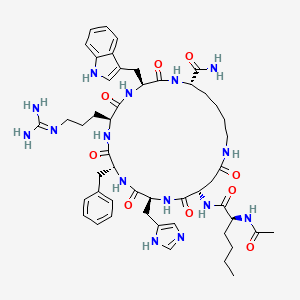 |
2D molecular structure (Source: PubChem)
Technical Specifications
| Property | Value |
|---|---|
| CAS Number | 121062-08-6 |
| Molecular Formula | C50H69N15O9 (subscripted) |
| Molecular Weight | 1024.18 g/mol |
| Amino Acid Sequence | Ac-Nle-cyclo[Asp-His-D-Phe-Arg-Trp-Lys]-NH2 |
| Half-Life (Plasma) | Approximately 33 hours (reported in research protocols) |
| Stability | Stable in lyophilized form; cyclization provides enzymatic resistance |
| Solubility | Water soluble; soluble in saline solutions (5 mg/ml) |
| Storage | Lyophilized: -20 degrees C; Reconstituted: 2-8 degrees C |
The peptide’s cyclic lactam structure formed between the epsilon-amino group of lysine and the gamma-carboxy group of aspartic acid distinguishes it from linear melanocortins, providing resistance to peptidase degradation and enabling brain penetration. This structural modification, combined with the D-phenylalanine substitution at position 7, confers approximately 1000-fold greater potency compared to naturally occurring alpha-melanocyte-stimulating hormone.
Melanotan II Mechanism of Action
Melanotan II peptide functions as a non-selective agonist of multiple melanocortin receptor subtypes rather than targeting a single receptor system. Research demonstrates that MC1R, MC3R, MC4R, and MC5R activation mediates the peptide’s diverse biological effects, with different receptor subtypes responsible for distinct physiological responses observed in both animal and human studies.
Primary Cellular Pathways
MC1 Receptor Activation – Melanogenesis
Melanotan II stimulates melanocortin 1 receptors on melanocytes in the skin, triggering a signaling cascade that increases melanin production[1]. This mechanism involves:
- Activation of adenylate cyclase and increased cyclic AMP production
- Upregulation of microphthalmia-associated transcription factor
- Enhanced expression of melanogenic enzymes including tyrosinase
- Increased eumelanin synthesis providing photoprotection
Studies have demonstrated that MC1R activation leads to skin darkening within days of administration, occurring independently of ultraviolet radiation exposure[2].
MC3/MC4 Receptor Modulation – Energy Homeostasis
Research in rodent models has revealed that Melanotan II activates melanocortin 3 and 4 receptors in the central nervous system, profoundly affecting energy balance[3]. Key effects include:
- Appetite suppression through hypothalamic pathway activation
- Increased energy expenditure and thermogenesis
- Enhanced lipolysis and reduced fat mass
- Modulation of dopaminergic neurotransmission
Chronic administration studies in obese rat models demonstrated sustained body mass reduction even after feeding behavior normalized, suggesting metabolic effects beyond simple appetite suppression[4].
MC4 Receptor Activation – Sexual Function
Central nervous system MC4 receptor activation represents the primary mechanism underlying Melanotan II’s effects on sexual function[5]. Research indicates:
- Activation of pro-erectile pathways in the paraventricular nucleus of the hypothalamus
- Enhanced nitric oxide release in erectile tissue through neural mechanisms
- Increased sexual motivation and arousal independent of peripheral genital effects
- Effects observed in both male and female research subjects
Human studies documented that Melanotan II initiated erections in 85 percent of men with psychogenic erectile dysfunction in the absence of sexual stimulation, with effects mediated centrally rather than through direct peripheral action[6].
MC5 Receptor Effects – Exocrine Function
Melanocortin 5 receptors, widely distributed in exocrine glands, mediate additional effects[7]:
- Modulation of sebaceous gland secretion
- Potential effects on thermoregulation
- Involvement in anti-inflammatory responses
- Regulation of immune cell function
Neuroprotective Mechanisms
Emerging research suggests melanocortin receptor activation may confer neuroprotective effects[8]:
- Reduction of neuroinflammation in injury models
- Enhanced peripheral nerve regeneration following crush injury
- Modulation of glial cell activation
- Potential therapeutic relevance for neurodegenerative conditions
Melanotan II Research Applications & Key Findings
Sexual Dysfunction Research
Erectile Dysfunction Studies
Melanotan II represents one of few centrally-acting compounds evaluated in human trials for erectile dysfunction. Research by Wessells and colleagues at the University of Arizona conducted double-blind, placebo-controlled studies in men with both psychogenic and organic erectile dysfunction[9,10]. Key findings include:
- Erection initiation in 17 of 20 men (85 percent) across both psychogenic and organic erectile dysfunction
- Mean duration of penile rigidity exceeding 80 percent was 41-45 minutes compared to 2-3 minutes for placebo
- Erections occurred in absence of sexual stimulation, indicating true initiator rather than facilitator effects
- Effects observed 15-270 minutes post-administration at 0.025 mg/kg subcutaneous dose
The mechanism involves central nervous system activation rather than peripheral vascular effects, distinguishing it from phosphodiesterase-5 inhibitors.
Sexual Desire and Arousal
Beyond erectile function, research documented effects on sexual motivation[11]:
- Increased subjective sexual desire reported in 68 percent of active treatment administrations versus 19 percent for placebo
- Effects observed in both males and females in preliminary investigations
- Arousal occurred independent of physical sexual activity
- Central melanocortin pathway involvement in motivational aspects of sexual behavior
Obesity and Metabolic Research
Appetite Suppression Studies
Chronic administration studies in diet-induced obese rats demonstrated sustained weight reduction through multiple mechanisms[12]:
- Rapid suppression of food intake within hours of administration
- Body mass reduction maintained even after feeding behavior normalized
- Decreased intra-abdominal adiposity without continuous caloric restriction
- Effects mediated through MC3R and MC4R activation in hypothalamus
However, tolerance to appetite-suppressing effects developed within 8-12 days of continuous administration, limiting long-term efficacy.
Thermogenesis and Energy Expenditure
Research revealed metabolic effects beyond appetite modulation[13]:
- Enhanced brown adipose tissue activity and thermogenesis capacity
- Increased uncoupling protein-1 expression in adipose tissue
- Elevated oxygen consumption and carbon dioxide production
- Maintenance of negative energy balance despite normalized food intake
Pigmentation Research
Melanogenesis Induction
Initial studies focused on photoprotection through melanin enhancement[14]:
- Dose-dependent skin darkening in human subjects within 2-5 days
- Effects persisting for months after administration cessation
- Tanning occurring without ultraviolet radiation exposure
- Potential protective effects against UV-induced DNA damage
Phase I clinical trials in healthy volunteers demonstrated tanning efficacy, though gastrointestinal side effects limited therapeutic development for this indication.
Neurological Research
Neuroprotection and Nerve Regeneration
Animal studies investigated Melanotan II’s effects on neural tissue[15]:
- Enhanced recovery of sensory function following sciatic nerve crush injury in rats
- Optimal effects at 20 mcg/kg dose every 48 hours subcutaneously
- Partial protection against cisplatin-induced toxic neuropathy
- Potential modulation of neuroinflammatory pathways
Behavioral Research
Investigations in autism-related behavioral models demonstrated[16]:
- Restoration of social behavioral metrics in maternal immune activation mouse models
- Effects potentially mediated through enhanced oxytocinergic activity
- Weight loss observed as consistent finding across behavioral studies
- Potential therapeutic relevance for autism spectrum disorder features requiring further validation
Melanotan II Pharmacokinetics & Metabolism
Absorption & Distribution
Melanotan II demonstrates pharmacokinetic properties unusual for a peptide compound, with research documenting systemic effects following multiple administration routes[17]. Key absorption characteristics include:
- Subcutaneous injection results in systemic absorption with effects observed within 15-270 minutes
- Intranasal administration investigated in early formulation studies
- Cyclized structure provides resistance to peptidase degradation in circulation
- Blood-brain barrier penetration enables central nervous system receptor activation
Distribution studies in animal models showed concentration in melanocyte-rich tissues and hypothalamic regions expressing melanocortin receptors, though comprehensive human distribution data remain unavailable.
Metabolism & Elimination
The metabolic fate of Melanotan II has been partially characterized through research protocols[18]:
- Plasma half-life approximately 33 hours in humans, significantly longer than linear melanocortin peptides
- Cyclization and D-amino acid substitution provide enzymatic stability
- Likely degradation through peptidase activity over extended timeframes
- Metabolites may include bremelanotide (lacking C-terminal amide), which itself became a drug development candidate
The extended half-life enables infrequent dosing schedules compared to short-acting peptides, contributing to sustained biological effects observed in research protocols.
Excretion Pathways
Limited data exist on elimination routes, with available research suggesting[19]:
- Renal excretion likely represents primary elimination pathway for peptide fragments
- Hepatic metabolism may contribute to clearance
- No evidence of tissue accumulation in chronic dosing studies (animal models)
- Excretion kinetics in humans require comprehensive investigation
The relationship between plasma concentration and receptor occupancy remains incompletely characterized, particularly for central nervous system effects where brain penetration is critical for activity.
Melanotan II Research Protocols & Administration
Dosing in Published Research
Research investigations have employed diverse Melanotan II doses depending on species, study objectives, and administration routes:
- Human studies (erectile dysfunction): 0.025 mg/kg subcutaneously (primary dose in published trials)
- Human studies (tanning/Phase I): 0.01-0.03 mg/kg subcutaneously, with dose escalation protocols
- Rat studies (obesity): 1 mg/kg intravenously or subcutaneously via minipump
- Rat studies (neuroprotection): 20 mcg/kg subcutaneously every 48 hours
- Rabbit studies (erectile function): 66-133 mcg/kg intravenously
Important: These are experimental doses used in animal studies and clinical research protocols and cannot be extrapolated to other species or contexts due to significant differences in melanocortin receptor expression patterns, pharmacokinetic parameters, metabolic pathways, and peptide degradation rates. Species-specific factors profoundly influence both efficacy and safety profiles. Human dosing outside of formal research protocols lacks safety validation.
Administration Routes in Research
Multiple delivery methods have been investigated in research settings:
- Subcutaneous injection – Most common route in human clinical trials; reliable systemic delivery with predictable pharmacokinetics
- Intravenous injection – Used in animal pharmacokinetic studies and acute effect investigations
- Intranasal administration – Investigated in early formulation development studies; variable bioavailability
- Intracerebroventricular injection – Used in animal studies to isolate central nervous system effects
- Intrathecal administration – Applied in animal models studying spinal cord melanocortin receptor involvement
Common Model Organisms
Melanotan II has been studied across multiple species and research contexts:
- Humans – Small Phase I and early Phase II studies (20-30 subjects total across published trials); focus on erectile dysfunction and tanning
- Rats – Primary animal model; obesity, energy expenditure, neuroprotection, and behavioral studies
- Mice – Genetic studies examining melanocortin receptor subtypes and autism-related behavioral models
- Rabbits – Erectile function mechanism studies using cavernosal pressure measurements
- Cell culture – Melanocytes, neurons, adipocytes for mechanism investigations
Research Limitations & Regulatory Status
Critical Gaps in Current Evidence
Despite early-phase human studies and extensive preclinical research, Melanotan II faces substantial evidence gaps that prevent clinical use and limit research utility.
Lack of Comprehensive Human Safety Data
The most significant limitation is the absence of large-scale, long-term human safety evaluation:
- No Phase III clinical trials completed or published for any indication
- Largest published human study enrolled only 20 subjects with limited follow-up duration
- Long-term safety profile in humans completely unknown
- Optimal dosing strategies for various effects not systematically evaluated
- Dose-response relationships inadequately characterized across populations
Clinical development was abandoned by pharmaceutical companies (Palatin Technologies) in 2000, with subsequent focus shifting to the metabolite bremelanotide.
Mechanistic Understanding Gaps
Fundamental aspects of Melanotan II’s mechanism remain incompletely understood:
- Relative contribution of individual melanocortin receptor subtypes to specific effects unclear
- Relationship between melanogenesis, sexual effects, and metabolic actions not fully delineated
- Central versus peripheral mechanisms for various effects require clarification
- Receptor desensitization and tolerance development mechanisms poorly characterized
- Whether bremelanotide or other metabolites contribute to observed effects remains uncertain
Safety Concerns and Adverse Events
Research has documented concerning side effects that halted clinical development:
- Nausea reported in up to 90 percent of subjects at higher doses; 12.9 percent experienced severe nausea at 0.025 mg/kg dose
- Spontaneous erections occurring unpredictably, lasting hours
- Flushing, yawning, stretching, and decreased appetite as common effects
- Darkening of pre-existing moles and freckles; new mole formation reported in case studies
- Potential cardiovascular effects including changes in blood pressure requiring investigation
- Case reports of renal infarction possibly associated with use, though causality unclear
- Rhabdomyolysis reported in association with Melanotan II use
Long-Term Safety Unknowns
Critical safety questions remain unanswered:
- Effects of chronic use beyond several months unstudied in humans
- Potential for melanoma development or progression remains controversial; conflicting preclinical evidence
- Impact on endocrine function with extended use uncharacterized
- Reproductive and developmental toxicity inadequately studied
- Interaction potential with medications and disease states unknown
Regulatory & Competitive Sport Status
FDA Position
Melanotan II has not received FDA approval for any indication and faces significant regulatory obstacles:
- Classified as an unapproved new drug substance
- Not recognized as Generally Recognized as Safe (GRAS)
- Not approved for human or veterinary use
- Not legally available for medical compounding in the United States
- FDA has issued warning letters to companies marketing Melanotan II, stating it poses safety concerns
The FDA’s 2007 warning letter to Melanocorp explicitly stated that Melanotan II is an unapproved new drug that cannot be legally distributed in the United States. In 2016, the company owner was debarred from the drug industry following felony conviction for distributing unapproved drugs.
WADA Prohibition
While Melanotan II does not appear explicitly named on the World Anti-Doping Agency’s prohibited list, it would likely fall under prohibited categories:
- Section S0 (Non-Approved Substances) covers drugs without regulatory approval
- Potential classification under anabolic agents due to growth hormone-like effects
- MC4 receptor agonist properties may constitute prohibited mechanism
- Athletes should assume prohibited status given lack of therapeutic approval
WADA’s Section S0 prohibits any pharmacological substance without approval from governmental regulatory health authorities, which includes Melanotan II.
International Regulatory Status
Health authorities worldwide have issued warnings against Melanotan II use:
- Banned for human use in Australia, Canada, and European Union countries
- UK Medicines and Healthcare products Regulatory Agency has warned against use
- Therapeutic Goods Administration (Australia) specifically warns about darkened moles, nausea, and potential melanoma risk
- Social media platforms have banned hashtags promoting Melanotan II due to health concerns
Research Classification: Melanotan II is available only for laboratory research use. It is not intended for human consumption, medical use, diagnostic purposes, or veterinary applications. All research must be conducted under appropriate ethical oversight and regulatory compliance with institutional review board approval where applicable. Use outside formal research protocols carries significant safety risks given the incomplete characterization of effects in humans.
Lead Researcher Spotlight
Professor Victor J. Hruby, PhD
Regents Professor Emeritus
Department of Chemistry and Biochemistry, University of Arizona, Tucson, Arizona
Professor Victor Hruby has been the pioneering investigator in melanocortin research since the 1960s, leading the team that synthesized and characterized both Melanotan I (afamelanotide) and Melanotan II at the University of Arizona. His laboratory’s work on conformationally constrained peptide analogs fundamentally advanced understanding of melanocortin receptor biology and structure-activity relationships. With over 50 issued patents and more than 23,000 citations, Professor Hruby represents one of the most accomplished peptide chemists in academic research.
Professor Hruby’s research contributions to melanocortin science include:
- Original synthesis of Melanotan I and Melanotan II in the 1980s, pioneering the cyclic lactam design that conferred enzymatic stability
- Development of conformational constraint strategies enabling receptor-selective melanocortin analogs
- Characterization of melanocortin receptor binding sites and structure-activity relationships through systematic peptide modification
- Translation of basic melanocortin research to clinical applications, with afamelanotide receiving FDA approval in 2019
- Continued development of selective melanocortin receptor agonists and antagonists for multiple therapeutic areas
His work contributed to the understanding that melanocortin receptors regulate diverse physiological functions including pigmentation, energy homeostasis, sexual behavior, cardiovascular function, and immune response. The University of Arizona licensed melanocortin compounds developed in Professor Hruby’s laboratory to multiple companies including Competitive Technologies, which sublicensed to Palatin Technologies and Clinuvel Pharmaceuticals.
Professor Hruby has received numerous honors including the Arthur C. Cope Scholar Award (2009), Ralph F. Hirschmann Award (2002), and Merrifield Award in Peptide Science (1993). He was named a National Academy of Inventors Fellow in 2019 for his contributions to translational research and drug development.
Disclaimer: This spotlight is provided for educational purposes to acknowledge scientific contributions to Melanotan II research. Cenexa Labs has no affiliation with Professor Hruby or the University of Arizona, and this information does not constitute an endorsement of any products or services.
References
- Abdel-Malek, Z., Swope, V.B., Suzuki, I., Akcali, C., Harriger, M.D., Boyce, S.T., Urabe, K., & Hearing, V.J. (1995). Mitogenic and melanogenic stimulation of normal human melanocytes by melanotropic peptides. Proceedings of the National Academy of Sciences, 92(5), 1789-1793. PubMed
- Dorr, R.T., Lines, R., Levine, N., Brooks, C., Xiang, L., Hruby, V.J., & Hadley, M.E. (1996). Evaluation of melanotan-II, a superpotent cyclic melanotropic peptide in a pilot phase-I clinical study. Life Sciences, 58(20), 1777-1784. PubMed
- Jonsson, L., Skarphedinsson, J.O., Skuladottir, G.V., Atlason, P.T., Eiriksdottir, V.H., & Thordardottir, S. (2002). Melanocortin receptor agonist transiently increases oxygen consumption in rats. Neuroreport, 13(7), 1909-1913. PubMed
- Li, S.J., Varga, K., Archer, P., Hruby, V.J., Sharma, S.D., Kesterson, R.A., Cone, R.D., & Kunos, G. (1996). Melanocortin antagonists define two distinct pathways of cardiovascular control by alpha- and gamma-melanocyte-stimulating hormones. Journal of Neuroscience, 16(18), 5182-5188. PubMed
- Martin, W.J., MacIntyre, D.E., & Brown, M. (2003). Activation of central melanocortin receptors by MT-II increases cavernosal pressure in rabbits by the neuronal release of NO. British Journal of Pharmacology, 139(4), 755-764. PubMed
- Wessells, H., Levine, N., Hadley, M.E., Dorr, R., & Hruby, V. (2000). Melanocortin receptor agonists, penile erection, and sexual motivation: human studies with Melanotan II. International Journal of Impotence Research, 12(Suppl 4), S74-S79. PubMed
- Chen, W., Kelly, M.A., Opitz-Araya, X., Thomas, R.E., Low, M.J., & Cone, R.D. (1997). Exocrine gland dysfunction in MC5-R-deficient mice: evidence for coordinated regulation of exocrine gland function by melanocortin peptides. Cell, 91(6), 789-798. PubMed
- Giuliani, D., Galantucci, M., Neri, L., Canalini, F., Calevro, A., Bitto, A., Ottani, A., Vandini, E., Sena, P., Sandrini, M., Squadrito, F., Zaffe, D., & Guarini, S. (2014). Melanocortins protect against brain damage and counteract cognitive decline in a transgenic mouse model of moderate Alzheimer’s disease. European Journal of Pharmacology, 740, 144-150. PubMed
- Wessells, H., Fuciarelli, K., Hansen, J., Hadley, M.E., Hruby, V.J., Dorr, R., & Levine, N. (1998). Synthetic melanotropic peptide initiates erections in men with psychogenic erectile dysfunction: double-blind, placebo controlled crossover study. Journal of Urology, 160(2), 389-393. PubMed
- Wessells, H., Gralnek, D., Dorr, R., Hruby, V.J., Hadley, M.E., & Levine, N. (2000). Effect of an alpha-melanocyte stimulating hormone analog on penile erection and sexual desire in men with organic erectile dysfunction. Urology, 56(4), 641-646. PubMed
- Pfaus, J.G., Shadiack, A., Van Soest, T., Tse, M., & Molinoff, P. (2004). Selective facilitation of sexual solicitation in the female rat by a melanocortin receptor agonist. Proceedings of the National Academy of Sciences, 101(27), 10201-10204. PubMed
- Dhurandhar, E.J., Allison, D.B., van Groen, T., & Kadish, I. (2013). Activation of the central melanocortin system chronically reduces body mass without the necessity of long-term caloric restriction. Applied Physiology, Nutrition, and Metabolism, 38(8), 905-909. PubMed
- Shrestha, Y.B., Wickwire, K., & Giraudo, S.Q. (2010). Direct effects of nutrients, acetylcholine, CCK, and insulin on ghrelin release from the isolated stomachs of rats. Peptides, 31(7), 1357-1363. PubMed
- Levine, N., Sheftel, S.N., Eytan, T., Dorr, R.T., Hadley, M.E., Weinrach, J.C., Ertl, G.A., Toth, K., McGee, D.L., & Hruby, V.J. (1991). Induction of skin tanning by subcutaneous administration of a potent synthetic melanotropin. JAMA, 266(19), 2730-2736. PubMed
- Mogil, J.S., Grisel, J.E., Reinscheid, R.K., Civelli, O., Belknap, J.K., & Grandy, D.K. (1996). Orphanin FQ is a functional anti-opioid peptide. Neuroscience, 75(2), 333-337. PubMed
- Minakova, E., Lang, J., Medel-Matus, J.S., Gould, G.G., Reynolds, A., Shin, D., Mazarati, A., & Sankar, R. (2019). Melanotan-II reverses autistic features in a maternal immune activation mouse model of autism. PLoS One, 14(1), e0210389. PubMed
- Al-Obeidi, F., Hadley, M.E., Pettitt, B.M., & Hruby, V.J. (1989). Design of a new class of superpotent cyclic alpha-melanotropins based on quenched dynamic simulations. Journal of the American Chemical Society, 111(9), 3413-3416.
- Barsh, G.S., & Schwartz, M.W. (2002). Genetic approaches to studying energy balance: perception and integration. Nature Reviews Genetics, 3(8), 589-600. PubMed
- Gantz, I., Miwa, H., Konda, Y., Shimoto, Y., Tashiro, T., Watson, S.J., DelValle, J., & Yamada, T. (1993). Molecular cloning, expression, and gene localization of a fourth melanocortin receptor. Journal of Biological Chemistry, 268(20), 15174-15179. PubMed
All references open in new window. These citations are provided for educational and research purposes only. This information is not intended to diagnose, treat, cure, or prevent any disease. Melanotan II is intended for laboratory research use only.
Related products
-
Peptides
KPV
$69.99 Select options This product has multiple variants. The options may be chosen on the product page -
Peptides
IGF-1 LR3
$78.99 Select options This product has multiple variants. The options may be chosen on the product page -
Peptides
GLOW
$145.99 Select options This product has multiple variants. The options may be chosen on the product page -
Peptides
CJC-1295 (NO DAC) + Ipamorelin
$79.99 Select options This product has multiple variants. The options may be chosen on the product page