Availability: In Stock
Selank Spray
$74.99 Original price was: $74.99.$59.99Current price is: $59.99.
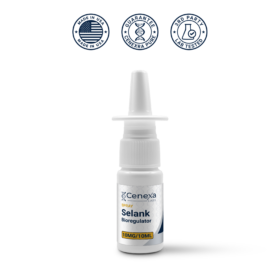
Selank Peptide Spray is a synthetic neuropeptide, pre-dissolved in sterile saline (10mg/10ml), studied for anxiety reduction and cognitive enhancement in intranasal research models. Amount Per Spray: 170 mcg
 Earn $2 Cenexa Bucks when you buy this product!
Availability: In Stock
A portion of every order supports organizations focused on children’s cancer research & care. Help us make a difference.
 Buy More & Save!
Add selected quantity to cart above & discount is automatically applied.
| Quantity | Discount % | Price Per Item |
|---|---|---|
| 3-6 | 4 | $57.59 |
| 7-9 | 7 | $55.79 |
| 10-50 | 9 | $54.59 |
Quick Links
Selank Peptide Spray
The Anxiolytic-Nootropic Neuropeptide Also known as: Tuftsin analog, TKPRPGP, Selanc
Format: Sterile aqueous solution in saline | Concentration: 1 mg/mL | Volume: 10 mL | Total Content: 10 mg | Amount Per Spray: 170 mcg
Why Researchers Choose Selank Spray
Selank is one of the few research peptides that simultaneously engages the anxiolytic and nootropic axes — modulating GABAergic inhibitory signaling while also upregulating BDNF (brain-derived neurotrophic factor) and influencing dopaminergic and serotonergic pathways. This multi-system neurological profile makes it particularly valuable for studies examining anxiety-cognition interactions, rather than treating them as separate phenomena.
For researchers comparing it to classical benzodiazepine models, Selank’s GABA-modulating mechanism appears to produce anxiolytic-level activity without sedation or dependence signals in animal models — a mechanistic distinction that continues to drive preclinical interest. This pre-dissolved 10 mg/10 mL sterile saline solution is ready for immediate laboratory use, eliminating reconstitution steps.
What It Is
Selank is a synthetic heptapeptide (Thr-Lys-Pro-Arg-Pro-Gly-Pro) developed at the Institute of Molecular Genetics of the Russian Academy of Sciences. It was engineered as a stabilized analog of tuftsin — a naturally occurring fragment of the human IgG heavy chain — with three additional amino acids (Pro-Gly-Pro) appended to the C-terminus to extend metabolic stability and duration of action.
Researchers became interested because tuftsin alone degrades too rapidly in vivo to be useful experimentally. Selank preserves the core immunomodulatory and neurological activity of tuftsin while offering a practical research window. It has since been the subject of both Russian clinical trials and peer-reviewed preclinical studies exploring its dual role in neuroimmunology and cognitive neuroscience.
How It Works (What Makes It Interesting)
Research suggests Selank may influence neurological function through several converging mechanisms:
- GABAergic allosteric modulation — Studies indicate Selank acts as a positive allosteric modulator at GABA-A receptors, enhancing the inhibitory effects of endogenous GABA without directly binding the classical benzodiazepine site — a mechanistically distinct pathway that may explain its non-sedating profile in animal models.
- BDNF upregulation — Research demonstrates rapid elevation of brain-derived neurotrophic factor (a key protein in synaptic plasticity and neuronal survival) in hippocampal tissue following Selank administration in rodent models.
- Monoamine neurotransmitter modulation — Selank appears to influence serotonin metabolism and regulate expression of dopamine receptor subtypes (Drd1a, Drd2, Drd5), with Drd5 activation in particular associated with long-term potentiation and memory consolidation processes.
- Enkephalinase inhibition — Similar to the related peptide Semax, Selank research suggests inhibition of enzymes that degrade enkephalins, potentially prolonging endogenous opioid peptide activity in stress-response pathways.
- Cytokine & immune modulation — As a tuftsin analog, Selank has been shown to modulate IL-6 expression and T-helper cell cytokine balance, making it relevant to research exploring the neuroimmune interface under stress conditions.
Common Research Applications
- Anxiety & Stress Models: Generalized anxiety disorder (GAD) animal models, chronic unpredictable mild stress (UCMS) paradigms, fear conditioning studies, HPA axis dysregulation models, benzodiazepine mechanism comparison studies
- Cognitive & Memory Research: Spatial learning tasks (Morris water maze), synaptic plasticity investigations, long-term potentiation (LTP) research, working memory models, stress-induced cognitive impairment studies
- Neuroimmunology: Cytokine regulation in CNS inflammation, T-helper cell polarization under chronic stress, IL-6 pathway modulation, neuroinflammation biomarker studies, stress-immune suppression models
- GABAergic Pharmacology: GABA-A receptor allosteric modulation studies, benzodiazepine receptor site interaction research, sedation-free anxiolytic mechanism exploration, chloride channel gating dynamics
- Neuroprotection Research: BDNF-mediated neuronal survival models, hippocampal neurogenesis studies, ischemic brain injury models, oxidative stress in neural tissue
- Peptide Pharmacokinetics: Tuftsin analog bioavailability and half-life research, Pro-Gly-Pro C-terminal stabilization studies, enkephalinase inhibition kinetics, intranasal peptide delivery modeling
Note: The majority of Selank research has been conducted in rodent models and Russian clinical settings. International independent replication remains limited; researchers should evaluate the existing evidence base accordingly.
What You’re Getting
Every batch of our Selank Spray meets rigorous research standards:
- Exceeds 99% Purity — Verified by HPLC analysis
- Certificate of Analysis (COA) — Included with every order, showing purity and identity confirmation
- Endotoxin-Free — Tested to ensure <1 EU/mg for cell culture applications
- Manufactured in USA — GMP-certified facilities with full traceability
- Ready-to-Use Format — Pre-dissolved in sterile saline (10 mg/10 mL), no reconstitution required
- Fast Shipping — Most orders ship same day. We offer flat rate shipping and 2–3 day delivery in the USA
Research Use Only This product is intended strictly for laboratory research purposes. Not for human consumption, clinical use, veterinary applications, or any diagnostic or therapeutic purposes.
Selank Research & Scientific Overview
Jump to: Structure | Mechanism | Studies | Pharmacokinetics | Protocols | Limitations | Lead Researcher | References
Selank Molecular Structure & Chemical Properties {#structure}
Selank is a synthetic heptapeptide developed in the early 1990s at the Institute of Molecular Genetics of the Russian Academy of Sciences, designed as a metabolically stable analog of tuftsin – a naturally occurring immunomodulatory tetrapeptide (Thr-Lys-Pro-Arg) derived from the heavy chain of human immunoglobulin G. To address tuftsin’s rapid enzymatic degradation, researchers extended the original tetrapeptide sequence at the C-terminus with the tripeptide Pro-Gly-Pro, yielding the final heptapeptide structure Thr-Lys-Pro-Arg-Pro-Gly-Pro (TKPRPGP). This structural modification substantially improves metabolic stability while preserving and expanding the biological activity of the parent molecule. Selank has accumulated decades of preclinical and limited clinical research primarily from Russian institutions, with particular emphasis on its anxiolytic, nootropic, and immunomodulatory properties and on intranasal delivery as its preferred research administration route.
Chemical Structure
[IMAGE PLACEHOLDER] Insert 2D chemical structure image here Image URL: https://pubchem.ncbi.nlm.nih.gov/image/imgsrv.fcgi?cid=11765600&t=l Alt text: Selank molecular structure diagram showing heptapeptide backbone Source credit: PubChem Position: Center-aligned below heading
2D molecular structure (Source: PubChem)
Technical Specifications
Property
Value
CAS Number
129954-34-3
Molecular Formula
C33H57N11O9 (subscripted)
Molecular Weight
751.88 g/mol
Amino Acid Sequence
Thr-Lys-Pro-Arg-Pro-Gly-Pro (TKPRPGP)
Half-Life (Plasma)
~20-30 minutes (rat models)
Stability
Enhanced stability vs. tuftsin due to C-terminal Pro-Gly-Pro extension; hydrophilic character
Solubility
Water soluble; prepared as aqueous nasal solution in research protocols
Storage
Lyophilized: -20 degrees C or below; Reconstituted: 2-8 degrees C
Selank’s isoelectric point is approximately 11.5, indicating a basic character under neutral pH conditions. The peptide is structurally linear, lacking disulfide bonds or cyclic elements, and its sequence rich in polar amino acids – threonine, lysine, and arginine – accounts for its marked hydrophilicity and aqueous solubility.
Selank Mechanism of Action {#mechanism}
Selank exerts its neuropsychopharmacological effects through multiple intersecting pathways rather than a single defined receptor target. The most extensively studied mechanism involves allosteric modulation of the GABAergic system, though research has also documented effects on monoamine neurotransmitter metabolism, enkephalin degradation pathways, and neurotrophic factor expression – all of which may contribute synergistically to the behavioral effects observed in preclinical models.
Primary Cellular Pathways
GABAergic System Modulation – Anxiolytic Activity
Research has demonstrated that Selank influences the specific binding of GABA to GABA-A receptors, likely through allosteric modulation that alters the number of specific GABA binding sites without affecting receptor affinity[1]. Studies in rat frontal cortex found that intranasal administration (300 mcg/kg) produced significant changes in the mRNA expression of 45 genes involved in GABAergic neurotransmission within one hour of administration[2]. Key effects documented in rodent models include:
Altered expression of major GABA-A receptor subunit genes, including GABRB3, GABRE, and GABRQ
Regulation of ion channels involved in GABA transport
Modulation of dopamine receptor subtypes (DRD3, DRD5) and serotonin receptor genes simultaneously
Changes in HCRT (hypocretin/orexin) gene expression, which may explain the absence of sedative effects observed with classical benzodiazepines
Enkephalin Degradation Inhibition
Selank, along with the closely related peptide Semax, has been found to inhibit aminopeptidase N (APN) and dipeptidyl peptidase IV (DPP-IV), enzymes responsible for the degradation of enkephalins and other endogenous regulatory peptides[3]. By attenuating enkephalin catabolism, Selank effectively prolongs the biological activity of endogenous opioid peptides:
Increased leu-enkephalin half-life in blood plasma observed in clinical study participants
Enkephalin-related effects on anxiety appear independent of direct opioid receptor activation
Studies in morphine-dependent rats showed Selank (0.3 mg/kg intraperitoneally) reduced withdrawal syndrome severity by approximately 40%, with effects partially blocked by naloxone[4]
BDNF Upregulation – Neurotrophic Support
Intranasal administration of Selank has been shown to regulate brain-derived neurotrophic factor (BDNF) expression in rat hippocampus in vivo[5]. Biodistribution studies using radiolabeled peptide confirmed brain penetration following intranasal delivery. Key findings include:
Doses of 250 and 500 mcg/kg increased BDNF mRNA levels at 3 hours post-administration
BDNF protein levels were elevated at 24 hours post-administration at both doses tested
BDNF upregulation in the hippocampus is specifically associated with local synthesis, not axonal transport from remote brain regions
Cognitive-protective effects against ethanol-induced memory impairment correlated with BDNF modulation in hippocampus and prefrontal cortex
Monoamine Neurotransmitter Modulation
Research in BALB/c and C57BL/6 mice documented that Selank (300 mcg/kg) produced strain-dependent changes in the brain content of noradrenaline, dopamine, serotonin, and their major metabolites across hippocampus, hypothalamus, and frontal cortex[6]. Notable observations include:
Induced serotonin metabolism changes within 30 minutes of administration
Selank elevated serotonin metabolism even in rats pre-treated with a serotonin synthesis inhibitor (p-chlorophenylalanine) – an effect not produced by tuftsin alone
Dopamine metabolite changes (3,4-dihydroxyphenylacetic and homovanillic acids) observed in hippocampus and frontal cortex
Immunomodulatory Activity
As a structural tuftsin analog, Selank retains meaningful immunomodulatory properties. Studies in patients with anxiety-asthenic disorders found that Selank modulated IL-6 expression, suppressing levels in subjects with depression while leaving healthy controls unaffected[7]. Research has also documented effects on T-helper cell cytokine balance and on the expression of inflammation-related genes in mouse spleen.
[CALLOUT BOX – Highlighted] Key Mechanistic Insight: Selank’s multi-target profile – encompassing GABAergic allosteric modulation, enkephalin system engagement, BDNF upregulation, and monoamine regulation – distinguishes it mechanistically from classical benzodiazepines. However, no single primary receptor or binding site has been definitively identified, which remains a significant gap in the current literature. [END CALLOUT BOX]
Selank Research Applications & Key Findings {#studies}
Anxiety and Stress Research
Generalized Anxiety Disorder Models
The most extensively studied application of Selank is its anxiolytic activity across multiple preclinical models and in a limited number of clinical investigations conducted in Russia. In the elevated plus maze and open field behavioral tests in rats, intranasal Selank (300 mcg/kg) consistently reduced anxiety-like behaviors, with effects considered comparable to those of classical benzodiazepine drugs[8].
A clinical study examined 62 patients with generalized anxiety disorder (GAD) and neurasthenia, comparing Selank (30 patients) to the benzodiazepine medazepam (32 patients)[9]. Key findings included:
Comparable anxiolytic efficacy between Selank and medazepam on standard psychometric scales (Hamilton, Zung, CGI)
Selank additionally demonstrated antiasthenic and psychostimulant properties not observed with medazepam
Selank subjects showed improved leu-enkephalin half-life, correlating with reduced anxiety severity
Absence of amnesia, withdrawal syndrome, and dependence – side effects commonly associated with benzodiazepines
A separate rodent study found that combined administration of Selank and diazepam under unpredictable chronic mild stress conditions amplified anxiolytic outcomes beyond either compound administered alone, suggesting potential additive effects on GABA-A receptors[10].
Cognitive Research
Memory and Learning Models
Research in rodent models has examined Selank’s effects on cognitive processes. In aged rats (9 months), Selank (0.3 mg/kg per day for 7 days intraperitoneally) produced cognitive-stimulating effects in the object recognition test and prevented the formation of ethanol-induced memory and attention disturbances during alcohol withdrawal[5]. Specific findings included:
Prevented ethanol-induced increases in hippocampal and frontal cortex BDNF associated with alcohol withdrawal
Restored cognitive parameters in older rats not previously exposed to ethanol
Improved avoidance conditioning in rodent active avoidance tests
Neurological Research
Parkinson’s Disease Models
Research examining Selank in rodent models of parkinsonism induced by 6-hydroxydopamine (6-OHDA), a neurotoxin targeting catecholaminergic systems, found that Selank administration restored certain cognitive and behavioral processes disrupted by dopaminergic damage[11]. This research remains preliminary and mechanistically poorly characterized.
Opiate Withdrawal Models
Studies in morphine-dependent rats demonstrated that intraperitoneal Selank (0.3 mg/kg) reduced the total index of naloxone-precipitated morphine withdrawal syndrome by approximately 40%, attenuating convulsive reactions, ptosis, and posture disorders, while increasing tactile sensitivity thresholds[4]. By comparison, diazepam (2 mg/kg) reduced the withdrawal index by approximately 49%, indicating Selank showed somewhat lower but still notable activity in this model.
Immunomodulation Research
Cytokine and Antiviral Studies
Research into Selank’s immunomodulatory properties has documented modulation of IL-6 expression in anxiety-asthenic disorder patients and effects on T-helper cell cytokine balance[7]. Additional studies have examined inflammation-related gene expression dynamics in mouse spleen following single and repeated Selank administration, finding temporal changes in C3, Casp1, Il2rg, and Xcr1 genes[12]. Separate preclinical research identified antiviral activity against influenza A (H3N2), herpes simplex virus (HSV-1 and HSV-2), and cytomegalovirus (CMV) in animal and cell-based models[13].
[CALLOUT BOX – Highlighted] Critical Research Limitation: The majority of Selank clinical research has been conducted exclusively at Russian institutions, with studies largely published in Russian-language journals and only the abstracts indexed in international databases. Independent international replication of these findings is very limited. All clinical findings should be interpreted with caution given these constraints. [END CALLOUT BOX]
Selank Pharmacokinetics & Metabolism {#pharmacokinetics}
Absorption & Distribution via Intranasal Route
Intranasal administration has been established in published research as the preferred delivery route for Selank, valued specifically because it enables direct nose-to-brain transport via olfactory and trigeminal nerve pathways[14]. Studies using radiolabeled Selank confirmed brain penetration following intranasal delivery, with peptide detected in multiple brain regions including cortex, hippocampus, and hypothalamus. Key absorption characteristics documented in rat models include:
Rapid systemic absorption with peak plasma concentrations occurring within 15-30 minutes following intraperitoneal administration
Nose-to-brain direct transport observed for intranasal route, bypassing systemic circulation
Research comparing intranasal vs. intraperitoneal routes in BALB/c and C57BL/6 mice found route-dependent differences in behavioral outcomes, consistent with distinct pharmacokinetic profiles[15]
Oral bioavailability is not established for Selank given its peptide nature
Metabolism & Elimination
Biodegradation studies using evenly tritium-labeled Selank identified the major metabolic products in blood plasma as the pentapeptide TKPRP, the tripeptide TKP, and the dipeptides RP and GP[14]. Key pharmacokinetic parameters observed in animal models include:
Plasma half-life approximately 20-30 minutes in rat models
Rapid hepatic metabolism through aminopeptidase activity
Complete clearance from circulation within approximately 10 minutes using sensitive detection methods in some studies
Pharmacodynamic effects persist considerably longer than the plasma half-life would predict, suggesting either active metabolite contributions or persistent receptor-mediated signaling
The dipeptide GP and tripeptide PGP, products of Selank biodegradation, are themselves reported to have independent biological activity, potentially contributing to the overall pharmacodynamic profile after parent peptide clearance.
Excretion Pathways
Excretion data for Selank remains incompletely characterized in published literature:
Likely renal elimination of peptide degradation fragments based on metabolic pathway analysis
No documented bioaccumulation in chronic dosing studies (animal models)
Excretion kinetics for the parent peptide and active metabolites require further investigation
Selank Research Protocols & Administration {#protocols}
Dosing in Published Research
Published preclinical and clinical research has employed a range of Selank doses depending on species, administration route, and research model:
Rat intranasal studies: 300 mcg/kg is the most commonly cited anxiolytic dose in preclinical literature
Rat intraperitoneal studies: 250-500 mcg/kg range for neurotrophic and cognitive studies; 0.3 mg/kg for opiate withdrawal models
Mouse studies: 250-300 mcg/kg typical range; dose response examined from 0.01 to 0.3 mg/kg depending on model
Clinical studies (Russia): Approximately 250 mcg to 3 mg daily ranges reported in Russian clinical protocols
Important: These are experimental doses used in animal studies and cannot be extrapolated to other species due to significant differences in metabolism, pharmacokinetics, receptor expression, nose-to-brain transport efficiency, and peptide degradation rates. Species-specific factors profoundly influence both efficacy and safety profiles.
Administration Routes in Research
Multiple delivery methods have been studied, with intranasal being the most extensively documented:
Intranasal administration – Clinically preferred research route; enables direct nose-to-brain transport; used in the majority of preclinical and clinical Selank studies
Intraperitoneal injection – Common in rodent behavioral pharmacology studies; reliable systemic delivery
Subcutaneous injection – Used in systemic delivery studies; documented in some Russian clinical protocols
Intravenous injection – Used primarily for pharmacokinetic characterization and biodegradation studies
Common Model Organisms
Selank has been studied across multiple species and cell systems:
Rats (Wistar, Sprague-Dawley outbred) – Primary research model; used in anxiety, cognitive, opioid withdrawal, and BDNF studies
Mice (BALB/c, C57BL/6) – Used for strain-dependent behavioral comparisons; genetic susceptibility research
Non-human primates (rhesus monkeys) – Limited studies examining neurosis models and behavioral restoration
Human subjects (clinical) – Limited clinical studies with GAD and neurasthenia patients conducted at Russian institutions
Cell culture – IMR-32 neuroblastoma cells; rat frontal cortex tissue; spleen cells for immunomodulatory studies
Research Limitations & Regulatory Status {#limitations}
Critical Gaps in Current Evidence
Despite decades of preclinical investigation and limited clinical research, Selank faces significant translational barriers that constrain interpretation of the available evidence base.
Geographic and Publication Bias
The most consequential limitation in Selank research is structural rather than purely scientific:
Overwhelming majority of studies conducted exclusively at Russian and Ukrainian institutions
Most clinical data published in Russian-language journals, with only abstracts accessible through international databases like PubMed
No independent international replication of clinical findings has been published in peer-reviewed Western literature
Clinical study methodologies are difficult to fully assess given limited access to complete publications
Mechanistic Understanding Gaps
Fundamental aspects of Selank’s mechanism remain unresolved:
No single primary receptor or binding target has been definitively identified
Whether anxiolytic effects are primarily driven by GABAergic modulation, enkephalin pathway effects, monoamine changes, or BDNF upregulation – or some combination – remains debated
Active metabolite contributions (RP, GP, PGP fragments) to total biological activity are not fully characterized
Tissue-specific receptor interactions require further clarification across brain regions
Long-Term Safety Considerations
Critical safety questions remain inadequately addressed:
Chronic use effects beyond short-term protocols unstudied even in animal models
Immunogenicity risk cannot be excluded given the peptide’s partial homology to immunoglobulin fragments
Interaction potential with psychiatric medications, including benzodiazepines, is only partially characterized
Reproductive and developmental toxicity has not been systematically investigated
Cancer cell interaction and tumor progression effects are unstudied
Regulatory & Competitive Sport Status
FDA Position
Selank has not received FDA approval for any indication in the United States:
Classified as an unapproved drug substance under FDA jurisdiction
Not recognized as GRAS (Generally Recognized as Safe)
Not approved for human use, medical compounding, or veterinary applications in the US
Approved in Russia (2009) for generalized anxiety disorder; available by prescription through Russian and Ukrainian pharmacies – this approval does not extend to other jurisdictions
WADA Status
Selank does not appear on the World Anti-Doping Agency’s current prohibited list as a specifically named substance; however:
It may fall under broader categories of peptide hormones and regulatory peptides subject to WADA scrutiny
Researchers and affiliated athletes should consult current WADA documentation before including Selank in protocols involving competitive athletes
Status may change as detection methods and prohibited substance lists evolve
Research Classification: Selank is available only for laboratory research use outside Russia and Ukraine. It is not intended for human consumption, medical use, or veterinary applications in jurisdictions where it lacks regulatory approval. All research must be conducted under appropriate ethical oversight and institutional review board approval where applicable.
Lead Researcher Spotlight {#lead-researcher}
Nikolai F. Myasoedov, PhD
Department of Chemistry of Physiologically Active Compounds Institute of Molecular Genetics, Russian Academy of Sciences, Moscow, Russia
Nikolai F. Myasoedov has been among the principal investigators driving Selank research since the peptide’s development in the early 1990s at the Institute of Molecular Genetics of the Russian Academy of Sciences, co-designing the structural modifications to tuftsin that produced the final heptapeptide. His laboratory has contributed to the synthesis and characterization of Selank, as well as to mechanistic investigations spanning GABAergic modulation, enkephalin degradation, BDNF regulation, and immunomodulatory pathways. His work has established Selank as one of the most extensively studied neuropeptide anxiolytics in the Russian pharmacological literature.
Dr. Myasoedov’s key research focus areas include:
Synthesis and structural optimization of regulatory neuropeptides including Selank and the related peptide Semax
Molecular mechanisms of short regulatory peptide action in the central nervous system
Enkephalin degradation pathways and enzyme inhibition by peptide analogs
Gene expression profiling in hippocampus and spleen following neuropeptide administration
Clinical investigations of Selank in anxiety-spectrum disorders conducted at Russian institutions
Disclaimer: This spotlight is provided for educational purposes to acknowledge scientific contributions to Selank research. Cenexa Labs has no affiliation with Dr. Myasoedov or the Institute of Molecular Genetics of the Russian Academy of Sciences, and this information does not constitute an endorsement of any products or services.
References {#references}
V’yunova, T.V., Andreeva, L.A., Shevchenko, K.V., Shevchenko, V.P., & Myasoedov, N.F. (2014). Peptide regulation of specific ligand-receptor interactions of GABA with the plasma membranes of nerve cells. Neurochemical Journal, 8, 259-264. PubMed
Volkova, A., Shadrina, M., Kolomin, T., Andreeva, L., Limborska, S., Myasoedov, N., & Slominsky, P. (2016). Selank administration affects the expression of some genes involved in GABAergic neurotransmission. Frontiers in Pharmacology, 7, 31. PubMed
Kost, N.V., Sokolov, O., Gabaeva, M.V., Grivennikov, I.A., Andreeva, L.A., Myasoedov, N.F., & Zozulia, A.A. (2001). Semax and selank inhibit the enkephalin-degrading enzymes from human serum. Bioorganicheskaya Khimiya, 27(3), 180-183. PubMed
Koroleva, S.V., Danchev, N.D., & Myasoedov, N.F. (2012). Activity of a peptide tuftsin analogue Selank in the naloxone-precipitated morphine withdrawal model. Eksperimental’naya i Klinicheskaya Farmakologiya, 75(5), 7-10. PubMed
Inozemtseva, L.S., Karpenko, E.A., Dolotov, O.V., Levitskaya, N.G., Kamensky, A.A., Andreeva, L.A., & Grivennikov, I.A. (2008). Intranasal administration of the peptide Selank regulates BDNF expression in the rat hippocampus in vivo. Doklady Biological Sciences, 421, 241-243. PubMed
Narkevich, V.B., Kudrin, V.S., Klodt, P.M., Pokrovskii, A.A., Kozlovskaya, M.M., Maiskii, A.I., & Raevskii, K.S. (2008). Effects of heptapeptide selank on the content of monoamines and their metabolites in the brain of BALB/C and C57Bl/6 mice: a comparative study. Eksperimental’naya i Klinicheskaya Farmakologiya, 71(5), 8-12. PubMed
Uchakina, O.N., Uchakin, P.N., Miasoedov, N.F., Andreeva, L.A., Scherbenko, V.E., Mezentseva, M.V., & Zozulia, A.A. (2008). Immunomodulatory effects of selank in patients with anxiety-asthenic disorders. Zhurnal Nevrologii i Psikhiatrii Imeni S.S. Korsakova, 108(5), 71-75. PubMed
Kozlovskaya, M.M., Kozlovskii, I.I., Val’dman, E.A., & Seredenin, S.B. (2003). Selank and short peptides of the tuftsin family in the regulation of adaptive behavior in stress. Neuroscience and Behavioral Physiology, 33(8), 853-860. PubMed
Zozulia, A.A., Neznamov, G.G., Siuniakov, T.S., Kost, N.V., Gabaeva, M.V., Sokolov, O.I., Serebriakova, E.V., Siranchieva, O.A., Andriushenko, A.V., Telesheva, E.S., Siuniakov, S.A., Smulevich, A.B., Miasoedov, N.F., & Seredenin, S.B. (2008). Efficacy and possible mechanisms of action of a new peptide anxiolytic selank in the therapy of generalized anxiety disorders and neurasthenia. Zhurnal Nevrologii i Psikhiatrii Imeni S.S. Korsakova, 108(4), 38-48. PubMed
Kasian, A., Kolomin, T., Andreeva, L., Bondarenko, E., Limborska, S., Myasoedov, N., & Slominsky, P. (2017). Peptide Selank enhances the effect of diazepam in reducing anxiety in unpredictable chronic mild stress conditions in rats. Behavioural Neurology, 2017, 5091027. PubMed
Slominsky, P.A., Shadrina, M.I., Kolomin, T.A., et al. (2017). Peptides Semax and Selank affect the behavior of rats with 6-OHDA induced PD-like parkinsonism. Doklady Biological Sciences, 474(1), 106-109. PubMed
Kolomin, T., Morozova, M., Volkova, A., Shadrina, M., Andreeva, L., Slominsky, P., & Myasoedov, N. (2014). The temporary dynamics of inflammation-related genes expression under tuftsin analog Selank action. Molecular Immunology, 58(1), 50-55. PubMed
Ershov, F.I., Uchakin, P.N., Uchakina, O.N., Mezentseva, M.V., Alekseeva, L.A., & Miasoedov, N.F. (2009). Antiviral activity of immunomodulator Selank in experimental influenza infection. Voprosy Virusologii, 54(5), 19-24. PubMed
Zolotarev, Y.A., Dadayan, A.K., Dolotov, O.V., Kozik, V.S., Kost, N.V., Sokolov, O.Y., & Myasoedov, N.F. (2006). Evenly tritium labeled peptides in study of peptide in vivo and in vitro biodegradation. Russian Journal of Bioorganic Chemistry, 32(2), 166-173. PubMed
Vasil’eva, E.V., Kondrakhin, E.A., Salimov, R.M., & Kovalev, G.I. (2008). Comparison of pharmacological effects of heptapeptide Selank after intranasal and intraperitoneal administration to BALB/c and C57BL/6 mice. Eksperimental’naya i Klinicheskaya Farmakologiya, 71(5), 13-16. PubMed
Filatova, E., Kasian, A., Kolomin, T., Rybalkina, E., Alieva, A., Andreeva, L., Limborska, S., Myasoedov, N., Pavlova, G., Slominsky, P., & Shadrina, M. (2017). GABA, Selank, and olanzapine affect the expression of genes involved in GABAergic neurotransmission in IMR-32 cells. Frontiers in Pharmacology, 8, 89. PubMed
All references open in new window. These citations are provided for educational and research purposes only. This information is not intended to diagnose, treat, cure, or prevent any disease. Selank is intended for laboratory research use only.
The Cenexa Labs Gold Standard
Most peptide sites simply resell vials from overseas labs with little oversight or testing (Much of it is either fake or laced with contaminants). At Cenexa Labs, we manufacture our own peptides under strict USA-based standards…right here IN THE USA. From synthesis to lyophilization to final vial, every step is handled under our direct control — so you never have to question what you’re getting.
We might not be the cheapest, but you can count on our peptides being 100% legit and free from contaminants, heavy metals and toxins.
Why Researchers Choose Cenexa Labs
- End-to-End Chain of Custody: Every batch is logged, tested, and traceable — no middlemen, no relabeling, no guesswork.
- Lot-Linked COAs: Each vial’s lot number ties directly to third-party HPLC/MS results. No recycled or generic COAs.
- We’re the Manufacturer: Because we produce in-house, we control purity, potency, and compliance — instead of reselling from anonymous overseas labs.
- Verified Purity, Every Time: 99%+ purity confirmed on every batch by independent labs, not just claimed on a label.
- GMP-Aligned, USA Based: Manufactured domestically in controlled GMP, ISO 9001-audited facilities.
- Fast, Reliable Fulfillment: Orders placed by 2pm CST ship the same business day. Free USPS Priority on orders $300+. $9.95 Flat rate shipping on all other orders with 2-3 day delivery.
- Backed by Trust: Over 18,000 researchers nationwide rely on Cenexa Labs for consistent, verifiable peptides.
- Room Temperature (Unmixed): Lyophilized (powder) peptides are stable for 3–4 months at room temperature if kept sealed and away from direct light.
- Freezer (Unmixed): For long-term storage, place vials in a freezer. Depending on temperature, peptides can remain stable for 1–3 years.
- After Reconstitution: Once mixed with bacteriostatic water, peptides must be stored in the refrigerator and remain stable for up to 30 days.
All Cenexa peptides are manufactured 100% end-to-end here in the USA using the Lyophilization (Freeze Drying) process. This ensures maximum stability and quality.
Best Practice:
Only reconstitute your peptides when you’re ready to begin using them. Until then, keep vials in their lyophilized powder form, stored in the freezer and away from light.
Fast Processing: We strive to ship same-day. During high-volume times it may take 2–3 days for your package to enter the mailstream. (You’ll see a notice at checkout and can upgrade if you need guaranteed same-day shipping.)
- Flat Rate Shipping: $9.95 on all orders (USPS Priority Mail 2–3 days).
- Free Shipping: Orders over $300 ship free.
- Expedited Options: Faster methods available at checkout.
Important: Orders paid by eCheck won’t ship until payment clears our bank (usually 2–3 business days after it leaves your account).
All products are carefully packaged for safe arrival.
Need help with your order or delivery?
- Call us at +1 800 123 4567
- [email protected]
See What Some Of Our 18,000+ Happy Customers Have To Say…
Related products
-
New
PT-141 Peptide Spray
$79.99 Select options This product has multiple variants. The options may be chosen on the product page -
Peptides
GLOW
$145.99 Select options This product has multiple variants. The options may be chosen on the product page -
Peptides
Cardiogen
$59.99 Select options This product has multiple variants. The options may be chosen on the product page -
Peptides
AOD-9604
$49.99 Select options This product has multiple variants. The options may be chosen on the product page