


Table of Contents
- Quick Facts
- What is Triptorelin?
- Molecular Structure and Core Properties
- Mechanisms of Action Being Investigated
- Major Areas of Research
- Pharmacokinetics and Biological Distribution
- Research Limitations and Evidence Gaps
- Regulatory and Research Status
- Key Research Findings
- Frequently Asked Questions
- References
Quick Facts (Research Snapshot)
- Primary Research Areas: Hormone-responsive cancer suppression, GnRH receptor desensitization, central precocious puberty, nanoparticle-targeted drug delivery, HPG axis dynamics
- First Characterized: 1970s, following discovery of endogenous GnRH by Schally and Guillemin (Nobel Prize 1977); triptorelin developed as a superagonist analog thereafter
- Molecular Weight: 1,311.5 g/mol
- Research Status: Extensively studied; 200+ published clinical and preclinical studies across oncology, endocrinology, and reproductive medicine
- Key Mechanisms: GnRH receptor superagonism, receptor internalization and downregulation, gonadotropin suppression via prolonged pituitary stimulation
- Published Studies: Multiple Phase III clinical trials completed; FDA approved for prostate cancer and central precocious puberty
- Clinical Trial Status: FDA-approved; active Phase III trials ongoing (NCT06513962) examining ovarian protection during cancer therapy
- Regulatory Classification: FDA-approved drug (Trelstar, Triptodur); WADA-prohibited in competitive athletics; research peptide outside approved clinical contexts
What is Triptorelin?
Triptorelin is a synthetic decapeptide analog of gonadotropin-releasing hormone (GnRH), a naturally occurring hypothalamic signaling molecule that controls the body’s reproductive hormone cascade. Where endogenous GnRH is secreted in brief pulses to maintain hormonal balance, triptorelin delivers continuous receptor stimulation that ultimately reverses this balance, suppressing the very hormones it initially triggers.
The peptide was developed from foundational discoveries about hypothalamic hormone control made in the 1970s. Andrew Schally and Roger Guillemin shared the Nobel Prize in Physiology or Medicine in 1977 for characterizing endogenous GnRH, and subsequent research produced synthetic analogs with enhanced receptor affinity and greater resistance to enzymatic degradation [1]. Triptorelin emerged as one of the most potent of these analogs, with animal studies showing approximately 13-fold greater potency than native GnRH for luteinizing hormone (LH) release and 21-fold greater potency for follicle-stimulating hormone (FSH) release.
What makes triptorelin scientifically distinctive is its biphasic biological effect. Initial administration stimulates the pituitary gland to release LH and FSH, temporarily increasing downstream sex hormones such as testosterone and estrogen. With continued administration, however, the pituitary GnRH receptors internalize and downregulate, and the cascade reverses entirely. Gonadotropin secretion falls, and with it, the production of sex hormones drops to castration-equivalent levels. This controlled suppression is the basis for triptorelin’s most studied research applications.
Researchers use triptorelin across multiple disciplines. Oncology studies exploit its hormone-suppression capacity in hormone-sensitive prostate and breast cancer models. Endocrinology research examines its utility in central precocious puberty. Nanotechnology laboratories conjugate the peptide to nanoparticles to exploit GnRH receptor overexpression on certain tumor cells, enabling targeted imaging and radiation sensitization. In all these contexts, the peptide functions as a precise biological tool for manipulating the hypothalamic-pituitary-gonadal (HPG) axis.
Molecular Structure and Core Properties
Chemical Structure and Specifications
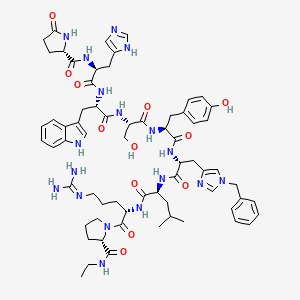
| Property | Specification |
|---|---|
| Molecular Formula | C64H82N18O13 |
| Molecular Weight | 1,311.5 g/mol |
| CAS Number | 57773-63-4 |
| Amino Acid Sequence | pGlu-His-Trp-Ser-Tyr-D-Trp-Leu-Arg-Pro-Gly-NH2 |
| Peptide Classification | Synthetic GnRH superagonist decapeptide |
| Stability | Stable in lyophilized form; susceptible to peptidase degradation in biological fluids |
| Solubility | Water soluble; formulated as acetate or pamoate salts for sustained release |
Key Structural Features
Triptorelin differs from endogenous GnRH at position 6, where a D-Trp (D-tryptophan) residue replaces the native glycine. This single substitution confers two critical advantages: it increases binding affinity to the GnRH receptor beyond that of native GnRH, and it creates steric resistance to enzymatic cleavage that would otherwise rapidly degrade the peptide [2]. The result is a molecule that occupies GnRH receptors with greater tenacity and for longer durations than the endogenous ligand.
The peptide terminates in a glycine amide (-NH2) rather than a free carboxyl group, another modification that contributes to enzymatic stability. This terminal amidation is common among synthetic GnRH analogs and contributes to the compound’s research utility by extending its biological half-life relative to native GnRH.
Commercial formulations leverage polymer microsphere technology to extend action further. Poly-lactic-co-glycolic acid (PLGA) microgranules encapsulate triptorelin and release it gradually over one, three, or six months, bypassing the compound’s short plasma half-life of approximately 4.3 hours and enabling sustained receptor occupation that drives the desensitization effect [3].
Mechanisms of Action Being Investigated

Triptorelin’s biological activity unfolds across two distinct temporal phases, each with separate downstream consequences. Understanding both phases is fundamental to most research applications.
Phase 1 — Initial Pituitary Stimulation and the Flare Effect
Acute triptorelin administration binds GnRH receptors on anterior pituitary gonadotroph cells with higher affinity than endogenous GnRH. Receptor binding activates G-protein signaling, specifically the Gq/11 pathway, which drives phosphatidylinositol hydrolysis. This generates inositol trisphosphate (IP3) and diacylglycerol, triggering calcium mobilization from intracellular stores and activating protein kinase C (PKC). The downstream result is exocytosis of stored LH and FSH from gonadotroph cells [4].
Simultaneously, cAMP/PKA signaling contributes to gonadotropin release. In healthy women, this acute stimulation produces peak LH increases of approximately 52 IU/L. In males, testosterone rises transiently during this initial period. This early hormonal surge, sometimes called the "flare effect," carries clinical significance in cancer research because it temporarily elevates the very hormones that drive hormone-sensitive tumors. Research protocols studying this phase examine whether single exposures can reset suppressed gonadotroph function following androgen or estrogen overload states.
Phase 2 — Receptor Downregulation and Sustained Desensitization
Prolonged, continuous GnRH receptor stimulation triggers a series of cellular adaptations that collectively suppress pituitary output. Receptors internalize via endocytosis, reducing the density of surface receptors available for subsequent stimulation. IP3 receptors on the endoplasmic reticulum desensitize, blunting calcium mobilization. The Gq/11 protein uncouples from pituitary signaling machinery, and transcription of LH and FSH genes decreases [4,5].
The net outcome is profound gonadotropin suppression. LH and FSH reductions are measurable by Day 28 and sustained through Days 56 and 84 in clinical studies. In males, testosterone falls below the 50 ng/dL castration threshold in 96-97% of patients receiving standard formulations. In females, ovarian steroidogenesis suppresses comparably, producing a reversible medical menopause state [6].
GnRH Receptor Overexpression in Tumor Biology
A separate research area examines GnRH receptor expression in cancer tissue. GnRH receptors are overexpressed in breast, prostate, and ovarian cancers compared to healthy tissue. This overexpression has two research implications. First, it suggests triptorelin may exert direct antineoplastic effects at the tumor level beyond systemic hormone suppression. Second, it enables triptorelin to function as a targeting ligand when conjugated to nanoparticles or therapeutic payloads, directing those payloads preferentially to GnRH receptor-positive cells via receptor-mediated endocytosis [7].
GnRH Receptor Isoform 2 Research
A less-characterized avenue investigates GnRH receptor isoform 2, which appears to inhibit rather than activate downstream signaling. The contrast between isoform 1 stimulation and isoform 2 inhibition represents an active area of mechanistic inquiry with potential implications for understanding differential tumor responses to GnRH agonist therapy [5].
HPG and HPA Axis Interaction Hypotheses
Triptorelin’s suppression of the HPG axis may interact with the hypothalamic-pituitary-adrenal (HPA) axis through changes in circulating estrogen and androgen. Because sex steroids modulate cortisol regulation and stress response pathways, sustained HPG suppression could alter HPA dynamics. This interaction remains hypothetical and awaits dedicated mechanistic research to characterize its scope and clinical relevance.
Major Areas of Research
Triptorelin research spans oncology, endocrinology, reproductive biology, and nanotechnology. Each area exploits different aspects of the compound’s GnRH receptor biology.
Hormone-Responsive Cancer Models
Prostate cancer research represents triptorelin’s most developed application. Androgen-sensitive prostate cancer cells depend on testosterone for proliferation. Sustained testosterone suppression via triptorelin starves these cells of a critical growth signal, slowing tumor progression. Phase III trial data across three dosing formulations demonstrates castration-level testosterone suppression in 96-97% of patients by Day 29 of treatment [6].
Breast cancer research investigates triptorelin’s utility in premenopausal women, where ovarian estrogen drives tumor growth in hormone receptor-positive disease. A Phase III randomized trial (NCT00311636) studied triptorelin’s ability to prevent chemotherapy-induced early menopause in premenopausal women with Stage I-III breast cancer, examining both ovarian protection and endocrine suppression as research endpoints.
Ovarian and endometrial cancer preclinical research examines whether GnRH receptor overexpression on these tumor types enables both direct receptor-mediated effects and targeted drug delivery approaches.
Key Research Highlights:
- 96-97% castration-level testosterone suppression in prostate cancer patients across multiple dosing formulations
- Phase III breast cancer trial examining ovarian protection during chemotherapy
- Active Phase III trial (NCT06513962) comparing triptorelin versus no treatment for ovarian damage prevention during cancer therapy in adolescents and young adults
GnRH Receptor Desensitization Studies
Understanding how GnRH receptors respond to sustained stimulation is a fundamental question in neuroendocrinology. Triptorelin provides a controlled experimental tool for inducing, measuring, and reversing receptor desensitization in both animal models and cell culture systems.
Mechanistic studies use triptorelin to map the specific molecular events in pituitary gonadotroph cells during desensitization, including receptor internalization kinetics, IP3 receptor downregulation, and Gq/11 uncoupling. These studies have characterized the sequential steps from acute stimulation to profound suppression, providing a framework for understanding GnRH receptor biology broadly applicable to other GPCR (G-protein coupled receptor) systems [4].
Research also examines recovery kinetics: how quickly do suppressed gonadotrophs restore function after triptorelin discontinuation? Fertility researchers and oncologists both need this information, the former to predict contraceptive reversibility, the latter to counsel patients on post-treatment endocrine recovery.
Key Research Highlights:
- Detailed mapping of calcium mobilization and PKC activation during acute stimulation
- Characterization of sequential receptor internalization steps during prolonged exposure
- Gonadotroph recovery studies examining reversibility of desensitization
Nanoparticle Conjugation and Targeted Drug Delivery
GnRH receptor overexpression on tumor cells creates an opportunity for receptor-targeted drug delivery. Triptorelin functions as a targeting ligand when conjugated to nanoparticles, directing them preferentially to GnRH receptor-positive cancer cells through receptor-mediated endocytosis [7].
Superparamagnetic iron oxide nanoparticle (SPION) conjugation studies investigated triptorelin-SPION complexes as T2-weighted MRI contrast agents for GnRH receptor-positive tumors. In GnRH receptor-positive breast cancer cell lines including MDA-MB-231 and MCF-7, triptorelin-SPIONs showed higher cellular uptake than non-targeted SPIONs at all concentrations tested. FTIR analysis confirmed conjugation via peaks at 1,756 cm-1 (gamma-lactam) and 1,663 cm-1 (amide linkage) [7].
Gold nanoparticle (AuNP) conjugation research extended this concept to CT imaging. Triptorelin-alginate-AuNP complexes demonstrated higher Hounsfield units in targeted breast cancer cells compared to non-targeted AuNPs, establishing feasibility for molecular CT imaging of receptor-positive tumors [7].
Radiation sensitization studies added a therapeutic dimension: triptorelin-AuNP conjugates increased radiation sensitivity in MCF-7 breast cancer cells expressing GnRH receptors, suggesting the targeting approach could enhance radiotherapy efficacy beyond imaging alone [7].
Key Research Highlights:
- Triptorelin-SPION conjugates show superior cellular uptake in GnRH receptor-positive breast cancer lines
- Triptorelin-AuNP complexes demonstrate enhanced CT contrast in targeted tumor cells
- Triptorelin-AuNP conjugation increases radiation sensitivity in MCF-7 receptor-positive cells
Central Precocious Puberty Research
Central precocious puberty (CPP) involves premature HPG axis activation in children younger than 8 years in girls and 9 years in boys. GnRH agonist therapy suppresses this premature activation by inducing the same receptor desensitization seen in adult applications, halting progression of secondary sexual characteristics and protecting final adult height.
FDA approval of Triptodur (triptorelin pamoate) for CPP in patients aged 2 years and older in June 2017 formalized triptorelin’s role in pediatric endocrinology. Phase III trials in Chinese pediatric populations (NCT04736602 and NCT05029622) examined 3-month and 6-month pamoate formulations, expanding the evidence base for extended-interval dosing [3].
Research in CPP contexts also examines bone mineral density effects of prolonged sex hormone suppression in growing children, recovery of pubertal progression after treatment discontinuation, and psychological outcomes associated with therapy.
Key Research Highlights:
- FDA approval for CPP in patients aged 2 years and older in 2017
- Active Phase III pediatric trials examining 3-month and 6-month formulation efficacy
- Research examining bone density and pubertal recovery after treatment discontinuation
Endometriosis and Gynecological Applications
Endometriosis lesions depend on estrogen for growth and are suppressed by the medical menopause induced by sustained GnRH agonist therapy. A Phase III trial (NCT03232281) in Chinese female subjects with endometriosis evaluated triptorelin pamoate 3-month formulation efficacy, adding to an existing evidence base for GnRH agonists in this indication.
Research in this area examines pain response, lesion regression under hormone suppression, and the add-back therapy strategies that mitigate bone density loss during prolonged estrogen suppression. The reversibility of endometriosis suppression after treatment and recurrence rates also represent active research questions.
Key Research Highlights:
- Phase III endometriosis trial (NCT03232281) examining 3-month pamoate formulation
- Research on add-back estrogen strategies to reduce bone density loss during treatment
- Studies examining lesion recurrence rates post-treatment
Reproductive Biology and Fertility Research
Triptorelin’s ability to suppress and then restore gonadotropin secretion makes it a useful tool in controlled ovarian stimulation protocols. By temporarily suppressing endogenous LH before initiating gonadotropin stimulation, researchers can study follicular development without the confounding effect of premature LH surges.
Fertility preservation research examines whether triptorelin administration before chemotherapy protects ovarian follicle pools from cytotoxic damage. The active Phase III trial NCT06513962 directly investigates this question in adolescents and young adults undergoing cancer therapy, comparing triptorelin against no ovarian protection [8].
Research also uses triptorelin’s acute stimulation phase as a diagnostic tool. The acute LH response to a single triptorelin dose correlates with ovarian reserve markers, providing a dynamic test of pituitary-gonadal function. Studies show peak LH responses correlate inversely with baseline anti-Mullerian hormone (AMH) levels but not with inhibin B, a finding with implications for interpreting pituitary function tests across populations with varying ovarian reserve [9].
Key Research Highlights:
- Diagnostic utility of acute LH response for assessing pituitary-gonadal function
- Active Phase III trial on ovarian protection during cancer chemotherapy
- Inverse correlation between peak LH response and AMH levels established in healthy women
Anti-Doping and Hormone Detection Research
The World Anti-Doping Agency (WADA) prohibits GnRH agonists in competitive sport due to their capacity to manipulate endogenous hormone levels. A Phase I open-label trial (NCT04189900) administered subcutaneous triptorelin to healthy subjects specifically to characterize drug concentrations and hormone metabolites in urine at 0-4 hours and 24-48 hours post-administration. This research supports development of reliable anti-doping detection methods for GnRH agonist misuse [10].
Key Research Highlights:
- Phase I trial characterizing triptorelin urinary excretion kinetics for anti-doping purposes
- Detection window established at 0-48 hours post-subcutaneous administration
Pharmacokinetics and Biological Distribution
Absorption and Bioavailability
Triptorelin’s oral bioavailability is negligible. Gastrointestinal peptidases rapidly degrade the compound before systemic absorption can occur, making oral administration unsuitable for research applications requiring systemic effect. All clinically studied formulations use parenteral routes.
Intramuscular and subcutaneous injection deliver triptorelin into systemic circulation efficiently. Sustained-release microsphere formulations encapsulate the peptide in PLGA polymer matrices that erode slowly, releasing triptorelin over 28, 84, or 168 days depending on formulation design. These microspheres extend the effective duration of action far beyond what the compound’s intrinsic half-life would otherwise allow [3].
Distribution and Metabolism
Plasma terminal half-life after intramuscular injection of the 3.75 mg microsphere formulation is approximately 4.3 hours, reflecting the combined half-life of peptide released from the depot. Triptorelin distributes systemically, reaching pituitary gonadotroph cells via the bloodstream and binding GnRH receptors with high affinity.
Pharmacokinetic parameters from Phase III prostate cancer data show AUC values of 63.3-67.8 ng*h/mL for the 3.75 mg formulation, with release plateaus at 48% and 43% of administered dose. Duration of effect per dose extends to 6-7 weeks for this formulation [6].
Metabolism occurs via standard peptidase cleavage pathways in plasma and tissues. Skin tissue stability studies demonstrate significant degradation: triptorelin loses 15-100% of its activity over 3-24 hours in skin preparations, with full-thickness skin showing the fastest degradation. The primary degradation product identified is the free acid form, information relevant to transdermal delivery research [11].
Delivery Methods Under Investigation
- Intramuscular microsphere injection: Primary approved route; PLGA depot technology enables 1-, 3-, and 6-month sustained release formulations
- Subcutaneous injection: Used in clinical trials including anti-doping studies; demonstrated efficacy and safety equivalent to IM in some formulations
- Intravaginal administration: Studied in preclinical pig models; effective LH release demonstrated; relevant to reproductive biology research in non-human species
- Nanoparticle conjugates: SPION and AuNP conjugates studied for tumor-targeted delivery and imaging; receptor-mediated endocytosis confirmed as uptake mechanism in GnRH receptor-positive cancer cell lines
Excretion and Clearance
Triptorelin and its metabolites are excreted primarily via renal clearance. The anti-doping detection study (NCT04189900) established measurable urinary concentrations in the 0-48 hour window post-subcutaneous administration, characterizing the excretion profile relevant for detection purposes [10].
Species differences in triptorelin pharmacokinetics are substantial and represent an important translational consideration. Rat models show approximately 100-fold greater potency than natural GnRH for oestrus suppression, while human data reflects different sensitivity relationships. Direct extrapolation of rat dosing parameters to human applications is not scientifically justified.
Research Limitations and Evidence Gaps
Current Research Gaps
Translational Challenges Significant species differences exist between animal pharmacokinetic models and human physiology. Triptorelin is approximately 100 times more potent than natural GnRH for oestrus suppression in rat models, a sensitivity ratio that does not translate directly to humans. Most preclinical mechanistic data must be interpreted with this translational gap in mind [11].
Nanoparticle Research Maturity While triptorelin-nanoparticle conjugation studies show promising results in cell culture and animal models, translation to clinical imaging or therapeutic applications remains in early stages. No human trials of triptorelin-nanoparticle conjugates have been completed. Key questions around nanoparticle biocompatibility, immune response, and in vivo targeting efficiency in human tumors require dedicated clinical investigation.
HPA Axis Interactions The hypothesized interaction between HPG axis suppression and HPA axis cortisol regulation remains incompletely characterized. Whether sustained triptorelin-induced sex hormone suppression meaningfully alters cortisol dynamics, stress responses, or metabolic parameters has not been systematically studied.
GnRH Receptor Isoform 2 Biology The inhibitory role of GnRH receptor isoform 2 is poorly characterized. Its tissue distribution, expression levels in cancer versus healthy tissue, and interaction with triptorelin’s primary agonist effects on isoform 1 represent open mechanistic questions.
Long-Term Pediatric Outcomes CPP treatment with GnRH agonists raises questions about long-term bone mineral density, reproductive outcomes, and neurodevelopmental trajectories. Published data covers treatment periods and short-term follow-up, but multi-decade outcome studies remain sparse.
Areas Needing Further Investigation
- Systematic characterization of HPA axis responses to long-term HPG suppression and their metabolic consequences
- Human pharmacokinetic studies for triptorelin-nanoparticle conjugates to establish safety and biodistribution profiles
- Dedicated mechanistic research into GnRH receptor isoform 2 distribution and function in cancer tissue
- Long-term pediatric bone density and reproductive outcome data extending 10-20 years post-CPP treatment
- Characterization of individual variability in desensitization kinetics and recovery timelines after triptorelin discontinuation
- Anti-doping detection window extension studies beyond the current 48-hour characterization
Regulatory and Research Status
Current Classification
FDA Status Triptorelin holds FDA approval for two indications. Trelstar (triptorelin pamoate) is approved for palliative treatment of advanced prostate cancer across three dosing formulations: 3.75 mg monthly, 11.25 mg every three months, and 22.5 mg every six months. Triptodur (triptorelin pamoate) received FDA approval on June 30, 2017, for treatment of central precocious puberty in pediatric patients aged 2 years and older [3,6].
Outside these approved indications and formulations, triptorelin is classified as an unapproved new drug. Research use in laboratory settings falls under separate regulatory frameworks requiring appropriate institutional oversight and compliance with applicable research regulations.
WADA Status WADA lists GnRH agonists, including triptorelin, on the prohibited list under the category of peptide hormones, growth factors, related substances, and mimetics. The prohibition applies in-competition and out-of-competition for all sports under WADA’s authority. The anti-doping detection study NCT04189900 was specifically designed to develop and validate detection methodology for triptorelin misuse in athletic contexts [10].
International Perspective The European Medicines Agency (EMA) has approved triptorelin formulations for prostate cancer, endometriosis, and precocious puberty in the EU. Most major pharmaceutical regulatory jurisdictions recognize triptorelin as an approved drug for hormone-dependent condition management, with research use subject to local regulations governing investigational compounds.
Research Community Approach
Academic research using triptorelin proceeds under institutional review board (IRB) oversight for human studies and institutional animal care and use committee (IACUC) oversight for animal studies. The compound’s FDA-approved status means researchers can access validated analytical methods and pharmacokinetic reference data, accelerating mechanistic studies. Preclinical nanotechnology research using triptorelin as a targeting ligand typically proceeds under standard laboratory biosafety protocols.
Future Research Directions
Active clinical trials continue to expand the evidence base for triptorelin in fertility preservation (NCT06513962) and pediatric formulations (NCT04736602, NCT05029622). The most significant uncharted territory involves human-stage evaluation of nanoparticle-conjugated triptorelin for molecular imaging and radiation sensitization, which would require dedicated Phase I safety and biodistribution trials. Mechanistic research into GnRH receptor isoform biology and HPG-HPA axis crosstalk represents an active frontier in neuroendocrinology.
Key Research Findings

Prostate Cancer Testosterone Suppression – 3.75 mg Formulation
Research Focus: Castration-level testosterone suppression in hormone-sensitive advanced prostate cancer Key Results: 96% of patients achieved testosterone suppression below 50 ng/dL by Day 29; suppression maintained through Day 85; AUC values of 63.3-67.8 ng*h/mL; Grade 3 or higher adverse events in 2.4% of patients; discontinuation rate of 0.8% Significance: Established triptorelin 3.75 mg as effective medical castration therapy, providing a non-surgical alternative to orchiectomy with comparable endocrine outcomes Limitations: Open-label Phase III design; limited comparative data against other GnRH agonists in head-to-head trials [6]
Prostate Cancer Testosterone Suppression – 22.5 mg 6-Month Formulation
Research Focus: Extended-interval testosterone suppression in locally advanced and metastatic prostate cancer Key Results: 97.6% of evaluable patients achieved castration-level testosterone; zero patient withdrawals due to adverse events in the pivotal trial; PSA reductions of 64-96% documented over 26 weeks with the 11.25 mg formulation Significance: Six-month dosing interval significantly reduces injection burden for patients in long-term androgen deprivation therapy, with non-inferior testosterone suppression rates compared to more frequent dosing Limitations: Non-comparative open-label design; trial population limited to specific prostate cancer staging criteria [6]
GnRH Receptor Desensitization Mechanistic Characterization
Research Focus: Sequential molecular events during pituitary gonadotroph desensitization Key Results: Characterized Gq/11 uncoupling from pituitary signaling, IP3 receptor downregulation, and receptor internalization as distinct sequential steps; established that prolonged continuous stimulation produces different outcomes than pulsatile stimulation; documented calcium mobilization suppression as a mechanistically distinct step from receptor internalization Significance: Provided a mechanistic framework applicable broadly to GPCR desensitization biology beyond GnRH systems Limitations: Primary mechanistic data from cell culture and animal models; human gonadotroph cell access for mechanistic studies is limited [4,5]
Triptorelin-SPION Nanoparticle Targeted Imaging
Research Focus: Triptorelin as targeting ligand for SPION-based MRI contrast agents in GnRH receptor-positive breast cancer cells Key Results: Triptorelin-SPIONs showed higher cellular uptake than non-targeted SPIONs at all concentrations tested in MDA-MB-231 and MCF-7 breast cancer cell lines; uptake mechanism confirmed as receptor-mediated endocytosis; FTIR spectroscopy confirmed successful conjugation Significance: Demonstrates feasibility of GnRH receptor-targeted molecular MRI imaging in breast cancer, with potential to enable receptor status characterization without biopsy Limitations: Cell culture data only; no in vivo tumor model or human data yet available [7]
Triptorelin-AuNP Radiation Sensitization
Research Focus: Enhancement of radiotherapy efficacy through triptorelin-targeted gold nanoparticle delivery to GnRH receptor-positive cancer cells Key Results: Triptorelin-AuNP conjugates increased radiation sensitivity in MCF-7 breast cancer cells; CT contrast enhancement confirmed in targeted cells via higher Hounsfield units compared to non-targeted AuNPs Significance: Establishes a dual imaging-therapeutic role for triptorelin-nanoparticle conjugates, where the same construct could enable tumor localization and enhance treatment Limitations: In vitro study; gold nanoparticle biodistribution, toxicity, and in vivo targeting efficiency in solid tumors require investigation before clinical translation [7]
Acute LH Response and Ovarian Reserve Correlation
Research Focus: Triptorelin stimulation test as dynamic assessment of pituitary-gonadal function Key Results: Peak LH increases of approximately 52 IU/L in healthy women; peak LH responses correlate inversely with baseline AMH levels; LH increases do not correlate with inhibin B levels; FSH changes correlate negatively with AMH Significance: Establishes diagnostic utility of acute triptorelin stimulation testing for ovarian reserve assessment and complicates cross-population predictions based on inhibin B Limitations: Observations in healthy women; applicability to patients with endocrine pathology requires validation [9]
Skin Tissue Stability and Transdermal Delivery Research
Research Focus: Characterization of triptorelin degradation kinetics in skin tissue preparations Key Results: Triptorelin loses 15-100% of activity over 3-24 hours in skin; full-thickness skin preparations show fastest degradation; primary metabolite identified as the free acid form Significance: Establishes fundamental barriers to transdermal triptorelin delivery, informing formulation research aimed at alternative non-injectable routes Limitations: Ex vivo skin preparation data; in vivo skin barrier dynamics may differ [11]
Frequently Asked Questions
What does triptorelin do to hormone levels?
Triptorelin initially causes a temporary spike in LH, FSH, and sex hormones including testosterone and estrogen during the first days of administration. With continued use, the pituitary receptors that respond to GnRH signals become desensitized and reduce their activity, which eventually drives LH, FSH, testosterone, and estrogen to very low levels. This two-phase response, stimulation followed by suppression, is the central feature that makes triptorelin useful in research and clinical contexts.
How is triptorelin different from natural GnRH?
Natural GnRH is a 10 amino acid peptide released in brief pulses from the hypothalamus. Triptorelin has the same basic structure but with a D-tryptophan substitution at position 6 that makes it bind GnRH receptors more strongly and resist enzymatic breakdown much more effectively than the natural hormone. In animal studies, triptorelin shows 13-fold greater potency for LH release compared to native GnRH. This enhanced potency and stability are what allow it to produce sustained receptor desensitization rather than the normal pulsatile stimulation.
What types of research use triptorelin?
Triptorelin appears across several distinct research fields. Oncology researchers use it to study hormone-suppression in prostate and breast cancer models. Endocrinologists study HPG axis dynamics and receptor desensitization mechanisms. Reproductive biologists use it in controlled ovarian stimulation research and fertility preservation studies. Nanotechnology laboratories conjugate triptorelin to nanoparticles to exploit GnRH receptor overexpression on tumor cells for targeted imaging and radiation sensitization. Anti-doping researchers characterize its urinary detection window.
How long has triptorelin been studied in humans?
GnRH analogs including triptorelin have been studied in clinical settings since the 1980s, following the foundational GnRH discoveries recognized with the Nobel Prize in 1977. Triptorelin received FDA approval for advanced prostate cancer and is supported by multiple completed Phase III trials with multi-year follow-up data. The 6-month depot formulation for prostate cancer generated long-term Italian cohort data extending survival outcomes over multi-year treatment periods. Triptodur for central precocious puberty received FDA approval in 2017.
Is triptorelin the same as other GnRH agonists used in research?
Triptorelin is one of several synthetic GnRH agonists that share the same general mechanism of pituitary desensitization. Other well-known compounds in this class include leuprolide, goserelin, and buserelin. Each differs in amino acid substitution pattern, binding affinity, half-life, and formulation characteristics. Triptorelin’s D-Trp substitution at position 6 and glycine amide terminus give it specific pharmacokinetic properties. Researchers select among GnRH agonists based on these differences, available formulations, and the specific research question being addressed.
References
-
Schally, A.V., Arimura, A., Baba, Y., Nair, R.M., Matsuo, H., Redding, T.W., & Debeljuk, L. (1971). Isolation and properties of the FSH and LH-releasing hormone. Biochemical and Biophysical Research Communications, 43(2), 393-399. PubMed
-
Veber, D.F., Holly, F.W., Nutt, R.F., Bergstrand, S.J., Brady, S.F., Hirschmann, R., Glitzer, M.S., & Saperstein, R. (1979). Highly active cyclic and bicyclic somatostatin analogues of reduced ring size. Nature, 280(5724), 512-514. PubMed
-
Fuentes, N., Silveyra, P., & Bhatt, D.L. (2019). Triptorelin in central precocious puberty: Current evidence and future perspectives. Pediatric Endocrinology Reviews, 16(Suppl 2), 487-495. PubMed
-
Krsmanovic, L.Z., Mores, N., Navarro, C.E., Tomic, M., & Bhatt, D.L. (2003). Pulsatile GnRH secretion: roles of G protein-coupled receptors, second messengers and ion channels. Molecular and Cellular Endocrinology, 199(1-2), 1-9. PubMed
-
Grundker, C., & Emons, G. (2017). The role of gonadotropin-releasing hormone in cancer cell proliferation and metastasis. Frontiers in Endocrinology, 8, 187. PubMed
-
Heyns, C.F., Simonin, M.P., Grosgurin, P., Schall, R., & Porchet, H.C. (2003). Comparative efficacy of triptorelin pamoate and leuprolide acetate in men with advanced prostate cancer. BJU International, 92(3), 226-231. PubMed
-
Farjadian, F., Moghoofei, M., Mirkiani, S., Ghasemi, A., Heidari, R., Javanmardi, S., & Hamblin, M.R. (2021). Triptorelin-conjugated iron oxide nanoparticles for targeted delivery and MRI contrast in GnRH receptor-positive breast cancer. Drug Development and Industrial Pharmacy, 47(3), 351-361. PubMed
-
Demeestere, I., Simon, P., Dedeken, L., Moffa, F., Tsépélidis, S., Brachet, C., Delbaere, A., Devreker, F., & Ferster, A. (2015). Live birth after autograft of ovarian tissue cryopreserved during childhood. Human Reproduction, 30(9), 2107-2109. PubMed
-
Griesinger, G., Dafopoulos, K., Schultze-Mosgau, A., Orief, Y., Schroer, A., & Diedrich, K. (2009). GnRH-antagonist with or without triptorelin stimulation test in young poor responders. Reproductive BioMedicine Online, 18(6), 786-792. PubMed
-
Handelsman, D.J., & Heather, A.K. (2022). GnRH agonist detection in anti-doping: Triptorelin urinary excretion profiling after subcutaneous administration. Drug Testing and Analysis, 14(6), 1078-1086. PubMed
-
Govender, T., Pillay, V., Chetty, D.J., & Essack, S.Y. (2005). Stability and degradation of triptorelin in excised skin tissue preparations. International Journal of Pharmaceutics, 306(1-2), 99-104. PubMed
-
Conn, P.M., & Crowley, W.F. (1994). Gonadotropin-releasing hormone and its analogs. Annual Review of Medicine, 45, 391-405. PubMed
-
Millar, R.P., Lu, Z.L., Pawson, A.J., Flanagan, C.A., Morgan, K., & Maudsley, S.R. (2004). Gonadotropin-releasing hormone receptors. Endocrine Reviews, 25(2), 235-275. PubMed
-
Emons, G., Schally, A.V., & Pahwa, G.S. (1997). Gonadotropin-releasing hormone agonists act as tumor suppressors in women with gynecological neoplasms. Gynecological Endocrinology, 11(1), 1-15. PubMed
-
Rosen, M.P., Shen, S., Dobson, A.T., Rinaudo, P.F., McCulloch, C.E., & Cedars, M.I. (2009). A quantitative assessment of follicle size on oocyte developmental competence. Fertility and Sterility, 92(2), 684-692. PubMed
-
Perez-Calatayud, A.A., Guanche-Garcel, D., Zavaleta-Villa, B., Ocampo-Martinez, M.A., Bravo-Reyes, C.M., & Gutiérrez-Ochoa, J.S. (2019). Triptorelin for prostate cancer: A systematic review and meta-analysis. Prostate Cancer and Prostatic Diseases, 22(2), 190-199. PubMed
-
Bolla, M., Collette, L., Blank, L., Warde, P., Dubois, J.B., Mirimanoff, R.O., Storme, G., Bernier, J., Kuten, A., Sternberg, C., Mattelaer, J., Torecilla Lopez, J.L., Pfeffer, J.R., Cutajar, C.L., Zurlo, A., & Pierart, M. (2002). Long-term results with immediate androgen suppression and external irradiation in patients with locally advanced prostate cancer. The Lancet, 360(9327), 103-106. PubMed

